Temps and termites are on the rise. Schedule your free inspection today.

800-837-5520 Call us for a free quote Contact us

European & English yellow jacket wasps

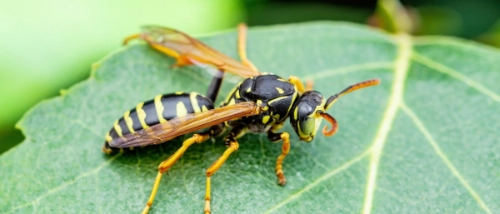
European wasps (Vespula germanica) and English wasps (Vespula vulgaris) are two common wasp species with distinctive black-and-yellow coloration and are widely known for their defensive behavior around nests.

Both wasps are found in Europe, and as invasive species, they have established themselves in parts of North America, impacting both local ecosystems and human spaces. Unlike the similar-sounding European hornets, European wasps are much smaller, more aggressive, and have a distinctive yellow-and-black striped appearance.

Characteristics & Identification

European and English wasps share similar body sizes, with workers typically around 12-15 mm and queens reaching up to 20 mm. Their distinguishing characteristics are their black-and-yellow striped abdomens.

The European wasp has a more defined black dot pattern, while the English wasp has a larger black mark on its face. Unlike bees, wasps can sting multiple times due to their smooth stingers, and both species are known to defend their nests aggressively.

European and English wasps are recognized by their vivid coloration and nesting habits. European wasps tend to have a more pronounced ‘anchor-like’ black pattern on their face, whereas English wasps feature a large black facial spot.

Their nests are built from chewed wood fibers that form a papery texture. They are often found in wall cavities, underground spaces, and tree hollows. Their nesting material is created by chewing wood pulp mixed with saliva, giving it a unique look and texture.

Curious about wasps? Learn more about their behaviors and habitats and how to manage them effectively here.

European & English yellow jacket wasps

Habitat

These wasps prefer temperate climates and are highly adaptable to both urban and rural areas. European wasps typically prefer sheltered spaces like wall voids, underground cavities, and hollow trees. English wasps are often found in similar protected spaces but may vary slightly based on region.

They forage for sugary foods, fruits, and insects within their environment, making them common around human food sources.

European & English wasps in America

Both species were introduced to North America around the early 20th century, likely through cargo and human travel. They have since spread widely across the continent, particularly in the northern United States and parts of southern Canada, where they thrive in climates similar to their native habitats. 

In many areas, European and English wasps are considered invasive, as they can outcompete native species for food and nesting spaces.

European & English wasp behaviors, threats, or dangers

Both wasp species are highly territorial and will defend their nests aggressively. If they sense a threat, they release alarm pheromones, prompting the colony to swarm and sting. These repeated stings can lead to pain, swelling, and allergic reactions.

Additionally, European and English wasps are attracted to sugary foods, which increases their presence near human activity during warmer months.

Are European & English wasps hard to get rid of?

Removing European and English wasps can be challenging due to their aggressive behavior and hidden nest locations. Nests are often in protected spots that are difficult to reach, like underground or inside wall voids. Attempting to remove a nest without proper equipment can be dangerous, as it may provoke the colony.

Professional pest control services are usually recommended to handle wasp infestations safely and effectively. At Ehrlich Pest Control, we help manage your wasp problem with ease. Contact us today for your consultation!

European & English wasp

How many European & English wasps count as an infestation?

At its peak, a single European or English wasp nest can house thousands of wasps, often 3,000 to 5,000 individuals. When a nest of this size is near human spaces, it poses a significant risk due to the large number of wasps and their defensive behavior. If a nest of this size is found near your home or business, it is generally advisable to contact pest control.

Frequently asked questions

European and English wasps sting as their primary defense mechanism. Both species can sting multiple times, which makes them effective in colony defense and can cause severe reactions in those allergic to wasp venom.

European and English wasps are notable for their adaptability and social structures. As invasive species, they disrupt local ecosystems and can pose challenges due to their large colony sizes, aggressive nest defense, and ability to thrive in a wide range of environments.

At their peak, European and English wasp colonies can house between 3,000 and 5,000 individuals, including workers, drones, and a queen. The size varies based on environmental factors and food availability.

Yes, European wasps are known for their aggressive behavior, especially around their nests. If they sense a threat, they release alarm pheromones that trigger a defensive swarm, making them a challenging pest to manage.

If stung, clean the area with soap and water, and apply ice to reduce swelling. Seek medical attention if you experience symptoms of an allergic reaction, such as difficulty breathing, swelling beyond the sting site, or dizziness.

Need help with European & English wasp control?

European and English wasps can be a threat when nesting near human spaces, especially due to their aggressive nest defense. Handling wasp removal yourself is not recommended, as these wasps quickly swarm and sting in defense.

Our team of pest professionals at Ehrlich Pest Control is trained to manage and remove wasp nests safely. Reach out to us today for wasp and hornet control!

Find your local branch

Start living pest-free today with PestFree365+. Ehrlich Pest Control protects your home from 36 different pests for the ultimate peace of mind.