Temps and termites are on the rise. Schedule your free inspection today.

800-837-5520 Call us for a free quote Contact us

Termite queen facts

Every termite colony revolves around its queen. She is the most important member of the colony, responsible for reproduction and ensuring the colony’s long-term survival. Unlike workers and soldiers, who live only a few years at most, a queen termite can live decades, producing thousands of eggs each day during peak years. 

A termite queen’s reproductive power explains how colonies can grow from a handful of termites to hundreds of thousands in just a few years.

A termite queen and a worker termite

What does a queen termite look like?

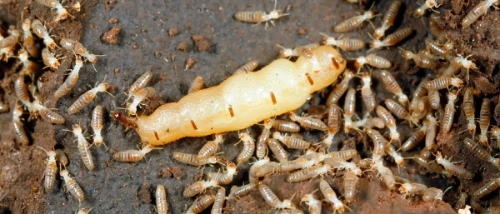
They typically vary in appearance depending on the species, but in general, a termite queen’s size is larger than the rest of the colony. Their bodies are elongated and more rounded than the slender shape of a worker or soldier. 

In some species, the queen can grow so large that she becomes immobile, relying entirely on worker termites to move her eggs and maintain the royal chamber.

In color, queen termites may range from pale yellow or light brown to darker brown or even black, depending on species and age. The queen is typically housed in a protected chamber deep within the colony, where she remains with the king and is tended to constantly by workers.

Want to know how to identify other types of termites in the colony? Visit our termite identification guide.

The role of the termite queen

The queen's role begins when she leaves her parent colony as a winged swarmer. After pairing with a king, she sheds her wings and starts a new colony in a small chamber. At first, she lays only a few eggs and cares for them herself. Once those eggs hatch into workers, they take over feeding, grooming, and egg care. From that point forward, the queen’s main job is reproduction.

Egg-laying begins slowly, but increases as the queen matures. Over time, she may produce thousands of eggs each day, with peak productivity typically lasting seven to ten years. To maintain this demanding role, she is constantly fed, groomed, and protected by workers. The king remains by her side for life, continuing to mate with her and ensuring a steady supply of fertilized eggs.

The lifecycle of a queen termite

The lifecycle of a termite queen shows how colonies grow from just two termites into hundreds of thousands:

A termite queen begins her life as a swarmer, also called an alate. These are winged termites that leave their parent colony in large groups during warm months to mate and start new colonies. Swarmers are often mistaken for flying ants. Once she finds a mate, the queen sheds her wings and begins her role as the founder of a new colony.

After mating, the queen and king look for a safe, protected location to start their colony. They hollow out a small chamber in soil or wood and seal themselves inside. This space becomes the heart of the new nest, where the queen will begin laying eggs and the king will stay by her side for the rest of their lives.

In the beginning, the queen lays only a few eggs at a time. Since no workers exist yet, she and the king care for the eggs themselves until they hatch. Once the eggs develop into larvae and then into workers, the queen can focus on producing more eggs while the workers care for the young.

As the first workers mature, they build new chambers, feed the queen, and move her eggs into nursery areas. The queen’s egg-laying rate increases year after year. A young colony may start with only a few dozen termites, but within a few years, it can grow to thousands. Workers and soldiers now maintain and defend the colony while the queen continues to expand the population.

When the colony reaches a certain size, the queen’s pheromones may allow the development of secondary reproductives or even tertiary queens. These additional reproductives live in satellite nests connected to the main colony and begin laying eggs of their own. This strategy allows termite populations to expand rapidly, sometimes reaching hundreds of thousands of individuals within a few years.

If the primary queen dies, the colony doesn’t necessarily end. Her pheromones, which had been suppressing new reproductives, disappear. Without this chemical signal, secondary queens or new reproductives take her place. This ensures that the colony continues producing eggs and can survive for decades, even after the original queen is gone.

By the second year, a young colony might have only a thousand workers. Within a few more years, it may expand to hundreds of thousands as the queen’s productivity increases and secondary queens begin producing eggs as well.

Queen termite surrounded by soldier termites

What is a termite queen’s lifespan?

Termite queens are among the longest-living insects in the world. While workers and soldiers survive for only one to two years, a queen can live anywhere from 25 to 50 years. 

During this time, she can produce eggs continuously, allowing the colony to survive and grow long after its founding. Her long lifespan is one reason termite colonies can last for decades without being discovered.


Termite queens and the risk to your property

The ability of a queen to produce eggs for decades is what makes termites such a problem. Even if the rest of the colony is reduced in number, as long as the queen is alive, the population can bounce back. Because termite colonies grow quietly inside wood and soil, many homeowners don’t realize they have a problem until the damage is significant.

Regular inspections are the best way to catch termite activity before it causes serious structural problems. If you think you may have termites, scheduling a free termite inspection with one of our Ehrlich technicians is the best way to know for sure.

Schedule your free termite inspection with Ehrlich

If you think termites may be active in your home, it’s important to act early. A termite inspection can confirm whether a colony is present and show you the best treatment options. Don’t wait for termites to grow out of control. Schedule your free termite inspection with Ehrlich today and take the first step toward protecting your home.

Termite resources:

Find out how to identify termite mud tubes, what they mean, and the signs of infestation.

Learn how to tell flying ants vs termites apart to help determine which pest you are dealing with.

Have a pest problem? From termites to rodents, Ehrlich technicians share expert answers to your most common questions.

Find your local branch

Start living pest-free today with PestFree365+. Ehrlich Pest Control protects your home from 39 different pests for the ultimate peace of mind.