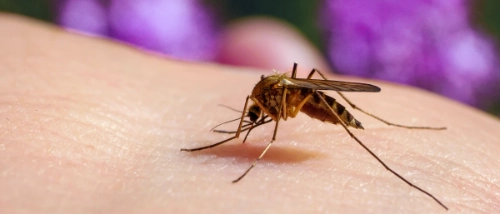
Mosquitoes themselves do not naturally have red blood flowing through their bodies; they have their own circulatory fluid, different from human or animal blood.
Mosquitoes have an internal fluid called hemolymph, which works somewhat like blood because it helps transport nutrients throughout the mosquito’s body. Mosquito hemolymph is not red: unlike human blood, it does not contain hemoglobin (the iron-rich protein that gives blood its red color). Instead, hemolymph is usually clear, pale, or slightly yellowish.
So while mosquitoes do technically have their own version of blood, it looks different from ours.
How does “mosquito blood” differ from human blood?
Human blood is a complex delivery system that carries oxygen through our veins using hemoglobin, which is what makes our blood red. Mosquitoes, however, don't use their blood to breathe at all. They actually pull in air through tiny holes in their sides, so they don’t need the red, iron-rich protein that we do.
Instead of a busy highway of red cells, mosquito "blood" (hemolymph) is a clear or yellowish fluid that primarily transports nutrients and hormones. And while our blood is tucked away in veins and arteries, their fluid just floats freely inside their bodies, washing over their organs.
This is why you only see red when you swat a mosquito that has just finished feeding on blood; their own natural fluid is almost invisible.