© 2026 Rentokil Initial plc and subject to the conditions in the legal statement.
Updated on: 17 September 2026
Quick overview
- Wasps are territorial stinging insects that can sting repeatedly, unlike bees
- Wasp nests are built from chewed wood pulp and are commonly found under eaves, in attics, and wall cavities
- Wasps are attracted to food, sweet drinks, nectar, and rotting fruit near your home
- Only queen wasps survive winter; the rest of the colony dies off in cold months
- DIY wasp nest removal is dangerous — professionals can locate and remove nests safely
There are a lot of concerns about stinging pests. Stinging pests often build their nests near where humans and families live, which can increase the risks of people being stung. A stinging insect nest built in close proximity to manmade structures will also increase the likelihood of wasps and bees infesting properties indoors, which increases the risk even more.
Wasps in particular pose some serious health risks as they can sting people multiple times, which adds to the element of danger. But the questions remain, such as how dangerous are wasps? Are wasps poisonous? We answer all of those questions and more. Just click on a question below and be taken right to the answer.
But still, why do wasps exist? Their presence is essential for the natural balance, though it’s easy to overlook when they pose a threat to humans. What do wasps eat? They primarily feed on nectar, fruits, and other insects, playing a key role in the food chain.
Of course, if you have a problem with wasps in or around your property, contact your local Ehrlich Pest Control office for an appointment with our wasp control experts.
Basic wasp questions
- What is a wasp?
- What do wasps look like?
- Where and when did wasps originate?
- How do wasps build their nests?
- How long does it take wasps to build their nests?
- Where do wasps tend to nest?
- How are wasps born?
- How do wasps reproduce?
- Social wasp reproduction
- Solitary and parasitoid wasps
- Do wasps sleep?
- When do wasps sleep?
- When are wasps most active?
- Do wasps go away at night?
- What do wasps eat?
- Are wasps carnivores?
- Do wasps sting or bite?
- How do wasps fly?
- Are there solitary wasps without nests?
- Are wasps good for the environment?
- What temperature is too cold for wasps?
- Where do wasps hibernate?
- Do wasps have predators?
Wasp risks
- Why are wasps aggressive?
- Why do wasps attack?
- Do wasps attack unprovoked?
- What are wasps attracted to?
Wasps inside the home
What is a wasp?
The basic answer is that a wasp is a type of flying insect in the order Hymenoptera and suborder Apocrita and it is neither an ant nor a bee. The majority of species of wasps are also social insects, like bees, and may have had a common ancestor as bees. Wasps live in colonies, much like bees, but they have very different physiological differences from bees and their behavior is very different from bees, as well. They also tend to be a bit larger than their bee cousins and have a very different temperament.
The vast majority of wasps are known as “eusocial wasps” which means they behave like ants and bees in terms of colonies. However, there is also a significant portion of solitary wasps that fly on their own. These solitary wasps often have parasitic tendencies (parasitoid wasps) and have adapted unique methods of laying eggs and propagating the species.
There are a number of insects that bear different names but are actually part of the wasp family. For example, yellowjackets and hornets are both actually types of wasps.
Wasps are also known to be crucial to the environment in a number of ways, just like bees, but there are many species of wasps, some of which are solitary and who do not pollinate. This wide range of behaviors, species, colors, sizes, and appearance make wasps complex and diverse insects.
From hornet types to the different types of wasps, these insects are crucial to the environment, though not all of them are pollinators. Whether you're dealing with common wasps or looking to identify the different wasps in your area, their variety is vast.
What do wasps look like?
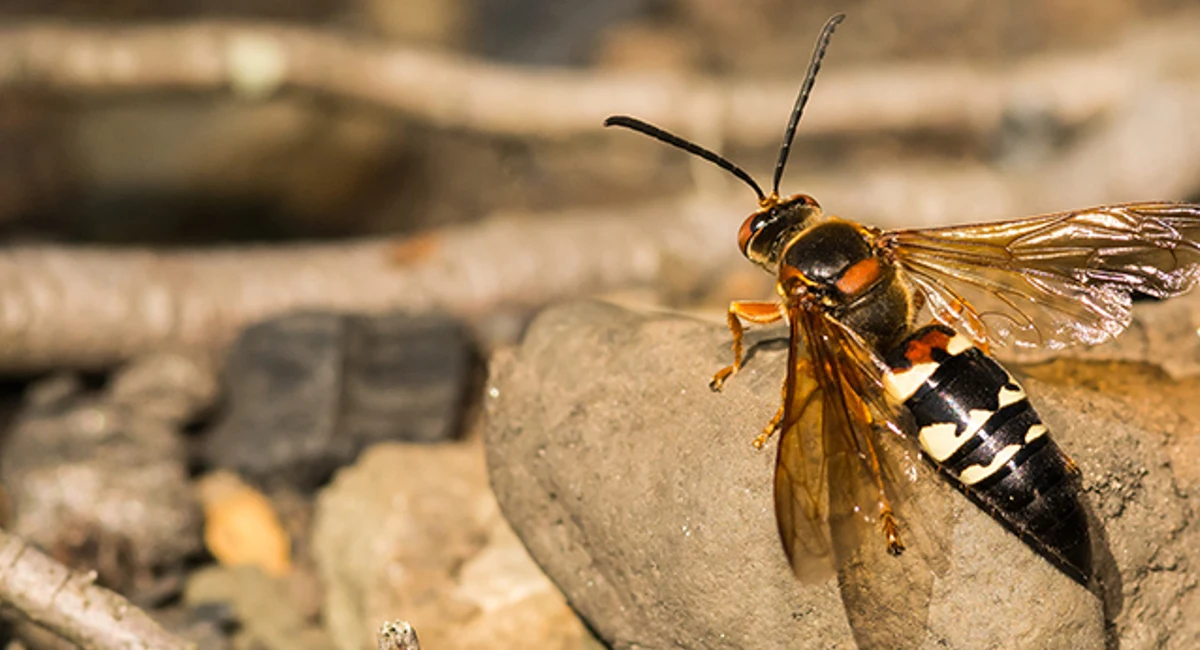
Identifying wasps is a bit of a challenge. There are more than 4,000 species of wasp in North America alone. While there is great variance in terms of their appearance, wasps definitely have a different look from bees and each species does share some traits with one another.
Wasps tend to be slender insects, unlike the plumper and rounder bees. Their bodies are a bit sleeker than a bee’s body. A wasp has a noticeable waist to its mid-section, unlike a bee that does not. In fact, some species of wasp have a very thin mid-section that attaches the front part of their body to the back part.
A wasp may have body hair to it, but it is usually much finer and harder to see than that of a bee’s body. Overall, they have much less body hair than their bee cousins.
Colony size is another thing that separates most wasps from bees. Although there is the chance a wasp colony can get quite large, bees tend to create much larger colonies. A bee colony can contain over 50,000 insects, while wasp colonies tend to range around the 10,000 range.
Where and when did wasps originate?
The exact origin of wasps is still being debated among scientists. It is known that species of wasp have been found in fossil records going back many millions of years. It is thought by many scientists that wasps first appeared in the Jurassic era and then began to diversify into sub-species and families during the Cretaceous era. There is a strong belief these days that wasps descended from the insect suborder Symphyta, which is also known as “sawflies.”
How do wasps build their nests?
Wasps do not build their nests in the same way that bees build their hives. Wasps have specially designed jaws that help them with the building of their nests, but they require outside substances to create the material that comprises their nests. Nests, of course, are used mostly among social wasp colonies, rather than many of the parasitoid wasp species who use other methods to lay eggs.
It all starts with the queen wasp. They emerge and fly off to find a suitable spot for their nests. Wasps prefer overhangs, eaves, roofs, trees, areas around decks and other areas. Areas that they can use corners or areas where two pieces of wood come together so they can attach the nest to a structure that will be stable.
Wasps are a bit like people and other animals in that they want their nests to be away from the elements as much as possible, so anything that overhangs or provides shelter from rain and other elements is preferred. Due to the importance of avoiding potential predators, wasps build their nests high in trees and on roof areas. The queen wasps are also looking for warmth, which is how they can end up building nests in wall cavities, attics and in and around human structures like homes, buildings, sheds, garages and even backyard decks.
The queen will find this spot and then use her powerful jaws to scrape wood from logs, wooden structures and even materials like cardboard. She then carries these substances back to the nesting area and chews them up, turning them into a paper-like pulp that she then uses to construct the first parts of the nest. She lays eggs, hatching more workers who then set about scraping more wood, turning them into pulp, and building the nest bigger and bigger until she can be encased within it and focus on laying eggs to create the rest of the colony.
Different types of wasps will create different types of nests. Paper wasps, for example, tend to create those open, cone-shaped nests with the visible honeycomb-like chambers in it often found on porches and roof eaves. Yellowjackets and hornets tend to build large, round, encased nests with a small opening near the bottom where the workers head in and out. These can get quite large and can be in trees or below eaves and other areas even closer to homes and the humans within.
How long does it take wasps to build a nest?
A wasp nest can start forming within days after a queen emerges from hibernation in early spring. She builds a small starter nest, about the size of a walnut, and lays her first eggs there. Once the first batch of worker wasps hatches, usually three to four weeks later, they take over construction, and growth speeds up considerably.
Where do wasps tend to nest?
Wasps look for sheltered, hard-to-reach spots where they won't be disturbed. Outdoors, you'll often spot nests tucked under eaves, roof hangs, and deck overhangs, or hanging from tree branches and shrubs. They also build inside sheds, garages, and lofts, as well as in cavity walls and other small voids around your property.
Some species prefer the ground rather than building up high. Yellowjackets, for example, often nest underground or inside wall voids, and you might see them flying in and out of a small hole in a lawn, flower bed, or pile of mulch.
How are wasps born?
Wasps are born out of eggs. The exact method of how they are born and where those eggs are laid depends on the type of wasp and if the wasp is of social order or a solitary, parasitoid type of wasp.
How do wasps reproduce?
Each colony starts with a single queen who mated the previous fall and spent winter hibernating. In spring, she emerges, builds a small starter nest, and lays her first eggs. Those eggs hatch into female worker wasps, who then take over nest building and food gathering while the queen focuses on laying more eggs.
As summer progresses, the queen lays eggs that develop into new queens and males. These leave the nest to mate, and the fertilized new queens go on to hibernate over winter and start their own colonies the following spring. The original nest and its colony don't survive the winter.
Social wasp reproduction
Social wasps mate to start their entire colonies and females have to restart their colonies and build them all from scratch every season. The male and female mate when it gets late in the season. The female will then burrow into a hole in the ground or find some other hiding place to keep warm during the winter and hibernate. The unfortunate male dies.
The female emerges when the weather gets warm ready with fertilized eggs. She finds a place to build the initial part of her nest and lays those eggs. They hatch as workers who help her continue to build the nest for the colony and care for additional eggs. The eggs continue to hatch and eventually, more reproductive males and females are born and can also lay eggs. Non-fertilized eggs will hatch into males who are unable to reproduce. The cycle is then repeated over and over again, season after season. The females hibernate, the males die, the females lay their eggs and build nests and so forth.
Solitary and parasitoid wasps
Some species of solitary wasp, like the potter wasp, build small nests near the ground out of mud and clay. These solitary wasps will spend their entire lives finding food and caring for their eggs within their small nests. They will usually create small nests and have a few eggs rather than the hundreds which can occur over time with social colonies.
The parasitoid wasps have a rather infamous way of reproducing. After a male and female mate and the female develops an egg, she then sets out to find a host. Many times this is another insect and, most famously, is often a spider. The female will sting the host spider to paralyze it and then bury it in a burrow., laying the egg on top of the spider.
The host is kept paralyzed and alive until the egg hatches and then the larva burrows into the unfortunate spider and begins to eat it from the inside out. The wasp does this slowly and keeps the spider alive for as long as possible before it reaches adult size, emerges from the host and the burrow and flies off to repeat the cycle.
Do wasps sleep?
Generally speaking, wasps do not sleep as we might think of sleeping. They don't sleep the way humans do, but they do rest.
When do wasps sleep?
Wasps tend to become less active at night and during the winter female wasps are known to hibernate. They can become very inactive, and appear to be asleep, but they are just dormant. Their bodily systems are slowed down. Cold weather can trigger this as most species of wasp tend to become most active during the day and when the weather is warmer. At night or in cooler temperatures, they become sluggish and inactive, often clustering together on or near the nest until it warms up again.
This is why, when you try to remove a wasp’s nest, it is often best to make the attempt during dusk and nighttime hours. At night, most of the nest will be occupied, thus ensuring the colony can be removed close to its entirety. Also, the wasps will be easier to deal with, not as active, less likely to attack and more easily removed.
When are wasps most active?
Wasps are most active in the warmer months, generally from spring through late summer, as colonies grow and forage for food. Activity tends to peak in late summer, when nests are largest and wasps become more active in their search for sweet foods and proteins.
Do wasps go away at night?
Wasps don't go away at night; they simply become less active. This means a nest that seems quiet after dark is still very much occupied.
What do wasps eat?
There is such a large number and variety of wasp species out there, the diet of each wasp depends a lot on what kind of wasp they are, their location and other factors.
For social wasps, they mostly feed on nectar or fruit that has fallen from trees or bushes. Some species of social wasp have omnivorous tendencies, eating insects and nectar. They are also known to feed off the dead bodies of other insects (carrion). Social wasps are known to visit various species of flower, much like bees do, and this makes them pollinators and important the environment.
Social wasps also have a peculiar symbiotic relationship with their own young. Since some worker wasps are constantly inside the nest, tending to the young, the larvae have been known to secrete a nectar-like substance from their salivary glands that the adults consume.
Even most species of solitary wasp prefer to live off of nectar but are carnivorous when they are in the larval stage. This is why so many solitary wasps spend so much of their time finding and foraging for food to bring back to their nests to feed their young.
Are wasps carnivores?
Wasps are, in general, omnivores. While adult wasps hunt insects such as caterpillars, flies, and aphids to feed their larvae, first chewing the prey into a pulp, the adult wasps themselves feed mainly on sugary substances, such as nectar, fruit, and other sweet liquids.
Most of the carnivorous wasps are solitary or parasitoid in nature. There is an entire species of solitary wasp that specializes in finding a spider, paralyzing them, and dragging them back to nests for its young to feed upon. Potter wasps and other species, like the sand wasp, will build their nests and then spend much of their time finding other insects like spiders, caterpillars, flies and more to bring back for their carnivorous young.
That being said, there are species of wasps known as predatory wasps. These flying insects are known to be carnivorous during all stages of their life. So, even the adults hunt other insects, sting their prey to paralyze them, and then consume the insect. These wasps prey and feed on insects, making them an important part of the ecosystem's balance.
Do wasps sting or bite?
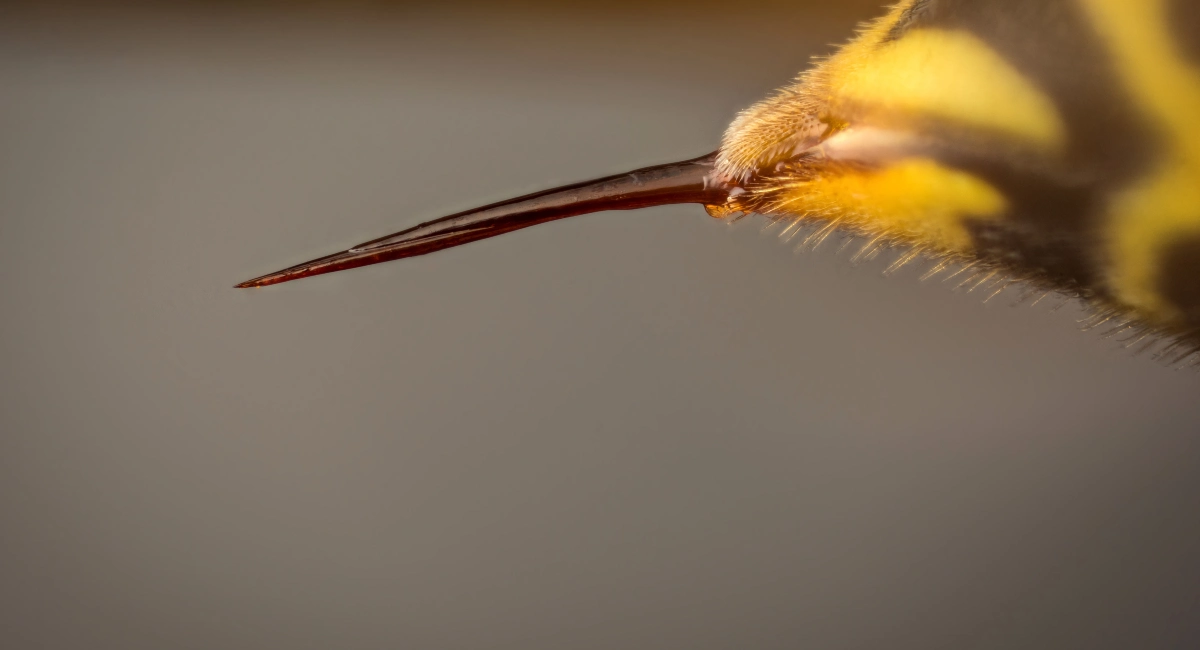
Wasps usually sting when they are trying to defend themselves. If you reach out to a wasp, it is going to perceive you as a threat and it will likely try to sting you. They also use their stingers and venom to paralyze food in order to take it back to their nest or to consume the insect they are eating.
Parasitoid wasps also use their stinger to paralyze insects and arachnids like spiders to then take back to their nest and then lay their eggs upon.
The thing to remember about wasps is that they do not lose their stingers like bees. Bees have stingers that are barbed on the end, so that the stinger pulls itself out, along with the bee’s intestines, which is why they die. Wasps have smooth stingers and can sting again and again. Thus, wasps do not die when they sting.
The wasp stingers, for most species, are retracted into the back end of the wasp. When they need to sting, the stinger juts out from the rear end of the insect and jabs at the object they are trying to sting. They have venom glands there, too, and can inject venom into the object they are stinging, which is especially true when the wasp is carnivorous and hunting for food. However, it is also possible for hornets and other species of wasp to inject venom into a person, too. It is this that can cause an adverse reaction to the sting and be medically significant and dangerous for some people.
There are species of wasp, such as the murder hornet, that is extremely large and carries with it a very, very potent venom. Because they tend to attack threats in a swarm and can sting over and over again, they have been known to inflict fatal injuries on people. However, this is generally rare in the stinging insect world.
How do wasps fly?
Wasps have wings. They are hard to see, but you can see them when the wasp is resting on something, such as a wall. They have wings that fold down over their backs and most species have multiple sets of wings. Wasps move their wings very fast, which generates wind and lift beneath their bodies and they can use this to lift into the air.
Wasps are generally pretty strong flyers. Unlike mosquitoes, most wasps can deal with fans if you are sitting outside on the porch. Some species of wasp have been known to chase after potential threats to their nests for very long distances, too. This is why angering a nest of wasps can be so dangerous. You can get stung multiple times by hundreds of insects and they will continue to sting again and again for maybe hundreds of yards before giving up.
Are there solitary wasps without nests?
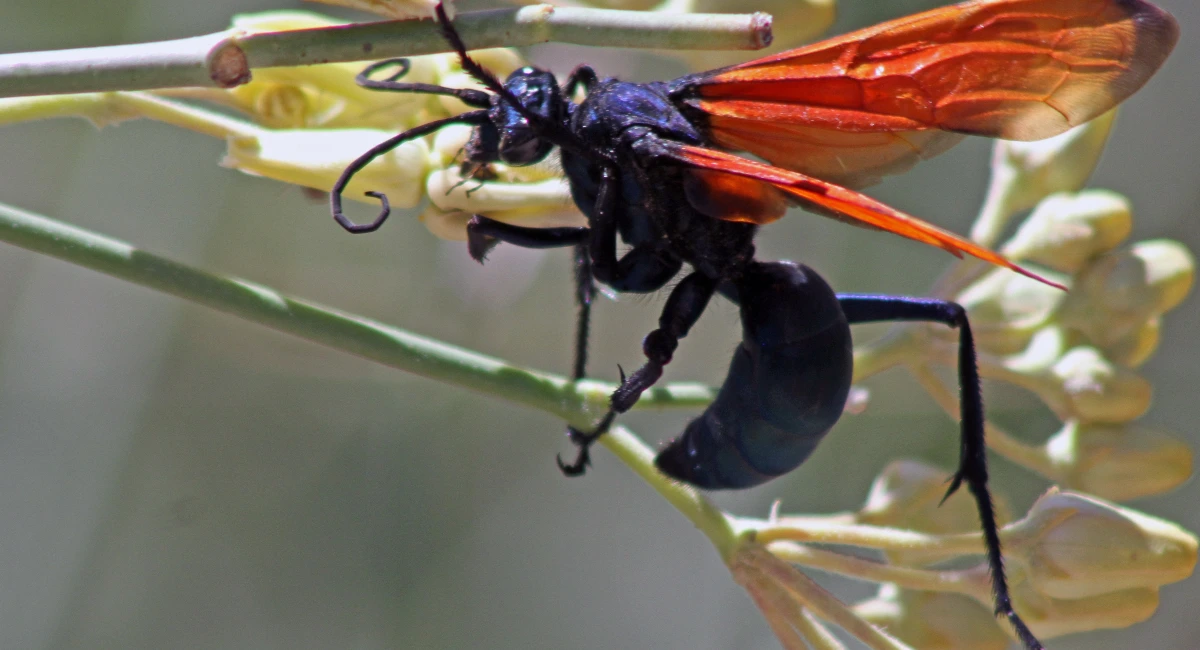
All wasps have some sort of nest, but if you are thinking of the nests you find in trees or under eaves, not necessarily. Solitary wasps are, by their very definition, on their own and they do not create huge colonies of wasps like their social cousins.
Solitary wasps sometimes build their smaller nests (like the Potter Wasp) and sometimes build their nests in the ground. Many of them burrow underground and create chambers into which they will lay their eggs. They do not create paper nests with multiple chambers like social wasps.
Some solitary wasps are parasitoid wasps and will drag insects or arachnids into their nests and then lay their eggs on their prey. The eggs hatch and burrow into the bodies of their host eggs and slowly devour their hosts, keeping the host alive until the wasp reaches maturity and bursts through and out into the wild again.
Are wasps good for the environment?
Overall, wasps are beneficial to the environment. Yes, they can be a nuisance and when a nest of wasps is near your home and family, they can really become a problem and carry a potential health risk. The fact is, wasps do have an important part of the overall health of the environment.
Most social wasps eat and feed on nectar from plants. Although wasps are less hairy than bees, meaning they pick up less pollen than their bee counterparts, they still play an important role in pollination. They still pick up pollen and transfer it to other plants to help propagate plant species. This is particularly true during the early spring months when plants and wasps start to emerge from their winter hibernation.
Even solitary, parasitoid and predatory wasps serve a benefit to the environment. In each case, these carnivorous insects feast on other pest insects. Flies, mosquitoes, spiders and other insects can all fall into the food purview of these flying insects. Having a few predator wasps around your garden can help remove some nuisance and potentially destructive pests, too, as they search for food for themselves and to bring back to their nests to feed their young.
What temperature is too cold for wasps?
When the temperature gets low, the wasps go away. It's hard to calculate exactly what temperature will cause wasps to hibernate, but generally, with social wasp colonies, only the queen hibernates during the winter. The rest of the colony will die in the cold winter months and the pregnant wasp queen will burrow into the ground or someplace warm and rest for the winter, needing to start the whole process of building a colony all over again.
It's a good rule of thumb that if the temps have dropped down to near freezing and there is frost on the ground, it's probably too cold for wasps. You may still see some sluggish worker wasps out and about during those months, but they will seem unable to move and may not try to get away from you if you approach.
Where do wasps hibernate?
Technically, wasps enter diapause rather than true hibernation. Only new queens survive winter; worker wasps and males die off once the colony's yearly cycle ends. Queens look for sheltered spots to hibernate, such as under loose tree bark, inside log piles, in wall cavities, attics, or other hidden crevices around a building.
Do wasps have predators?
Yes, wasps do have predators and they are sometimes the prey of other types of wildlife. Of course, it can be very risky for whatever animal decided to go after wasps or wasp nests since wasps are very territorial and will react by attacking anything that is going after their nests. However, some animal species either are not affected by wasps stings the way humans are or have developed ways to deal with the threat.
First off, of course, humans can attack wasps. Whether this is a person who finds a wasp's nest around their home and destroys the nest and the wasps within, or the fact that some cultures will eat wasp larvae.
Second, there are numerous animals that have been known to go after wasp nests. Some of these animals will gladly snack on the adults, but many species prefer to go after the larvae, as well. These animals include:
- Raccoons
- Bears
- Lizards and amphibians
- Birds
- Mice and rats
- Skunks
- Weasels
- Badgers
- Wolverines
- Bats
There are also other species of insect that have no problem using wasps for prey purposes. These include:
- Dragonflies
- Robber flies
- Centipedes
- Beetles (certain species)
- Moths
- Praying mantises
- Robber flies
- Other species of wasp
Of course, spiders will also very gladly go after a wasp that gets caught in their web, too, and even solitary hunter spiders will attack and prey upon wasps.
Wasp risks
Why are wasps aggressive?
Wasps become defensive mainly when they feel their nest is threatened. Vibrations, sudden movements, or getting too close can trigger them to protect their colony, which is why late summer often sees more aggressive encounters as nests reach peak size and food sources like nectar become scarcer.
Swatting or disturbing wasps can also make things worse, since it can provoke a defensive response from the whole colony.
Why do wasps attack?
Wasps are very territorial and they protect their nests and young. They will swarm and attack anything they perceive as a threat to their nest. So, they will attack you or anyone else who wanders too close to their nests. If you try to remove a wasp's nest and climb up a ladder to get close to them, they will perceive this as a threat and attack.
Do wasps attack unprovoked?
Wasps rarely attack without some kind of trigger, though that trigger isn't always obvious to us. Vibrations, fast movements, strong scents, or simply being too close to a nest can all be read as threats, even if no one meant to disturb it.
What are wasps attracted to?
The main thing that will attract wasps is food. They are always looking for food to bring back to their nests. Even solitary wasps spend the bulk of their lives searching for food sources and for food to bring back to their nests for their young to feast upon. So, if you have found wasp nests near and around your home, it's probably because they have found a food source nearby that they like and want to be close to.
Wasps can and do help control the insect population. As such, they may have found some insects that are on their diet around your home and this could be a whole different pest problem you need to deal with.
Wasps also like sweet things, much like bees. Wasps like rotten fruit, fruit juices, certain sweet meats and their favorite thing of all is nectar. If you have a garden with nectar-rich flowers or plants you run the risk of both bees and wasps finding your yard the perfect place to set up shop. Some plant species have evolved to deliberately release an insect-attracting scent in order to transfer pollen and continue the species.
Having food out on a picnic table can attract both bees and wasps. Open soda cans can also attract wasps. Keeping food covered and sealed up until consumed can help reduce the number of wasps around your yard, barbecue or backyard picnic. If you have fruit trees on your property, pick up and dispose of any fallen and rotting fruit as these are perfect to attract large numbers of wasps.
Wasps inside the home
How do wasps get inside a house?
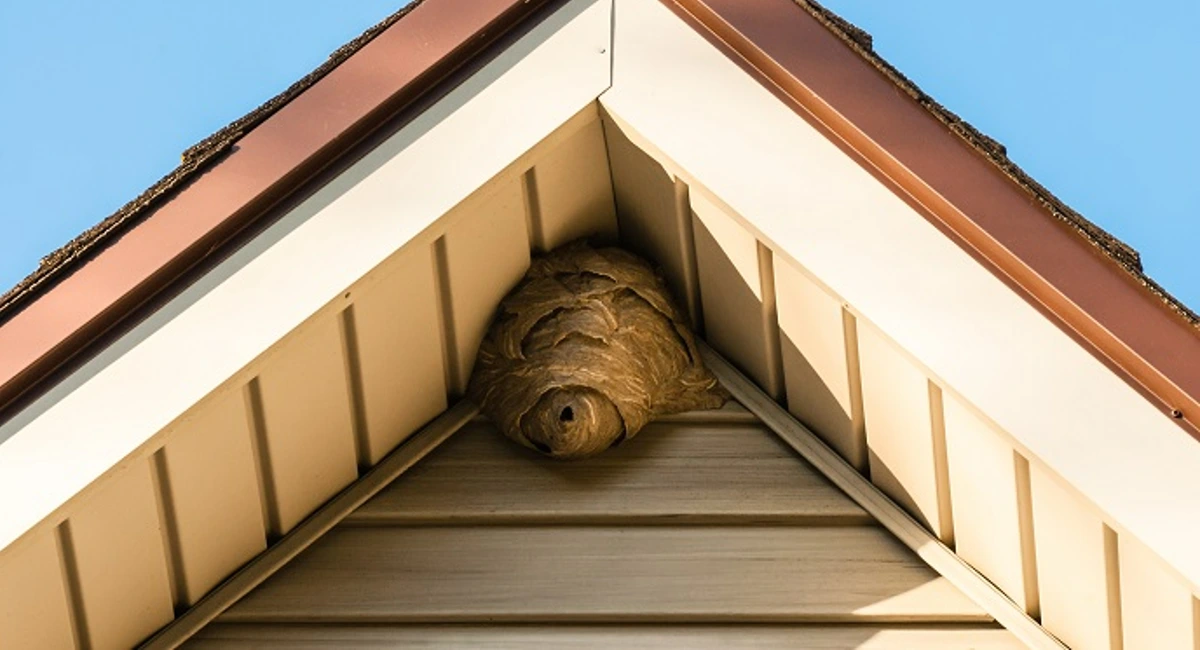
Wasps can get inside homes through open windows, windows without screens or holes in screens. They can get into open doors that do not have screen doors to protect the interior of the home.
Wasps will also build nests in wall cavities, which means when they start to hatch and build their nests, they can use any opening from within the wall cavity into your home to get inside. Wasps are narrow and small by comparison to the homes we all live in and any hole or opening in siding, the roof or other areas of the home is enough for them to get inside and set up nests. Sometimes holes made for electrical wires or cable television leave just enough space around them for wasps to get inside and build nests.
Where do wasps build nests in a home?
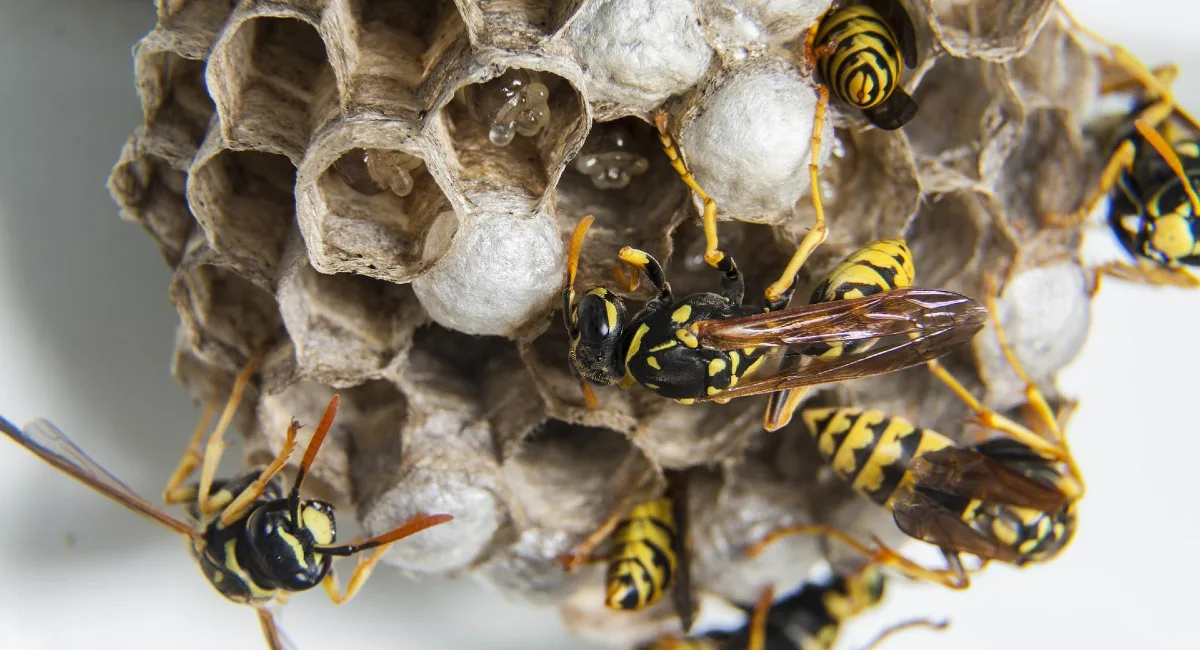
Wasps want to build their nests in a relatively sheltered place, preferably high off the ground and away from potential threats. This is why you will often find wasps nests in places like:
- Under eaves
- Beneath windows
- Inside wall cavities
- Inside attics
They can also build their nests around a home, which can give them easy access to the homes through open windows and doors. Areas such as:
- Hollow logs
- Around unused equipment or debris in the yard
- Trees near or around the home
- Piles of wood
Look for the nests high of the ground most of the time. There are species of wasp that build nests close or in the ground, but the most common social wasps will build their nests around second-floor windows and under the eaves of your rooftop. They will also build their nests quite high in surrounding trees.
How do you get rid of wasps in the home?
It is not recommended that you try to get rid of wasps on your own. They can be very dangerous. Climbing up a ladder to try and remove a wasp's nest is a sure way to end up attacked and stung. The best way to get rid of wasps is to prevent them from finding your property attractive.
- Keep vegetation and debris away from your home.
- Seal up windows or get screens for windows without them.
- Make sure you close doors during the warmer months to reduce the chance of wasps or other insects from getting inside.
- Keep the grass around your home short and make sure there is no unused equipment like abandoned cars, lawnmowers or bicycles in your yard.
- Hollow logs can also be great places for wasps nests, so remove those, too.
If you do find yourself stung, seek medical attention right away. This is especially true if you have been stung multiple times.
Of course, if you want to get rid of wasps with less risk to yourself and your family, contact your local Ehrlich Pest Control office. We can find where their nests are and remove the wasp's nest so that you get rid of the current infestation, but also offer advice on how to prevent them from returning.
Book your free pest inspection today
Our local technicians will assess your property and recommend tailored solutions. Fast, friendly, and completely obligation-free.
- Safe, targeted treatments
- Local experts, fast response
- Trusted, trained technicians