© 2026 Rentokil Initial plc and subject to the conditions in the legal statement.
Quick overview
- Sustainable rodent control uses data, not routine chemical baiting.
- Connected monitoring can reduce rodenticide bait use by up to 60%.
- Sensors flag activity fast, so treatment stays targeted.
- Less bait means less risk to wildlife and non-target animals.
- Cleaner records support food safety audits and compliance.
Sustainable rodent control is changing how facilities handle rats and mice, and technology is leading that shift. For years, the standard approach meant placing bait in stations and checking them on a fixed schedule, whether or not rodents were present. This traditional method is not only inefficient in terms of time, it also increases rodenticide usage and impacts the local environment. Today, connected monitoring gives your team a smarter option: track activity in real time, act only where it matters, and cut chemical use without cutting protection. For facilities managers in food, healthcare, and warehousing, that balance is becoming a priority.
Why routine baiting adds up
Traditional programs lean on scheduled visits, often weekly or monthly. Bait sits in stations between those visits as a "just in case" measure. The problem is that most of that bait goes unused, or worse, it can be consumed by a non-target species and also could still enter your facility and the surrounding environment.
Rodenticide overuse carries real consequences. Second-generation anticoagulants can cause secondary poisoning when predators such as owls or hawks eat affected rodents. Regulators have noticed. In the US, the EPA no longer registers second-generation anticoagulants for consumer products, limiting them to professional and structural pest control. That regulatory pressure keeps pushing the industry toward monitoring and non-chemical alternatives.
How technology reduces rodenticide use
Connected rodent control flips the model. Instead of guessing when rodents are active, sensors watch continuously and report the moment something changes, and begin the use of rodenticide immediately. That single shift is what drives the drop in chemical use.
Monitoring replaces constant baiting
Digital devices detect movement or capture events and send an alert with the exact device, date, and time. Your provider responds to confirmed activity rather than restocking bait on a calendar. Ehrlich's PestConnect system has been shown to reduce rodenticide bait use by up to 60% compared with non-connected programs, based on customer sites that made the switch.
Data keeps treatment targeted
Every alert feeds into a reporting portal, so patterns become clear over time. If activity clusters near a loading dock, your team can focus on exclusion and sanitation there instead of spreading bait across the whole site. This is integrated pest management in action, where prevention and monitoring do the heavy lifting and chemicals become a last resort.
Non-toxic options fill the gaps
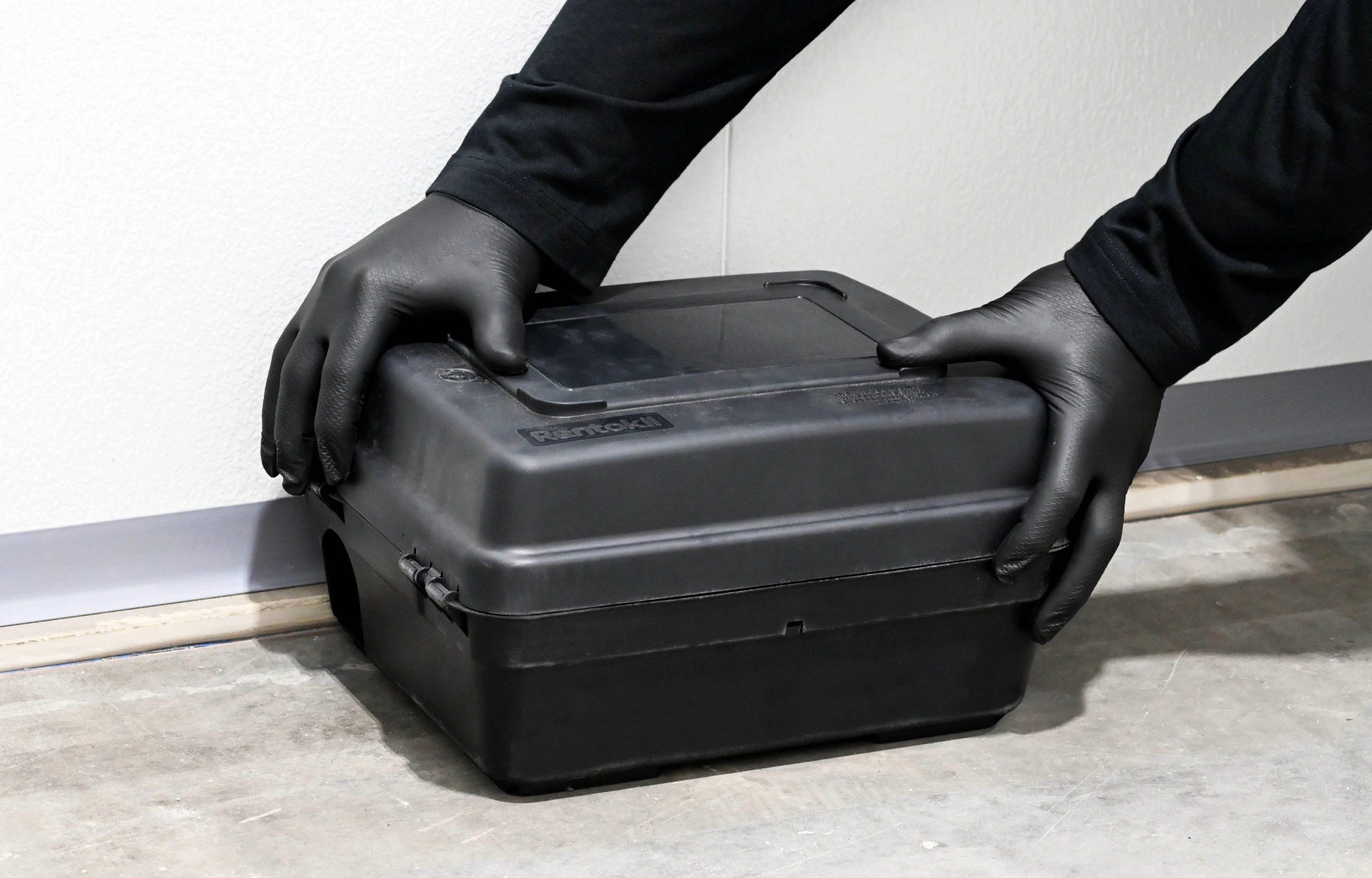
Not every device needs bait at all. Some connected traps capture rodents mechanically or use a controlled method that avoids toxic bait entirely. That means continuous coverage in sensitive zones like food prep areas, with far less reliance on rodenticide.
What this means for your facility
The environmental case is clear, but the business case is just as strong. Less bait handling supports cleaner audit trails, which matters if you answer to food safety schemes or health inspectors. Connected records show exactly what was found and when, so you can prove due diligence with a few clicks.
There is a compliance angle too. Rentokil's 2025 State of the Rodent Report notes that new state rules, including a one-year rodenticide ban in South Carolina, are already reshaping how facilities manage rodents. Programs built on monitoring rather than routine baiting are better placed to adapt as those rules spread.
A more sustainable path forward
Sustainable rodent control is not about doing less. It’s about doing the right thing at the right time, backed by data. By pairing continuous monitoring with targeted action, facilities can protect people and products while shrinking their chemical footprint. For property and operations teams weighing their next move, the technology is ready and the results are measurable.
Reduce rodenticide use with PestConnect
Ready to rethink your rodent program? Ehrlich's PestConnect combines round-the-clock monitoring with targeted response, helping you reduce rodenticide use while keeping your facility protected and audit-ready. Talk to us today about a free inspection and let an Erhlich expert help build a plan around your site.
Schedule your free pest inspection today
Get peace of mind knowing your home or business is protected. Our technicians will assess your property and recommend customized solutions.
Book your free pest inspection today
Our local technicians will assess your property and recommend tailored solutions. Fast, friendly, and completely obligation-free.
- Targeted treatments, applied safely
- Local experts, fast response
- Trusted, trained technicians