© 2026 Rentokil Initial plc and subject to the conditions in the legal statement.
Quick overview
- The exterminator bill is the smallest part of the cost.
- Rodents contaminate around 20% of the world's food supply.
- Gnawed wiring is linked to about 20% of unexplained fires.
- One sighting can trigger a failed inspection or closure.
- Early detection keeps small problems from becoming big bills.
When facility managers think about the cost of a rodent infestation, most picture the price of a service call. That number is real, but it is the least of your worries. The expensive part of a rodent problem is everything that happens around it: contaminated product, downtime, damaged equipment, a failed inspection, and customers who saw something they shouldn’t have. Those costs add up fast, and most of them never show up on a pest control quote.
Here is where the real money goes, and why catching activity early matters more than ever.
The rodent control costs you can see
The direct costs are the obvious ones. Treatment, follow-up visits, and exclusion work to seal entry points all carry a price. For a large or entrenched commercial rodent problem, those numbers climb with the size of the building and the severity of the activity.
But direct treatment is usually a small fraction of the total. The bigger hit comes from the damage rodents do before anyone acts.
Rodent infestation costs you don’t see coming
This is where a rodent problem gets expensive. The damage rodents do to buildings, wiring, and inventory can dwarf the cost of removal, and very little of it shows up on a service quote.
Property and equipment damage
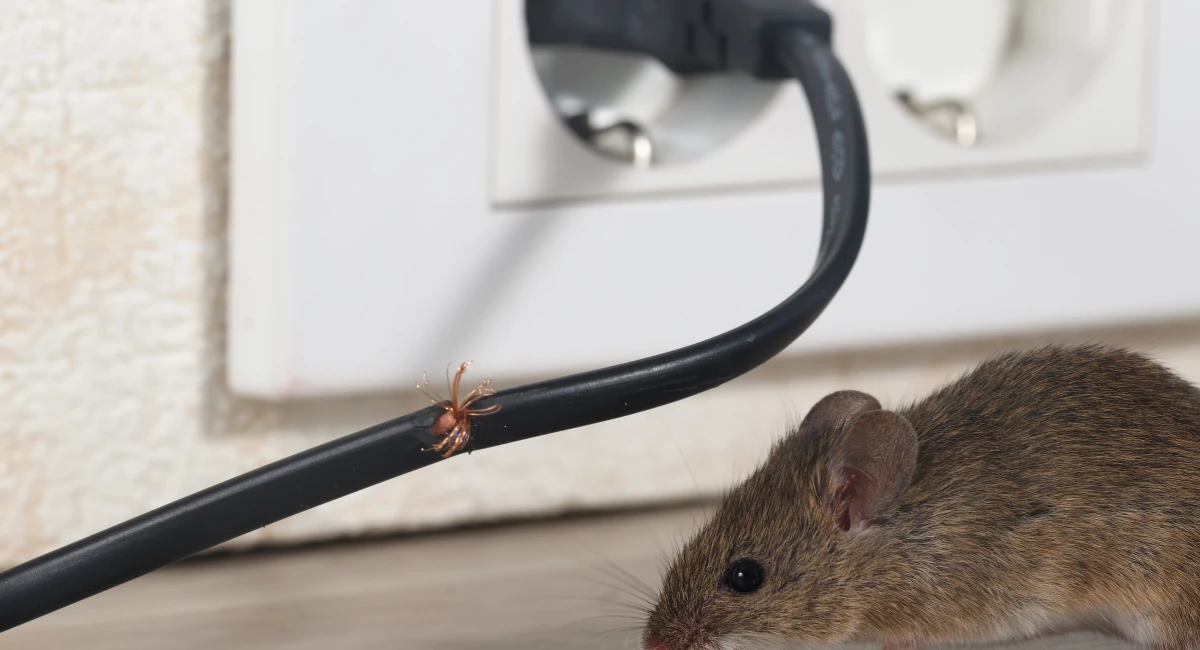
Rodents chew constantly because their teeth never stop growing. That means gnawed wiring, damaged insulation, and compromised HVAC systems. The wiring issue is the one that keeps facility managers up at night: gnawed wires are suspected in roughly 20% of unexplained structure fires.
Contaminated product and lost inventory
Rodents contaminate far more than they eat. Droppings, urine, and hair can ruin entire product lots and force disposal. Rodents are believed to contaminate about 20% of the world's food supply each year. For a food and beverage or commercial operation, a single contamination event can mean a recall.
Downtime and failed inspections
A rodent sighting during a health inspection can trigger violations, fines, or a forced closure. Every hour a production line or restaurant sits idle is revenue lost. In food production, healthcare, and hospitality, a failed audit can also put certifications and contracts at risk.
Reputation damage
This one lingers longest. A single photo of a rodent can travel further than any marketing campaign and a single pest sighting has the potential to ruin an establishment's reputation. Even after the problem is solved, those posts and reviews stay online and keep costing you business.
Why the risk window is now open all year
Rodent problems used to be predominantly a cold-weather concern. That has changed. Rentokil's 2025 State of the Rodent Report found that rodent pressure is shifting toward a year-round pattern, with peak activity moving into spring and summer breeding months. For your facility, that means the window for a costly incident is no longer seasonal. It is open twelve months a year.
The takeaway for cost control is simple. Waiting for the next scheduled visit to find out something is wrong gives a small, cheap problem time to become a large, expensive one.
How early detection keeps costs down
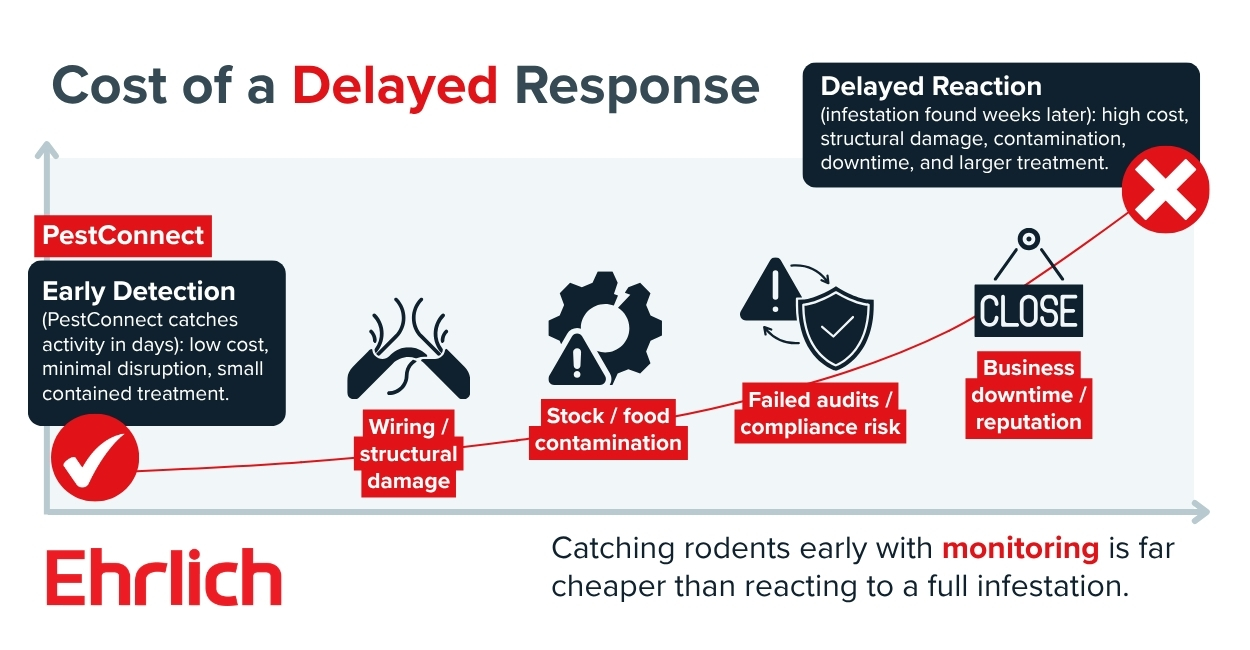
Almost every hidden cost mentioned shares one root: the problem was found too late. That is exactly what continuous monitoring is built to fix. Catching activity when it starts, rather than weeks later, is the difference between a quick response and a recall.
Continuous monitoring also cuts treatment costs in another way. Because problems get resolved before they escalate, connected systems have been shown to reduce rodenticide use by up to 60%, which trims chemical costs and supports year-round rodent control with less waste.
Catch problems early with PestConnect
The cost of a rodent infestation is really the cost of finding out too late. PestConnect uses connected monitoring to track rodent activity 24/7 and alert your local Ehrlich team the moment something is detected, so issues get handled before they turn into downtime, damage, or a failed audit. To see how it would protect your facility and your budget, request a free inspection with your local Ehrlich team.
Schedule your free pest inspection today
Get peace of mind knowing your home or business is protected. Our technicians will assess your property and recommend customized solutions.
Book your free pest inspection today
Our local technicians will assess your property and recommend tailored solutions. Fast, friendly, and completely obligation-free.
- Targeted treatments, applied safely
- Local experts, fast response
- Trusted, trained technicians