© 2026 Rentokil Initial plc and subject to the conditions in the legal statement.
Quick overview
- 24/7 pest monitoring builds an unbroken record auditors want to see.
- Auditors reward early detection and fast response, not luck.
- A missing trap log entry can fail an audit on its own.
- Trend data shows problems developing before a sighting.
- Continuous coverage keeps you audit-ready all year.
If your facility answers to a third-party auditor, 24/7 pest monitoring is one of the most useful tools you can put behind your pest control plan. Audits do not just check whether pests are present. They check whether you can prove your program is working, day after day, with clean records to back it up. That proof is exactly what continuous monitoring is built to produce. For a food plant, warehouse, or healthcare site, it can be the difference between a smooth audit and a costly non-conformance.
What auditors really want to see
This surprises a lot of facility managers: auditors are not looking for a site with zero pest activity. They know pests exist. What they are grading is your process. Can you detect activity early? Do you respond in a systematic way? Can you show improvement over time?
That shift from outcome to process matters. You cannot promise a pest will never appear. You can prove that your program catches it fast, responds correctly, and documents every step. A facility with early detection and clear records is in a stronger position than one that has never logged a pest but cannot show how it monitors.
The records that make or break an audit
Most audit findings come down to paperwork, not pests. Three record types cause the most trouble.
Trap logs with no gaps
Auditors compare your written schedule against your actual logs. One missing inspection week reads as a program that is not being managed, even if nothing happened that week. With paper systems, gaps like these are a common finding. Continuous monitoring records every reading automatically, so there are no blank weeks to explain.
Corrective actions closed on time
When a device detects activity, most standards require a documented response within a defined window. An open corrective action at audit time is often an automatic finding. A connected system alerts our technicians and triggers a response (e.g. showing up on-site quickly to confirm pest activity and logging it), providing you with the visibility of when the issue was caught and resolved.
Trend analysis, not just raw numbers
Standards increasingly expect you to analyze data for trends, not simply record it. Rising activity in one zone should trigger a look before anyone sees a pest. Because monitoring runs constantly, our technicians are able to analyze trends and often anticipate a pest issue and respond before it becomes an infestation.
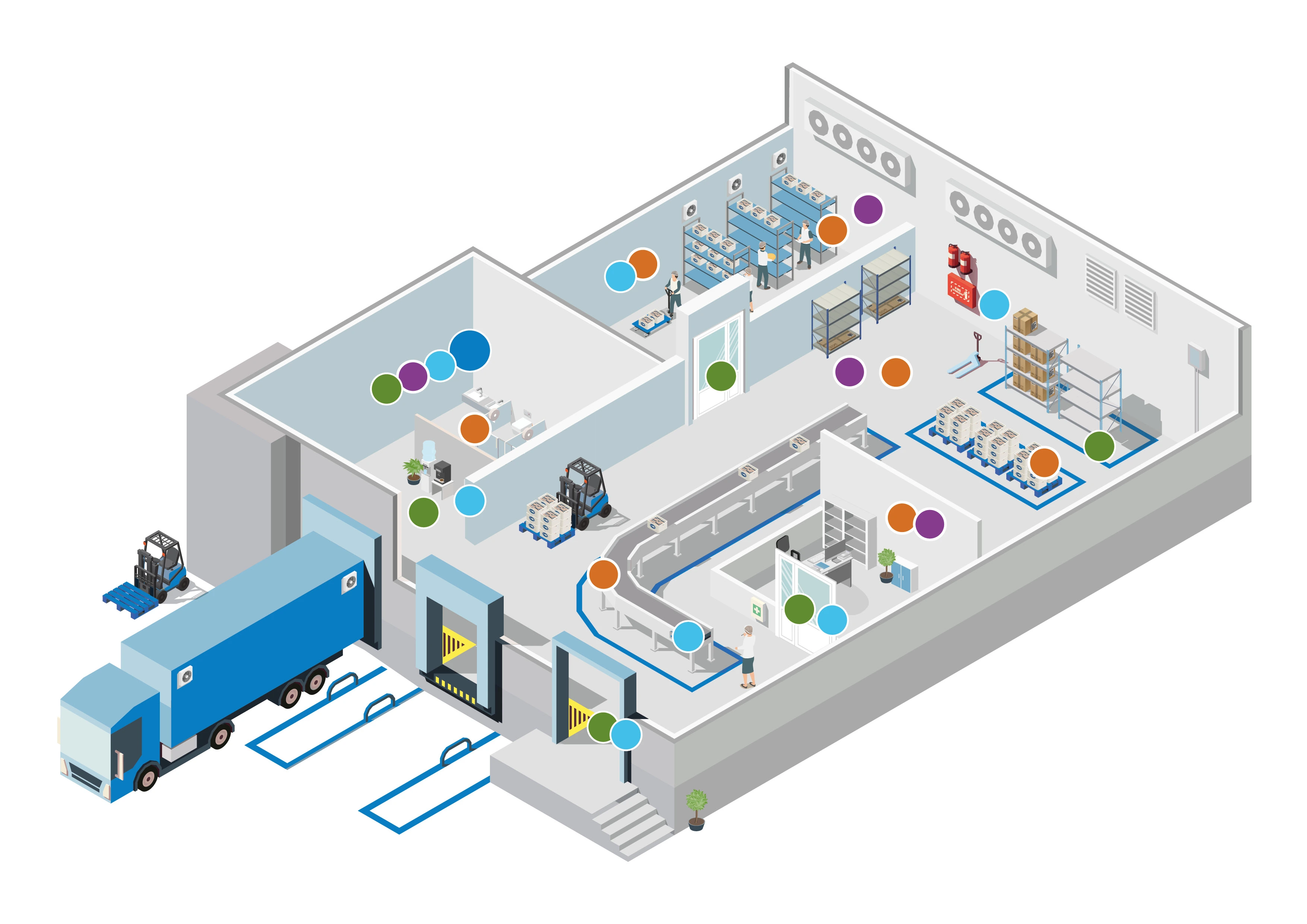
Where 24/7 monitoring changes the math
A traditional service contract might mean weekly visits, roughly 52 hours of coverage a year. In a quarterly plan, that can drop to about four hours. Everything between visits is a blind spot.
Connected monitoring runs 8,760 hours a year. That does two things for compliance. First, it catches activity when it starts, which is the early detection auditors reward. Second, it produces a continuous digital record instead of a binder someone fills in by hand. When an auditor asks for six months of data from a specific zone, the answer is a filtered report, not days of searching.
The frameworks this supports
Whether you answer to FSMA and FDA rules, or a GFSI-benchmarked scheme the common thread is documented, monitored, and managed pest control. These standards want monitoring records, corrective action records, trend data, and current device maps. Pest issues are also among the most frequently cited problems in FDA food-facility inspections, and the stakes are high. A single recall averages around $10 million in direct costs. Strong records are cheap insurance against that.
Stay audit-ready with PestConnect
Passing an audit is really about proof, and proof is what continuous monitoring delivers. PestConnect tracks activity 24/7, timestamps every alert and response, and gives your local Ehrlich team the records and year-round rodent data that auditors expect to see. To get your facility audit-ready before your next inspection, request a free inspection with your local Ehrlich team.
Schedule your free pest inspection today
Get peace of mind knowing your home or business is protected. Our technicians will assess your property and recommend customized solutions.
Book your free pest inspection today
Our local technicians will assess your property and recommend tailored solutions. Fast, friendly, and completely obligation-free.
- Targeted treatments, applied safely
- Local experts, fast response
- Trusted, trained technicians