© 2026 Rentokil Initial plc and subject to the conditions in the legal statement.
Quick overview
- In healthcare, there is no acceptable level of rodent activity.
- One sighting can trigger an infection risk and a failed survey.
- Rodents carry pathogens dangerous to vulnerable patients.
- Activity often starts between scheduled service visits.
- Around-the-clock monitoring watches when inspectors and staff cannot.
In a hospital or clinic, a single rodent can prove to be a pathogen risk to immunocompromised patients and a red flag for regulators. That is why the importance of rodent control for healthcare facilities extends far beyond cleanliness. It is about patient safety, infection control, and passing the surveys your accreditation depends on. This guide covers why healthcare faces near-zero tolerance for rodents, where traditional service leaves you exposed, and how continuous monitoring helps facilities catch activity before an inspector or a patient ever does.
Why healthcare has zero tolerance
Most businesses can absorb the occasional rodent sighting. Healthcare cannot. Regulators and accreditation bodies expect a proactive, documented program, and they audit for it. Hospitals that accept Medicare must maintain a sanitary environment free from sources of contamination under the CMS Conditions of Participation (42 CFR Part 482).
The reason for that scrutiny is the patient. Rodents carry pathogens and can contaminate sterile supplies, and the people in a hospital are exactly the ones least able to fight off an infection. That is why a single confirmed rodent sighting in a sensitive area can trigger an emergency response instead of a routine one.
Why rodents are a healthcare problem
Rodents are drawn to the exact conditions hospitals run on: warmth, food service, constant deliveries, and around-the-clock activity. That makes them a persistent threat to both patients and compliance.
- They carry disease. Rodents can spread pathogens and contaminate sterile storage, medication areas, and dietary departments.
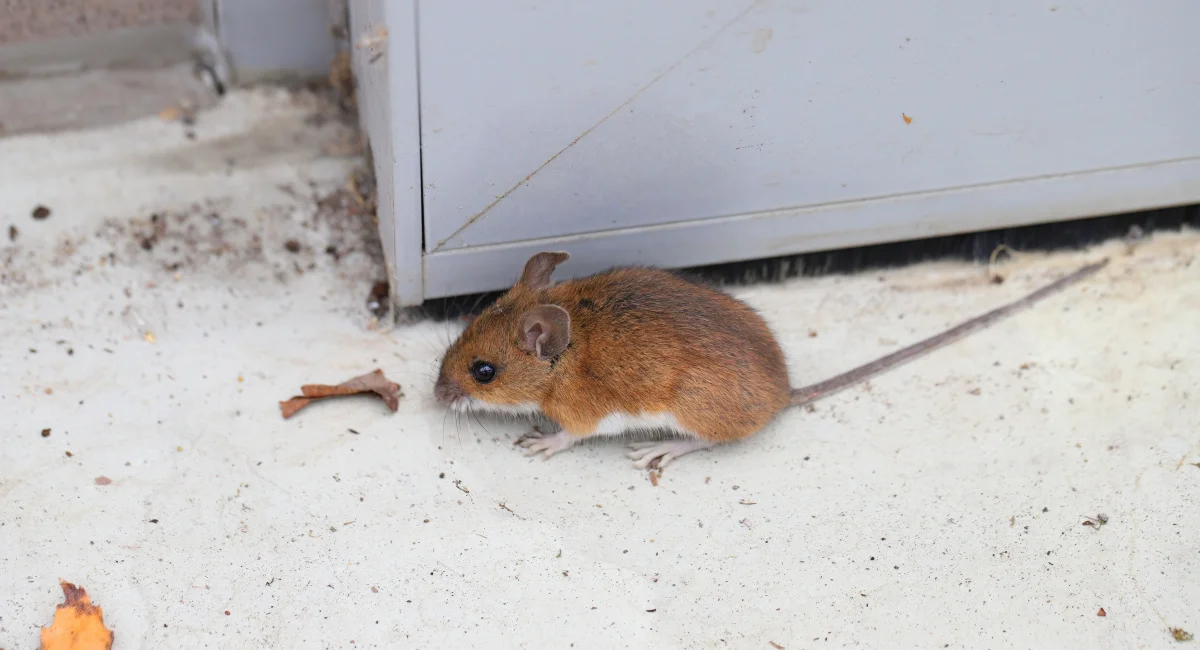
- They get in easily. Mice slip through gaps the size of a dime, often at loading docks, utility penetrations, and mechanical rooms.
- They do hidden damage. Gnawing through wiring and drywall creates problems in the walls long before anyone sees the animal.
A strong healthcare pest control program manages this through exclusion, sanitation, and monitoring. The weak point is rarely the plan. It is the time between visits.
The gap between visits
Even the best-run programs share one blind spot: time. Scheduled service is built around visits. A technician arrives, checks devices, treats what they find, and leaves. The plan is sound, but it only sees the building in snapshots. Everything that happens between those snapshots goes unrecorded.
Add it up and a typical schedule accounts for only about 52 hours of attention across a year. The other 8,760 hours, the ones when your facility is treating patients, receiving deliveries, and running dietary services around the clock, pass without eyes on the problem. A rodent that turns up the morning after a visit has weeks to settle into a utility chase or storage room before anyone is due back. In a setting where the next survey is unannounced and the nearest patient may be immunocompromised, weeks is far too long.
Why timing is the whole game
Accreditation surveys are often unannounced, so you never get to pick the day. Catch rodent activity early in a back corridor and you resolve it quietly, with a clean record to show for it. Miss it until it turns up on the day of a survey, and you are managing a deficiency, a corrective action plan, and a threat to your accreditation. Speed is what keeps a rodent issue a logbook entry instead of a survey finding.
How connected monitoring closes the gap
Connected rodent control turns those blind hours into continuous coverage. Sensors housed inside monitoring devices stay active around the clock, so activity is picked up the moment it happens rather than at the next visit. When a device is triggered, the system logs the event, notifies your local team right away, and sets a rapid response in motion, closing the window that a scheduled model would have left open.
That kind of coverage earns its keep in the parts of a facility patients rarely see but surveyors always check: loading docks, dietary areas, soiled utility rooms, and central storage. Every detection and response is captured with a time stamp, giving you the kind of documented, integrated pest management trail that CMS and Joint Commission surveyors look for. So rather than trusting that nothing stirred between visits, you can show exactly when activity occurred and how quickly it was dealt with.
Stay ahead of rodents with connected monitoring
In healthcare, the goal is simple: catch rodent activity before it reaches a patient or a surveyor does. Ehrlich's PestConnect keeps watch on rodent activity around the clock, notifies your local Ehrlich team the instant a device is triggered, and time-stamps every event so your documentation holds up between service visits.
Backed by more than a decade in the field, it gives your facility earlier warning, stronger protection for vulnerable patients, and a clean, defensible record when the next survey arrives unannounced. Get in touch to request a free inspection and talk through how connected monitoring would fit your facility.
Schedule your free pest inspection today
Get peace of mind knowing your home or business is protected. Our technicians will assess your property and recommend customized solutions.
Book your free pest inspection today
Our local technicians will assess your property and recommend tailored solutions. Fast, friendly, and completely obligation-free.
- Targeted treatments, applied safely
- Local experts, fast response
- Trusted, trained technicians