© 2026 Rentokil Initial plc and subject to the conditions in the legal statement.
Quick overview
- Ants can nest deep inside wall voids, making them harder to spot and treat.
- Carpenter ants, odorous house ants, and Pharaoh ants are the most common culprits.
- Scratching sounds, frass, and ant trails on walls are key signs of a nest.
- Professional treatment targets the colony at its source for longer-lasting results.
Finding ants coming and going from cracks or holes in your walls is a bit more unsettling than spotting a trail across your kitchen counter. When ants nest inside the walls of your house, they're harder to find and harder to treat. Depending on the species, they can also cause real damage over time. The good news is that with the right approach, you can deal with the problem effectively.
Why are there ants in my walls?
The ants are looking for three things: warmth, moisture, and shelter. Wall voids can offer all of these, making them ideal nesting spots, especially during colder months or periods of heavy rain.
Ants will enter your walls via:
- Cracks and gaps in the foundation or exterior
- Gaps around utility pipes, wires, and conduits
- Damaged or rotting wood near windows, doors, or rooflines
- Weep holes in brick or masonry
Moisture is a major draw. Areas with leaky pipes, poor ventilation, or water-damaged wood are particularly attractive to certain ant species. Our expert ant control technicians know exactly what draws ants in and how to prevent them.
Which ants nest inside walls?
Not all ants on walls are nesting there; some are simply foraging. But a few species are well known for setting up colonies in wall voids. Knowing which species you're dealing with matters as treatment methods may differ between species. Below we look at some of the main culprits.
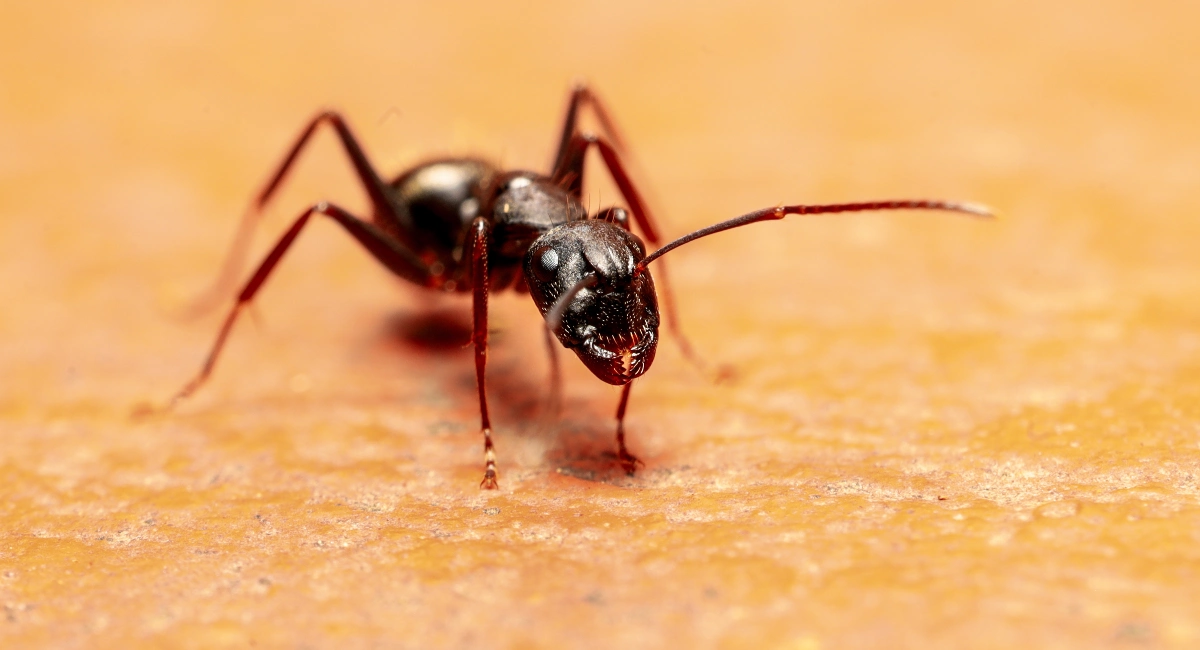
Carpenter ants
The most common culprit. They excavate wood to build smooth tunnels and galleries, preferring moist or softened timber. They don't eat wood, but the damage they can cause to structural lumber can be significant if left untreated.
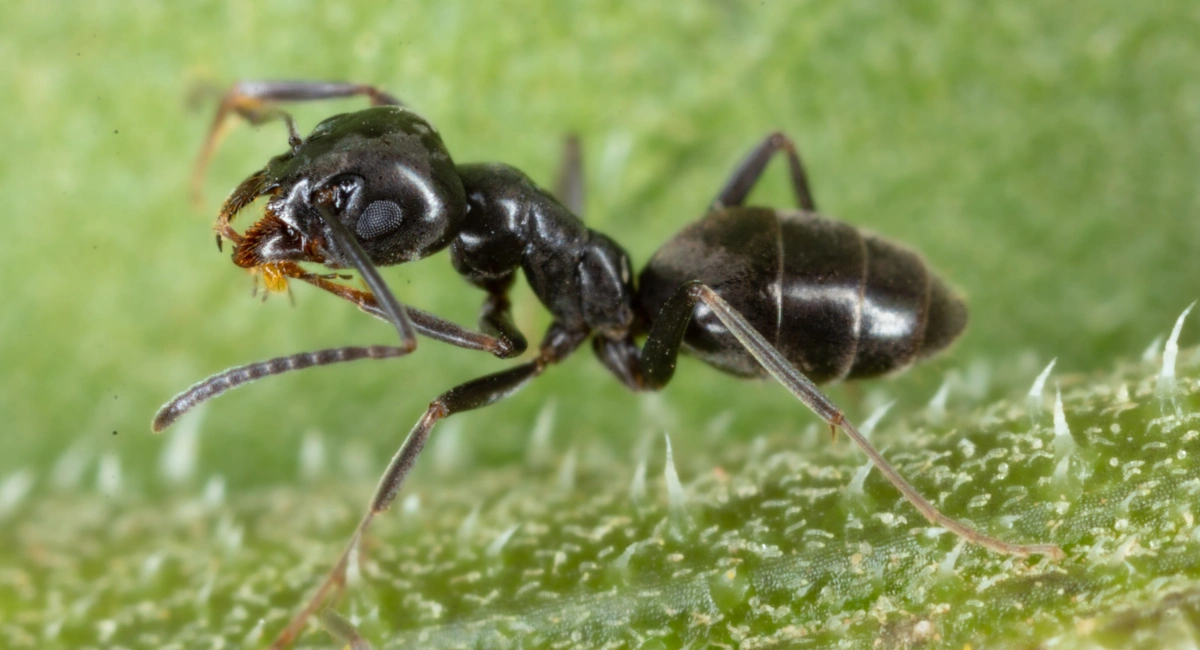
Odorous house ants
Small, dark ants that often nest in wall voids near moisture sources like pipes or insulation.
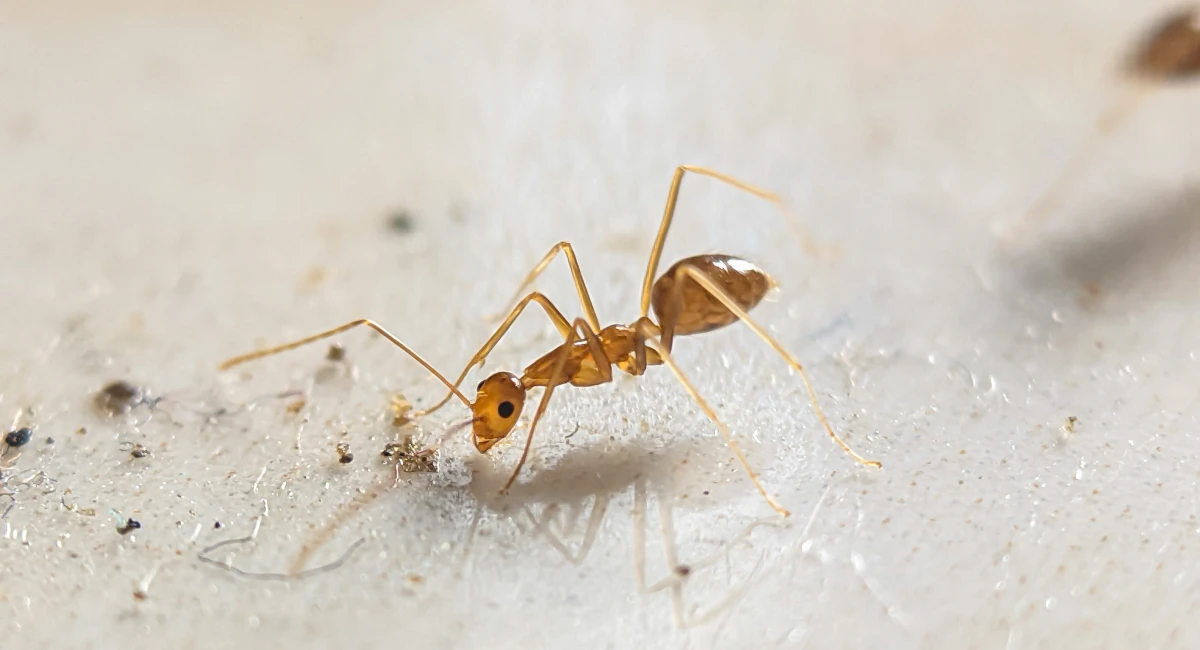
Pharaoh ants
Tiny, pale ants that thrive in warm, humid spaces and are notorious for nesting deep inside walls, making them particularly tricky to treat.
Signs of an ant nest in your wall
Ants in the walls of your house can go undetected for a while. Here are the key signs to watch for:
- Ants emerging from gaps: If you're seeing ants coming through walls, particularly around baseboards, electrical outlets, or window frames, there's likely a nest nearby.
- Rustling or faint scratching sounds: Carpenter ants are most active at night. A faint rustling inside the walls, especially after dark, can indicate activity.
- Sawdust-like frass: Small piles of fine, wood-shaving material near baseboards or below wall openings are a telltale sign of carpenter ants excavating inside. This can also be a sign of termites, so it’s best to get a professional inspection to find out what you’re dealing with.
- Trails of ants on walls: A consistent line of ants on the wall, particularly leading to or from a single point, suggests a nearby nest.
- Winged ants indoors: Seeing flying ants emerge from walls or ceilings is a strong indicator of a mature, established colony.
Top tips for getting rid of ants in walls
There are some DIY steps that may help reduce activity, but it’s important to be realistic about their limitations.
- Place bait near entry points: Ant bait placed close to where ants are entering can be carried back to the colony. This is one of the more effective DIY approaches, as it targets the source rather than just the visible ants.
- Seal entry points: Caulking cracks around baseboards, pipes, and window frames can help cut off access routes and reduce the chance of re-entry.
- Address moisture issues: Fixing leaky pipes or improving ventilation in damp areas removes one of the main reasons ants are attracted to your walls in the first place.
That said, DIY methods rarely solve an established wall infestation on their own. Ants leave pheromone trails that persist long after any surface treatment, and colonies hidden inside wall voids are simply out of reach of most store-bought products.
Why professional treatment works better
Getting rid of ants in walls in the longer term means targeting the entire colony and not just the ants you can see. That requires the right products, applied in the right places, by someone who knows where to look.
Ehrlich technicians are trained to identify the species, locate satellite nests, and apply treatments that reach deep into wall voids where the colony lives. Ant control is strongly recommended for species such as carpenter ants, as they can cause structural damage.
Book your free pest inspection today
Our local technicians will assess your property and recommend tailored solutions. Fast, friendly, and completely obligation-free.
- Safe, targeted treatments
- Local experts, fast response
- Trusted, trained technicians