Temps and termites are on the rise. Schedule your free inspection today.

800-837-5520 Call us for a free quote Contact us

American dog ticks

American dog ticks (Dermacentor variabilis) are one of the most common tick species found in the eastern half of the United States. These pests often appear in yards, on trails, and in parks, especially during the spring and summer. They feed on the blood of both animals and humans. 

While not every tick bite leads to illness, it’s important to stay alert to local American dog tick behavior, as they can carry diseases that may be a danger to you or your pets.

What are American dog ticks?

American dog ticks are a type of hard tick with a tough outer shell, known as a scutum. This hard shield covers part of their back and gives them protection while they feed. They belong to the same family as deer ticks, but they tend to live in different areas and feed on different animals. You will often see them in places where dogs, raccoons, or other medium-sized animals roam.

These ticks are not just a nuisance; they pose a significant health risk. That’s because they are known to carry bacteria that may cause Rocky Mountain spotted fever and tularemia. While these diseases are rare, it’s best to be vigilant.

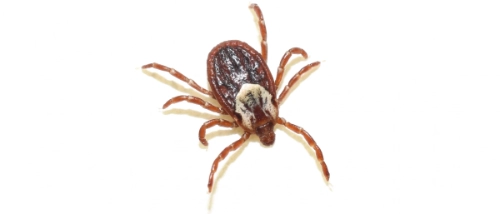
An American dog tick on white background

American dog tick: Size and identification

American dog ticks can be relatively easy to identify as they are larger than many other types of ticks. Adult females can grow up to half an inch long when fully fed. They have a reddish-brown body with silver or gray markings on their backs. Males are smaller and have more detailed patterns across their backs.

Before feeding, their bodies are flat and oval. After feeding on blood, their bodies swell and become rounder. They have eight legs, like all adult ticks.

The life cycle of American dog ticks

The American dog tick life cycle happens in four stages: egg, larva, nymph, and adult. This can take up to two years, depending on the weather and the availability of hosts.

  • Eggs: Female ticks lay thousands of eggs in the soil.
  • Larvae: Once hatched, the tiny larvae find small animals like mice or birds to feed on.
  • Nymphs: After feeding, larvae drop off, shed their skin, and become nymphs. Nymphs then look for another host.
  • Adults: After one more molt, they become adults. Adults prefer larger animals such as dogs, raccoons, or humans.

American dog tick: Diet and habitat

Ticks do not actively chase after animals or people. Instead, they use a behavior called “questing.” A tick will climb to the top of a blade of grass or low plant and stretch out its front legs. When it senses body heat, movement, or even the carbon dioxide from a passing host, it quickly grabs on.

Preferred environments of American dog ticks

These ticks inhabit grassy, brushy, or wooded areas, where they can easily come into contact with animals or people. They favor areas with humidity and are especially common along the edges of forests, in overgrown fields, and near trails or roadsides where wildlife and pets often pass through. These environments provide the cover and moisture the ticks need to survive while they wait for a host.

Even your backyard can attract ticks if there is enough shade, moisture, and wildlife. While they do not survive well indoors, this species of tick can get inside your home by attaching to clothing or pets.

Managing American dog ticks

The most effective way to manage any type of tick is through preventive measures. This includes keeping your yard tidy, applying tick prevention treatments to your pets, and watching for early signs.

A dog owner applying tick prevention treatment

Preventing infestations of American dog ticks

To help prevent tick activity around your home:

  • Keep grass trimmed and bushes cut back
  • Remove leaf piles and brush
  • Use vet-approved tick prevention for pets
  • Seal up fences to keep wild animals out
  • Add a gravel or mulch barrier between wooded areas and your lawn
  • Wear long clothing in tall grass and wooded areas
  • Check your body, clothes, and pets after being outside.

Taking small steps now can help lower the risk of ticks becoming a bigger issue later. For more detailed advice on how to handle a tick issue, visit our page on how to get rid of ticks.

Book your free tick inspection today

If you are seeing ticks regularly or finding them on your pets, it is a good time to reach out to your local Ehrlich tick control professional. Our trained technicians use trusted, targeted treatments to help reduce tick activity around your home and yard. 

We start with a free initial inspection to assess the situation and recommend the best course of action for your property.

Frequently asked questions

Adult American dog ticks are larger than many other ticks. Before feeding, females are about 3/16 inch long. After feeding, they can grow up to half an inch. Males are smaller and do not swell as much after feeding.

These ticks live in grassy, brushy, and wooded areas. They are especially common in the eastern half of the United States. You might find them in overgrown lawns, along trails, or near forest edges where pets and wildlife pass through.

Yes, American dog ticks can bite humans. They attach to the skin and feed on blood. While their bites are usually painless, they can sometimes cause irritation or pass bacteria that may lead to illness.

American dog ticks can carry bacteria that may cause diseases like Rocky Mountain spotted fever and tularemia. These illnesses are serious but rare.

Find your local branch

Enjoy protection from 39 common pests and get peace of mind with our annual residential pest control program, PestFree365+.