Temps and termites are on the rise. Schedule your free inspection today.

800-837-5520 Call us for a free quote Contact us

Do I have bed bugs or lice?

Bed bugs and lice are both small, blood-feeding parasites, and it's easy to confuse the two. But they're actually very different pests that live in different places, behave differently, and need very different solutions.

Bed bugs vs lice: the key differences at a glance

Other than their size (bed bugs are larger than lice, and have a reddish-brown color), where they live is the biggest distinction. 

Where they live: Bed bugs hide in mattresses, furniture, and cracks in your home, coming out mostly at night to feed. Lice, on the other hand, live directly on the human scalp or body and feed multiple times throughout the day.

Where they lay their eggs: Bed bug eggs are loose and tucked into crevices around your home. Lice eggs, known as nits, are firmly attached to individual hair strands and much harder to remove.

How they spread: They also spread in completely different ways, because bed bugs like to hitchhike on luggage, furniture, and clothing, whereas lice spread almost entirely through direct head-to-head contact with an infected person.

Treatment: Lice are a medical issue. A pharmacist or doctor can advise on the right shampoos and combs to remove nits. Bed bugs, on the other hand, are a pest control problem. Because they hide deep in your home, in mattresses, furniture, and wall crevices, DIY methods rarely do the job. Our bed bug exterminators use proven treatments, including heat, to reach bed bugs wherever they're hiding.

Now, let’s take a closer look at each pest.
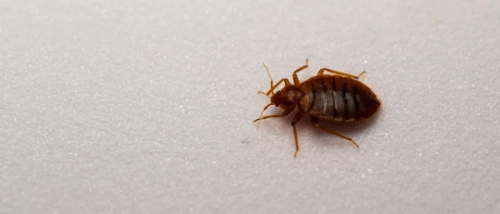
A bed bug on a white fabric surface, showing its distinctive reddish-brown oval body

What do bed bugs look like?

Knowing the basics of bed bug identification can help you act fast. Bed bugs are small, flat, and oval-shaped, roughly the size of an apple seed. After feeding, their bodies swell and become more elongated and darker. 

  • Size: About 1/4 inch long
  • Color: Reddish-brown; darker and more swollen after a blood meal
  • Shape: Flat and oval when unfed
  • Legs: Six legs, no wings
  • Eggs: Tiny, white, and about 1 mm, roughly the size of a pinhead.
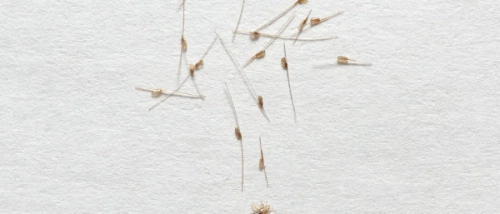
A head louse and nit casings attached to human hair strands

What do lice look like?

Lice are smaller than bed bugs, usually whitish-gray or tan in color. There are three types that affect humans: head lice, body lice, and pubic lice. Head lice are by far the most common.

  • Size: Less than 1/8 inch long
  • Color: Whitish-gray or tan
  • Shape: Oblong, with a narrower body than a bed bug
  • Legs: Six legs with claws adapted for gripping hair
  • Eggs (nits): Tiny, oval, and firmly attached to individual hair strands

How do the bites compare?

Both pests leave red, itchy bites, which is part of why they're so easy to confuse. But there are some differences worth knowing.

Bed bug bites often appear in a line or cluster on exposed skin (arms, neck, shoulders, legs), and may not show up for several days after the bite. They don't always cause a reaction; some people have no visible response at all, and are typically painless at the time of the bite.

Lice bites cause itching fairly quickly, especially on the scalp, neck, and behind the ears. 

Note: Bites alone aren't a reliable way to identify either pest. If you're unsure what's biting you, look for other signs or get a professional inspection.

Other signs to look for

Bites are a common first sign, but both bed bugs and lice leave behind other clues. Knowing what to look for can help you identify the pest quickly and take the right action.

Bed bugs

Some common signs of bed bugs include:

Our guide to bed bug control methods covers what options are available once you've confirmed an infestation.

After feeding, bed bugs can leave small reddish-brown spots on your bedding. These appear when a bug is accidentally crushed during sleep or when it retreats after a meal. Check your sheets, pillowcases, and mattress edges regularly.

Bed bugs leave behind tiny dark spots of digested blood, roughly the size of a pen tip. You'll often find these on mattresses, walls, or bedding near where they hide. They can look similar to ink dots and may bleed into fabric.

As bed bugs grow, they shed their outer skin, leaving behind pale, hollow casings. Finding these around your mattress seams, bed frame, or nearby furniture is a strong sign of an active infestation.

A heavy bed bug infestation can produce a noticeable musty or sweet smell. This comes from the scent glands bed bugs use to communicate with each other. If a room smells off and you can't find the source, it's worth investigating further.

Spotting a live bed bug is the most obvious sign of all. Check mattress seams, bed frames, furniture joints, and baseboards, particularly at night when they're most active. They move quickly, so look carefully.


Lice

Some common signs of a lice infestation include:

The most common sign of head lice is persistent itching, particularly at the back of the neck and behind the ears. It's caused by a reaction to lice saliva when they feed. The urge to scratch can be hard to ignore and often gets worse over time.

Nits are lice eggs, and they're firmly attached to individual hair strands close to the scalp. They look like tiny white or yellowish ovals and, unlike dandruff, don't brush off easily. A fine-toothed nit comb is the most reliable way to find and remove them.

Live lice are small, fast, and avoid light, which makes them tricky to spot. Part the hair into sections and examine the scalp, particularly around the ears and neckline. A bright light and a magnifying glass can help.

Repeated scratching can break the skin, leading to small sores or scabs on the scalp. In some cases, these can become infected. If you notice sores alongside itching, it's worth checking for lice and consulting a healthcare professional if the irritation is severe.

How are both pests treated?

When it comes to treatment, the two pests couldn't be more different. Head lice are typically easy to eliminate, and can usually be tackled at home with medicated shampoos, a fine-toothed nit comb, and hot washes for bedding and clothing. 

Bed bugs, on the other hand, are much harder to shift. They hide in places that are easy to miss, and a single overlooked egg cluster can restart an infestation in your home. Residential pest control is often the only way to treat a bed bug infestation at home, while hotels and hospitals require commercial pest control measures.

Still not sure what you're dealing with?

If you can't identify what’s biting you, call us or click the button to learn more about our services.

Frequently asked questions

The biggest differences are where they live and how they spread. Bed bugs hide in mattresses, furniture, and cracks in your home, coming out at night to feed. Lice live directly on the human body and feed multiple times a day. 

They also spread differently: bed bugs hitchhike on luggage and furniture, while lice spread through direct head-to-head contact.

No. Bed bugs and lice are completely different insects. They look different, live in different places, and need different treatments. The main thing they have in common is that they both feed on human blood.

No. Bed bugs and lice are separate species and cannot transform into one another. If you're dealing with one, it won't become the other. 

That said, it is possible (though uncommon) to have both at the same time.

The easiest way to tell them apart is to look at where you're finding them: If you're spotting insects in your bedding, mattress seams, or furniture, it's more likely to be bed bugs. If you're finding them in your hair or on your scalp, lice are the more likely cause.

If you manage a commercial property, you know pest problems can impact your reputation and your bottom line. See how Ehrlich helps protect your business.

Enjoy protection from 39 of the most common household pests with our annual residential pest control program, PestFree365+.