800-837-5520 Call us for a free quote Contact us

Signs of an ant infestation

If you’ve seen a few ants scuttling around on the floor, they might be just having a look around. However, seeing more than just one or two ants here or there could be a sign of a larger problem.

If you see live ants accompanied by pathways, dirt, and ant nests, contact us today for an effective treatment plan.

Top seven signs you have an ant infestation

Ants rarely show up one at a time. If you're seeing activity in your home, it's usually a sign that a colony has already settled in nearby. The good news is that ants tend to leave clues behind, from visible trails to small piles of debris, that can help you catch a problem early.

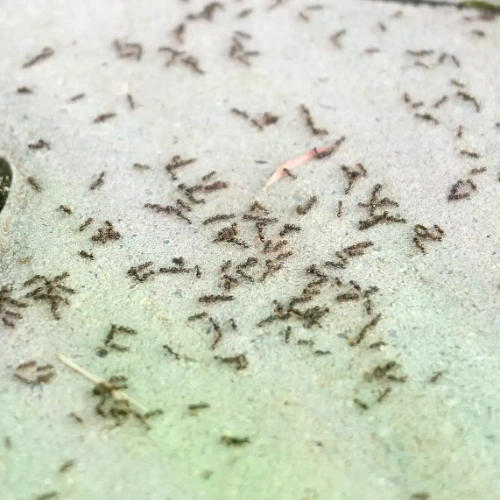
If you spot a steady line of ants moving in the same direction, you're likely looking at a foraging trail rather than a few stray insects. Ants leave pheromone trails to guide the rest of the colony back to a food or water source, and that trail can persist for days if it's not addressed.

Winged ants, sometimes called swarmers, are reproductive ants that leave an established colony to start a new one. Finding them indoors, especially near windowsills or light fixtures, can point to a mature colony nearby. 

This is especially true for carpenter ants, and if you're not sure what you're seeing, our guide on how to get rid of carpenter ants can help you tell them apart from termite swarmers.

Some ant species build small mounds made of soil, sand, or plant debris near their nest entrances. You might notice these along foundations, driveways, or patio edges. 

While a single mound isn't always cause for alarm, mounds that keep reappearing near the same entry point suggest an active colony close to your home.

A sawdust-like material near baseboards, window frames, or wooden structures can be a sign of carpenter ants excavating wood to build their nests. Unlike termites, carpenter ants don't eat wood, but they can still cause structural damage over time.

Faint rustling or scratching noises inside walls, especially at night, can indicate carpenter ants tunneling through wood to expand their colony. These sounds are often subtle, so it helps to pay attention in quiet rooms, where they are easier to notice.

Ants are drawn to kitchens, pantries, and bathrooms because these areas offer easy access to food, crumbs, and moisture. If you're seeing ants gather around pet bowls, sinks, or the trash can, it's a sign your home may be providing exactly what a colony needs to thrive.

Some ants build nests you can actually see, whether that's a mound outdoors or a nest tucked into a wall void, under flooring, or inside insulation. Spotting a nest usually means the colony has been established for a while.

Struggling with ants?

Call now to book your free inspection.

Species-specific signs: Identifying the type of ant

Not all ants behave the same way, so knowing which ant species you're dealing with can help you understand what to expect and how serious the problem might be.

Carpenter ant

Carpenter ants

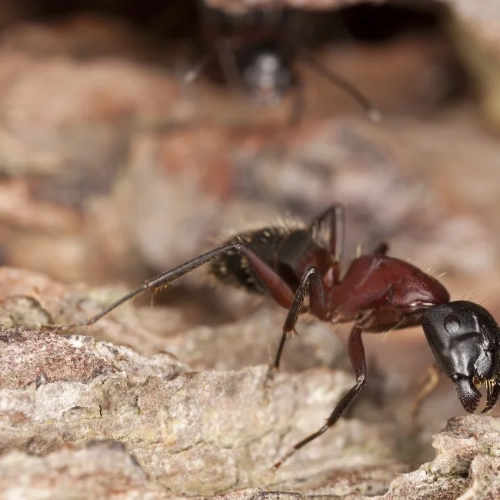
Carpenter ants are large, usually black or dark brown, and known for excavating wood to build their nests. They don't eat wood the way termites do, but the tunneling can still weaken structural timber over time. Sawdust-like frass near baseboards or window frames is often the first clue.

Odorous house ants

Odorous house ants

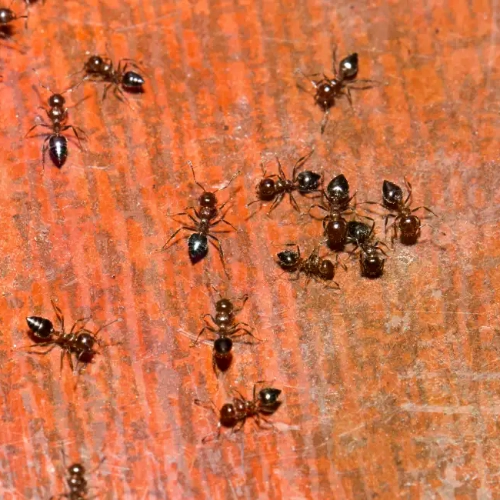
These small, dark brown ants release a distinct, rotten-coconut-like smell when crushed, which is how they got their name. 

Odorous ants tend to nest in wall voids or under flooring near moisture and are commonly found trailing toward kitchens and pantries in search of sugary food.

Pavement ants

Pavement ants

As the name suggests, pavement ants typically nest under sidewalks, driveways, and building foundations. They often enter homes through small cracks in concrete and can be identified by small mounds of displaced soil near these entry points.

Fire ants/sugar ants

Fire ants/sugar ants

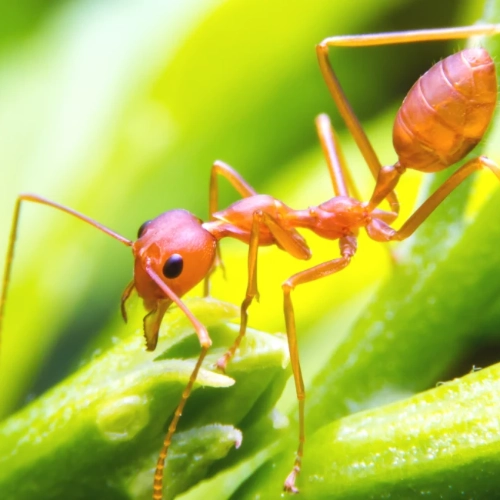
Fire ants are aggressive and can deliver painful stings, often in groups, which can be a concern for households with children or pets. Sugar ants, by contrast, are drawn to sweet foods and are more of a nuisance than a health risk.

Why are ants in your house?

Ants don't invade homes without reason. They're almost always chasing something your house is providing, whether that's food, moisture, or shelter from the weather outside.

Common attractants

Ants are drawn to homes that offer easy access to their basic needs. Common attractants include:

  • Crumbs, spills, or open food containers, especially anything sugary or greasy
  • Pet food left out for extended periods
  • Standing water or excess moisture from leaks
  • Trash cans and recycling bins without tight-fitting lids
  • Overgrown vegetation touching the exterior of the house

How ants get inside

Ants can squeeze through remarkably small gaps to get indoors. They commonly enter through cracks in the foundation, gaps around doors and windows, openings in utility lines, and even tiny spaces in siding. Once inside, they follow scent trails left by scouts to guide the rest of the colony to a reliable food source.

Are ants dangerous?

Most ants are more of a nuisance than a serious threat, but that doesn't mean they should be ignored. Left untreated, certain species can lead to real problems for your home, health, or business.

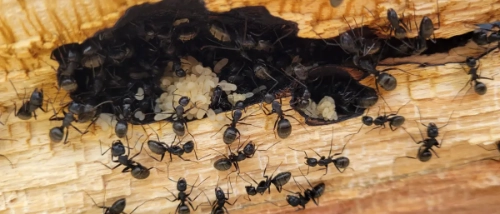
Carpenter ants tending eggs inside a nest in damaged wood

Structural property damage

Carpenter ants are the main concern here. While they don't consume wood, their tunneling can hollow out support beams, wall studs, and other wooden structures over time, potentially leading to costly repairs if the colony goes unaddressed.

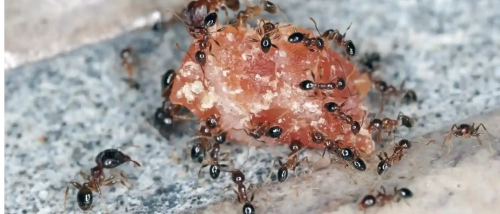
Ants swarming over a piece of food outdoors

Food contamination & hygiene risks

Ants travel across a range of surfaces, including trash, drains, and soil, before making their way to your kitchen. This means they can carry bacteria onto countertops and into food storage areas.

Ants swarming over a piece of food outdoors

Risks to commercial properties

For businesses, an ant infestation can carry bigger consequences: failed health inspections, damaged inventory, and a hit to your reputation if customers spot activity.  

This is especially true in food-focused environments such as restaurants, bars, and food processing facilities, where commercial pest control is a necessary asset.

How to prevent and deal with an ant infestation

Getting ahead of an ant problem is almost always easier than dealing with an established colony, but even active infestations can be managed with the right approach.

Immediate steps for homeowners

If you're currently seeing ant activity, start by cleaning up food debris, sealing containers, and wiping down surfaces where trails have been spotted. Removing standing water and fixing minor leaks can also help make your home less appealing. These steps may offer some short-term relief, but they typically won't eliminate an established colony on their own.

Long-term ant-proofing tips

For lasting protection, focus on prevention:

  • Seal cracks and gaps around doors, windows, and the foundation
  • Trim vegetation and tree branches away from the exterior walls
  • Store food, including pet food, in airtight containers
  • Keep gutters clear and manage moisture around the property
  • Schedule routine pest inspections to catch new activity early.

If you need help with keeping ants out of your home, our pest control services offer routine inspections and preventative maintenance.
When to call professional pest control

If you're seeing recurring trails, winged swarmers, or signs of structural damage, it's time to bring in a professional. Our team can identify the species, locate the nest, and build a treatment plan suited to your property.

Frequently asked questions

If you’re seeing ants daily or in high numbers, it’s likely an infestation. A few random ants may just be scouting, but consistent activity—especially trails leading to food sources or numerous ants in multiple areas—indicates a nest nearby. It’s best to consult Ehrlich ant control experts when ants are in continuous or noticeable numbers.

Signs of ants in walls include rustling sounds, small piles of dirt or wood shavings, and ants entering and exiting through tiny gaps. If you notice trails leading toward walls or frequent activity around electrical outlets and baseboards, you may have an ant colony inside. 

Additionally, if you notice ants inside your home during the cold winter months, that is indicative of an interior infestation since ants do not forage outside in the cold. A professional inspection can help confirm and address the issue.

An ant infestation can last for weeks, months, or even longer if not treated. Colonies can persist as long as they have access to food and water sources, and some may even expand. Professional treatments can resolve infestations quickly, stopping the colony at its source to prevent reoccurrence.

A sudden ant infestation is often triggered by changes in weather, such as heavy rain, extreme temperatures, or a lack of food in their natural environment. When ants find food crumbs, unsealed containers, or moisture inside your home, they may settle in to establish a colony. Sealing entry points and maintaining cleanliness can help deter them.

Find your local branch

Ehrlich Pest Control protects your home from 36 different pests for the ultimate peace of mind.