© 2026 Rentokil Initial plc and subject to the conditions in the legal statement.
Updated on: October 20, 2026
Quick overview
- Beetles enter homes seeking food, warmth, and shelter
- Correct species identification is key before treatment
- Carpet beetles require intensive vacuuming and hot washing
- Pantry beetles are best managed with sealed containers and regular stock rotation
- Sealing entry points and reducing outdoor lighting helps keep beetles away
Beetles belong to the order Coleoptera, the largest group of insects in the world, with over 300,000 species identified globally. With this number of beetles, it’s only natural that home and business owners frequently encounter various species, ranging from the destructive carpet beetle to invasive Japanese beetles or pantry invaders.
While many beetles are beneficial outdoors, because they act as predators for other pests, they become a nuisance when they move indoors in search of food, warmth, and shelter. A combination of proactive maintenance, strategic sanitation, and other effective beetle prevention measures is needed to keep beetles outside.
Below, we take a look at how to prevent beetle infestations by using an integrated approach that addresses the root causes of why these insects are attracted to your property, and how to create an environment that is less welcoming to these six-legged visitors.
The biology of beetle attraction and entry
Beetles are remarkably diverse, but almost all species are motivated by three primary needs: finding a sustainable food source, seeking shelter, and locating a place to reproduce. When the weather turns cold, many species seek out the warmth of human structures to survive the winter. They may enter through open windows or on a bouquet of fresh flowers, and your wool rugs and silk curtains provide the perfect nursery for their larvae.
Additionally, many beetles are attracted to light, which draws them toward windows and entryways at night. Once near your property, they may detect the scent of food or find a gap in the siding that offers a direct path inside. For fabric-eating beetles, the presence of lint, pet hair, and human hair in dusty corners provides an initial food source that encourages them to stay.
Beetle identification: The first step in effective management
Before you can determine the best way to keep beetles away, you need to know what you're dealing with. Misidentification is common and can lead to the wrong treatment approach, so it's best to seek advice from a pest control technician if you're unsure.
Many people confuse carpet beetles with bed bugs because both are small and oval-shaped. However, the two pests behave very differently. Bed bugs are parasites that feed on human blood, while carpet beetles are scavengers that feed on organic materials like fabric and stored food. If you spot a small, patterned insect near a window, it's more likely a carpet beetle, as this species is drawn to light. Bed bugs prefer dark crevices near sleeping areas.
Wood-boring beetles, often called woodworms, are another group that requires prompt attention. Our woodworm control guide can help you confirm what you're seeing.
Effective beetle control and prevention
Once you have determined the type of beetle infesting your property, you can implement targeted strategies to eliminate the pests and prevent future incursions.
How to get rid of carpet beetles
Management of fabric pests requires a thorough cleaning regimen and strategic environmental changes. To get rid of carpet beetles, you should prioritize intensive vacuuming of baseboards, areas under furniture, and inside closets. Washing infested clothing or linens on a high heat is also effective for eliminating eggs and larvae.
For delicate items that cannot be washed, cold storage or freezing can stop larval activity. Storing seasonal wool and silk items in airtight plastic containers provides a barrier against future infestations.
Strategies for pantry beetle control
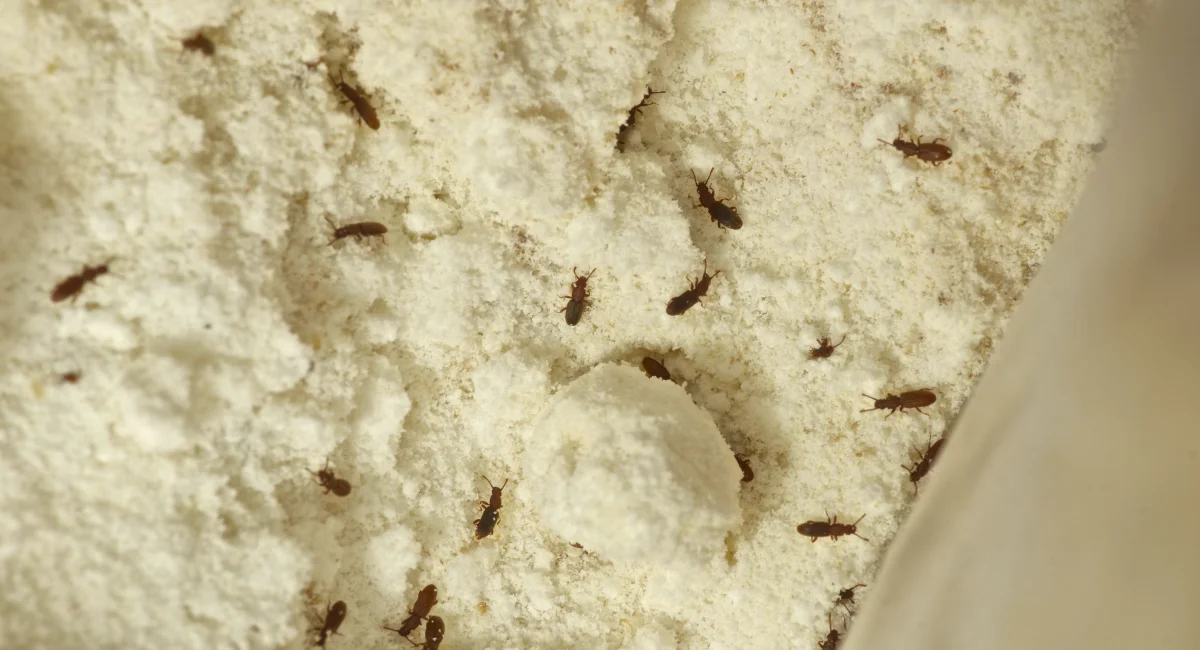
Maintaining a clean and organized pantry is your best defense against food-invading beetles. For effective pantry beetle control, you should inspect all dry goods before purchase, checking for small holes or signs of webbing. Moving dry goods into glass, metal, or heavy plastic containers with secure lids is the best approach, as cardboard and thin plastic provide little protection.
Practice a first-in, first-out rotation for your food stock to ensure older items do not become breeding grounds. Cleaning up spills immediately and using pheromone traps can help you identify a problem early.
In commercial settings like food processing plants and grocery stores, a professional integrated pest management plan is needed to prevent contamination and protect the food supply chain.
Exterior modifications to prevent beetle infestations
Protecting the perimeter of your home or business premises is key to preventing beetle infestations.
- Reduce outdoor lighting or use yellow bug bulbs to decrease the number of insects drawn to your entryways
- Manage moisture by ensuring gutters are clear and water is directed away from the foundation
- Keep shrubs and trees trimmed so they do not touch the property, which removes the bridges beetles use to reach windows and vents
- Use caulk or sealant to close any gaps in the brick or concrete where beetles might seek shelter
Essential oils and scents to naturally repel beetles
If you're wondering how to repel carpet beetles using items you might have at home, certain scents can be worth exploring, along with their limits. These scents that repel carpet beetles may provide a short-term solution, but do require frequent reapplication, so they work best alongside good sanitation rather than as a stand-alone fix.
Cedar is a popular choice, but research suggests it's not a dependable one. According to UC IPM, cedar chests are not reliable at repelling fabric pests, since the wood's natural oils dissipate over time. If you rely on cedar, treat it as a minor deterrent rather than a long-term solution.
The strong scent of lavender may temporarily discourage beetles from settling in a treated area, such as a drawer or closet. However, its effects fade quickly, and beetles can return once the scent weakens.
Peppermint oil has a strong smell that some beetles avoid in the short term. As with other essential oils, it needs frequent reapplication and won't address an existing infestation.
Diluted vinegar is sometimes used as a cleaning agent to remove food residue and scent trails that attract beetles, but it has little direct repellent effect on the insects themselves.
Garlic is another natural scent some homeowners try, often diluted in water and used as a spray in cracks and crevices. Like other natural options, its effects are inconsistent and short-lived.
When should I call a professional for beetle control?
Maintaining a beetle-free property requires vigilance, sanitation, and proactive maintenance. By understanding the biology of these insects and taking steps to exclude them, you can protect your belongings and food supply.
You should call a professional if you notice signs of an active infestation, such as holes in fabrics, bore dust near wood, or recurring sightings in your pantry. Professional intervention is particularly recommended for larger infestations, where DIY remedies and scents will not work. If you are concerned about beetles on your property, contact our pest control team to schedule your free inspection.
Schedule your free pest inspection today
Get peace of mind knowing your home or business is protected. Our technicians will assess your property and recommend customized solutions.
Book your free pest inspection today
Our local technicians will assess your property and recommend tailored solutions. Fast, friendly, and completely obligation-free.
- Safe, targeted treatments
- Local experts, fast response
- Trusted, trained technicians