Temps and termites are on the rise. Schedule your free inspection today.

800-837-5520 Call us for a free quote Contact us

Carpet beetle facts and identification

Carpet beetles are small, hard-to-spot insects that slip into buildings without warning. They are members of the Dermestidae family, a group of insects that feed on animal products, such as wool, feathers, and leather. Common species found in US homes include the black carpet beetle (Attagenus unicolor), the varied carpet beetle (Anthrenus verbasci), the common carpet beetle (Anthrenus scrophulariae), and the furniture carpet beetle (Anthrenus flavipes). 

Females can lay 40 to 100 (or more) eggs, which hatch within five weeks. This is why early awareness and accurate carpet beetle identification are crucial. If you’re unsure, our carpet beetle control services can help identify the issue.

Carpet Beetle Identification

Correct identification of carpet beetles is an essential first step in addressing the problem. These pests are small, often overlooked, and easily mistaken for other insects, which can delay proper control and allow damage to continue. Clear identification supports better decisions and more effective protection for homes and businesses.

Technician outside with customer

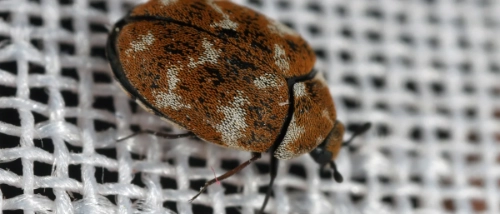
What do carpet beetles look like?

They are generally about one-sixteenth to one-eighth of an inch long, with an oval-shaped body and hard wing covers coated in fine scales. Their color varies by species: varied carpet beetles have a mottled pattern, while black carpet beetles appear solid dark. Adults are often seen near windows or light sources as they move toward daylight.

Larvae can be easier to identify once you know what to look for. Carpet beetle larvae are brown or tan, carrot-shaped, and covered in short bristles, with some showing faint striping. You may also find shed larval skins along baseboards, inside closets, or in other undisturbed areas. Damage to wool items, stored clothing, rugs, or upholstered furniture, along with small dead insects, can also signal carpet beetle activity.
Habitat, diet, life cycle, and behaviors

Carpet beetles are active indoors and outdoors. Their habits change depending on whether they’re adults or larvae, so knowing how they live helps you understand an infestation and how to manage it.

Adult carpet beetles may fly inside, hitch a ride on furniture or clothing, or enter through vents or gaps. Inside, they hide in closets, attics, storage bins, behind baseboards, or within infested items. Outdoors, they may live inside abandoned wasp, spider, or bird nests, or areas with plenty of pollen.

Adults feed on pollen and nectar. Larvae are the ones that infest and destroy household materials as they feed on wool, silk, feathers, fur, and other animal products, as well as stored items that contain protein. Given the chance, they also consume pet hair, lint, or stored dried goods like spices or grains.

Carpet beetles move through egg, larval, pupa, and adult stages. Females lay eggs on or near materials that the larvae can eat. During the larval stage, the insect molts several times before it is ready to pupate. The complete life cycle varies by species and temperature, but often takes several months.

Adults are often attracted to light and tend to gather around light sources, such as windows. Conversely, larvae avoid light, preferring to hide deep inside stored fabrics or along the edges of carpets. As they grow, they shed their bristly skins, leaving behind fuzzy, brownish casings.

Are carpet beetles harmful?

Carpet beetles are not biting insects and don’t spread disease, but their larvae are destructive pests that feed on and damage natural fibers in valuables like clothing, rugs, and upholstered furniture. Meanwhile, shed hair and exoskeletons can provoke skin rashes, bumps, and respiratory issues in some individuals. If you think you’re seeing damage or unusual debris, it may have an expanding carpet beetle infestation.

How to get rid of carpet beetles

Intense cleaning (vacuuming cracks, washing infested items in hot water/drying on high, freezing items, and decluttering), along with applying diatomaceous earth (DE) or boric acid (use with caution around pets) and natural deterrents like peppermint oil, baking soda or vinegar sprays, can be effective with repeated treatment over several weeks, but without professional pest control, hidden larvae may be missed and the problem is likely to return.

Carpet beetle prevention tips

A few simple habits can make your home or business less welcoming to carpet beetles. These measures won’t replace professional help if you already have an issue, but they can reduce risk and help protect the things you care about.

  • Store wool and other susceptible items in sealed bins.
  • Keep closets and storage areas clean and well-organized, with a regular vacuuming schedule.
  • Wash or dry-clean seasonal clothing before storing.
  • Reduce the number of indoor access points near windows and doors.
  • Remove abandoned wasp and bird nests or debris outside the home, provided it is safe to do so.
  • Check items like rugs, felt pads, or reused fabric before bringing them indoors.

Need help with carpet beetle control?

Ehrlich brings proven expertise in both residential pest control and commercial pest control. We understand how carpet beetles affect fabrics, furnishings, and day-to-day activities, and tailor a program that works for you and your business. With knowledgeable technicians and a professional, customer-focused approach, we help protect homes, workplaces, and the people who rely on them.


Frequently asked questions

No, carpet beetles do not bite people. The tiny hairs on larvae can irritate the skin for some individuals. If irritation occurs, check with a healthcare professional.

Yes. Adult carpet beetles have wings and can fly, which helps them move toward lights and enter through open windows or vents.

No. Carpet beetles cannot jump. Larvae crawl along surfaces, while adults fly from place to place.

Females lay eggs on materials that provide food for larvae, such as wool, feathers, or stored fabrics. Eggs are tucked into dark, protected spots.

Carpet beetle eggs are tiny and white or cream-colored. They’re often hard to spot because they’re placed deep within folds of fabric or in quiet corners.

Find your local branch

Start living pest-free today with PestFree365+. Ehrlich Pest Control protects your home from 39 different pests for the ultimate peace of mind.