© 2026 Rentokil Initial plc and subject to the conditions in the legal statement.
Updated on: August 17, 2026
Quick overview
- The East Coast's top five mosquito hotspots are Miami, Orlando, Savannah, New York, and Washington, D.C.
- Warm weather, high rainfall, and standing water drive mosquito populations in these cities.
- Hurricane season worsens mosquito activity by creating ideal hatching conditions after storms.
- Professional mosquito control and personal protection can help keep bites at bay all season.
Mosquitoes love moisture. In fact, mosquito eggs need it to hatch. Therefore, a period of increased rainfall, intermittent flooding, and high humidity gives these blood-sucking pests just the environment needed to thrive.
Not only are mosquito bites incredibly itchy and annoying, but they also carry with them the risk of disease transmission. Protect yourself and your family from mosquitoes this summer with Ehrlich Pest Control. Our mosquito and tick prevention plan will put your mind at ease knowing that our mosquito control experts are keeping your property mosquito-free.
Check out five of the top cities for East Coast mosquito activity listed below.
Mosquitoes in Washington, D.C.
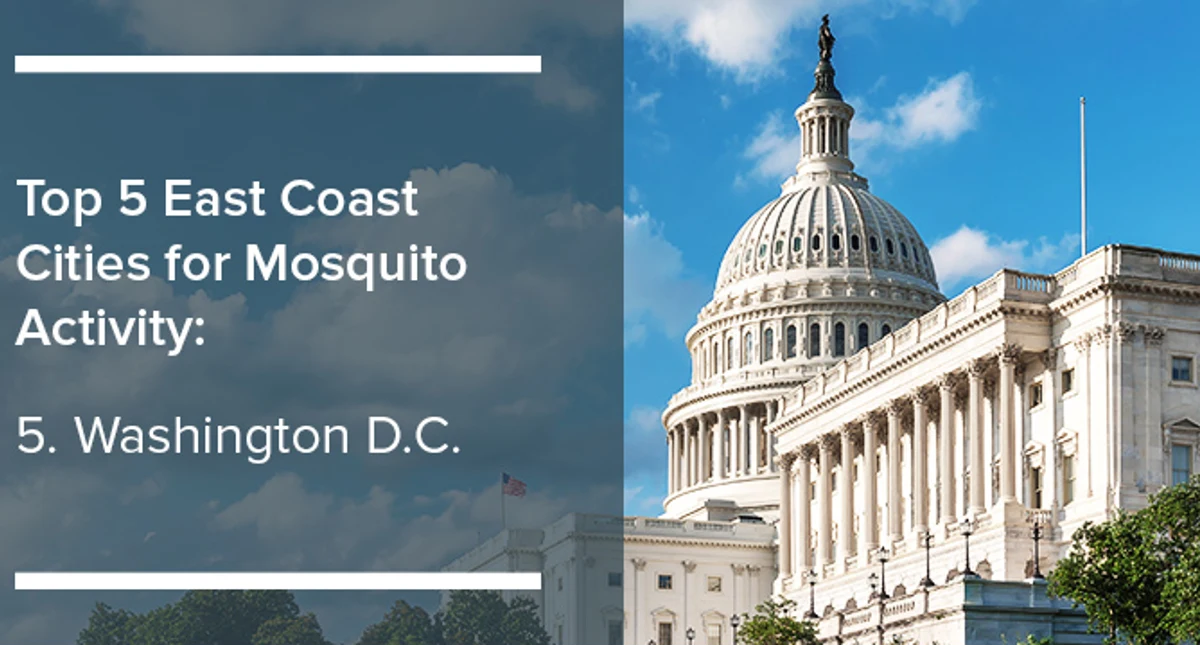
Coming in at number 5 is our nation’s capital, Washington. D.C. As temperatures rise in the United States, mosquitoes are gravitating further north, and this city is suffering the consequences. Additionally, mosquitoes are better able to survive the winter months when temperatures fail to drop below freezing. The D.C. area has many bodies of water, thousands of people passing through each day (plenty of blood to drink!), and abundant wooded areas that provide mosquitoes a desirable environment in which to live.
If you’re planning to visit Washington D.C. this summer, make sure to pack your EPA-registered bug spray.
What types of mosquitoes are found in Washington, D.C.?
Several species are active in the D.C. area:
- Northern house mosquito (Culex pipiens) — The most common urban species. It breeds in stagnant, polluted water like storm drains and neglected birdbaths, and is the primary carrier of West Nile virus in the region.
- Asian tiger mosquito (Aedes albopictus) — An invasive species now well-established across the Mid-Atlantic. It bites aggressively during the day and breeds in very small amounts of water, even a clogged gutter.
- Floodwater mosquito (Aedes vexans) — A species that surges in numbers after heavy rain, which is common during D.C.'s summer months.
Mosquitoes in New York
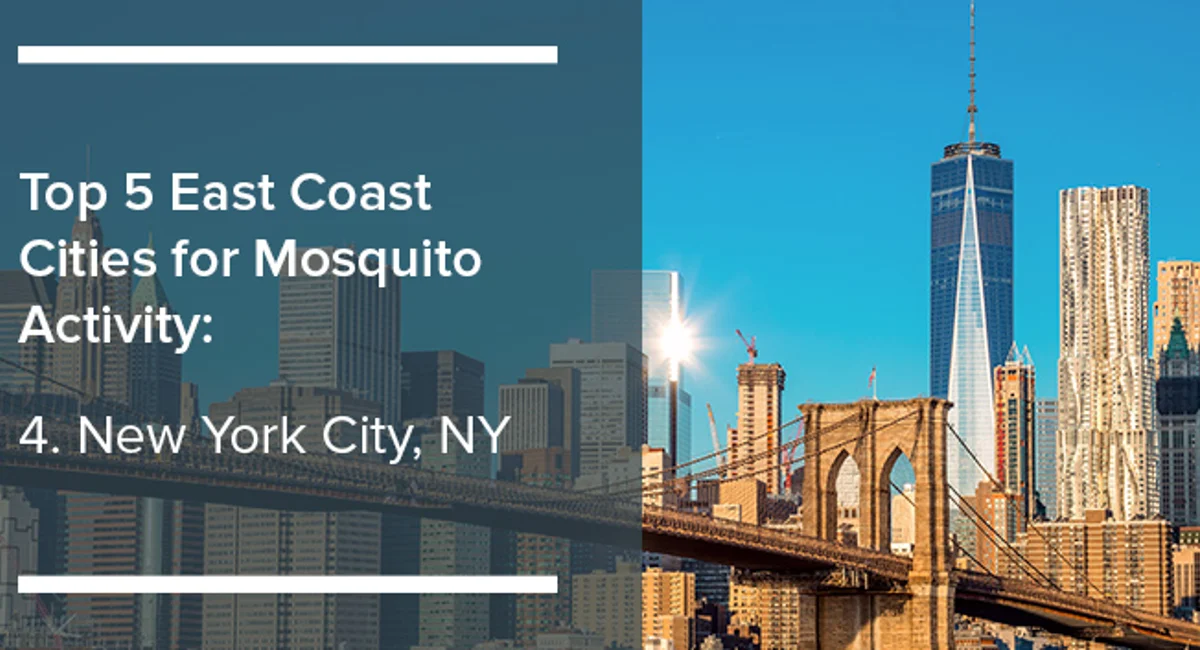
U.S. News’ # 1 place to visit in the United States, New York City, is number 4 on our list of top East Coast cities for mosquito activity. City officials say that mosquitoes, including those that carry diseases, are active in New York City beginning in April and continuing through October.
The NYC Department of Health is doing what it can to reduce mosquito populations and protect its inhabitants and visitors. During the aforementioned date range, the DOH encourages people to report standing water in the city that is not taken care of within 5 days. Such water collection promotes rapid mosquito population growth. In the case of conditions that could attract mosquitoes, the property owner could be fined up to $2000 for failing to remove the standing water!
What types of mosquitoes are found in New York?
More than 70 mosquito species have been identified across New York State. The most common pest species include:
- Northern house mosquito (Culex pipiens) — The dominant urban species in New York City and the surrounding boroughs. It breeds in standing water in containers, gutters, and catch basins.
- Asian tiger mosquito (Aedes albopictus) — Now well-established in the New York metro area. A daytime biter that can breed in tiny amounts of water.
- Japanese rock pool mosquito (Aedes japonicus) — Found in wooded suburban areas. It breeds in tree holes and artificial containers.
- Black-tailed mosquito (Culiseta melanura) — Found in freshwater swamps and associated with Eastern Equine Encephalitis (EEE) transmission.
When do mosquitoes come out in New York?
Mosquitoes are most active at dawn and dusk, though the Asian tiger mosquito bites throughout the day. Warmer spring and fall temperatures in recent years have pushed activity earlier and later in the season.
Mosquitoes in Savannah, Georgia
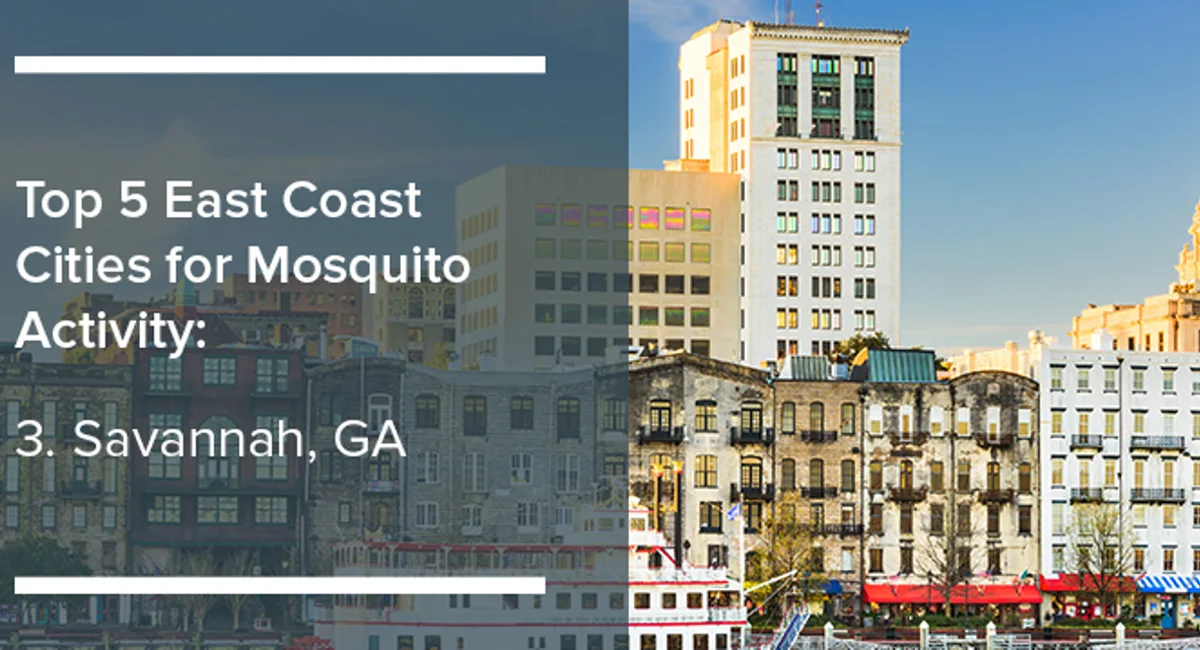
From riverboat cruises to a walk down River Street, there is no shortage of things to do in Savannah, Georgia. Many of the things for which this southern city is famous take place outdoors, but tourists aren’t the only ones enjoying what Savannah has to offer. 40 species of mosquito have made themselves right at home here. Recently, the area has seen increased rainfall that has only worsened the city’s mosquito problem. The city has an average annual rainfall of 47.98 inches, compared to the national average of 30.21 inches.
What types of mosquitoes are commonly found in Savannah?
- Black salt marsh mosquito (Aedes taeniorhynchus) — Extremely common along Georgia's coast. It breeds in salt marshes and can travel several miles from its breeding site, making it a persistent nuisance even in urban areas.
- Asian tiger mosquito (Aedes albopictus) — Widespread throughout Savannah. A daytime biter that breeds in small containers and ornamental water features.
- Southern house mosquito (Culex quinquefasciatus) — A nighttime biter common in warm, humid climates. It breeds in polluted standing water and is a known carrier of West Nile virus and St. Louis encephalitis.
Mosquitoes in Orlando
Orlando may be known for its infamous mice, but mosquitoes enjoy this Florida tourism hub too. Disney World, arguably the biggest attraction in the city, has taken to providing complimentary insect repellent throughout the resort to protect its visitors against mosquito bites. Orlando has an even higher average annual rainfall than Savannah, at 53.19 inches. And with around 68 million people visiting Orlando each year, mosquitoes have plenty of opportunities for a good blood meal.
What types of mosquitoes are found in Orlando, Florida?
Florida is home to more than 80 mosquito species. The most common in the Orlando area include:
- Yellow fever mosquito (Aedes aegypti) — A significant concern in Florida. This species is a known vector of dengue fever, Zika virus, and chikungunya. It bites during the day and breeds in small, clean water containers around homes.
- Asian tiger mosquito (Aedes albopictus) — Also a daytime biter and widespread throughout central Florida.
- Florida SLE mosquito (Culex nigripalpus) — The primary carrier of St. Louis encephalitis and West Nile virus in Florida. It's most active at dusk and dawn and breeds in a wide range of standing water sources.
- Common malaria mosquito (Anopheles quadrimaculatus) — Found near freshwater lakes and marshes throughout the region.
Mosquitoes in Miami
Sitting at the top of the list is one of the world’s top vacation spots, Miami, Florida. With year-round warm weather and rainy winters, mosquito season is pretty much 365 days a year in Miami. Aside from the weather, a popular Miami ornamental plant, the bromeliad, can play a part in increased mosquito activity. The bromeliad’s leaves collect water and provide mosquitoes with a perfect breeding ground.
What types of mosquitoes are found in Miami?
- Yellow fever mosquito (Aedes aegypti)— Highly prevalent in Miami and a primary concern for public health officials. This species is a known vector of dengue, Zika, and chikungunya viruses.
- Asian tiger mosquito (Aedes albopictus) — Common throughout Miami-Dade County. A daytime biter that breeds in small amounts of standing water.
- Southern house mosquito (Culex quinquefasciatus) — Active at night and a carrier of West Nile virus. Breeds in polluted water sources, including storm drains and neglected pools.
- Dark rice field mosquito (Psorophora columbiae) — A large, aggressive floodwater mosquito that surges in numbers after heavy rain events, which are frequent in South Florida.
Are there mosquitoes in Miami Beach?
Yes, and in significant numbers. Miami Beach's coastal location, combined with its urban density and proximity to tidal waterways, makes it a hotspot for mosquito activity. The same species found throughout Miami are active on the beach, with the yellow fever mosquito being a particular concern given its preference for urban environments and small water containers.
Residents and visitors should use repellent, wear protective clothing at dawn and dusk, and eliminate any standing water around their property.
What does hurricane season mean for mosquito populations?
In a time of heightened threat of hurricanes along the Atlantic coastline, you may wonder about the implications of hurricane season on mosquito activity. The problem with mosquitoes and hurricanes is not the adults, but the eggs. Adult mosquitoes do not usually survive the high winds of the storm, but eggs laid prior to the storm in moist soil or other water reserves are suddenly surrounded by increased moisture. These are ideal conditions for hatching.
In addition to improved hatching conditions, East Coast residents often spend a great deal of time outdoors after a hurricane cleaning up and getting the town back to working order. Increased time spent outdoors means a greater possibility of being bitten by mosquitoes.
The mosquito populations that are escalated as a result of a hurricane are often species known as “nuisance mosquitoes.” These mosquitoes are unpleasant and can cause discomfort with their itchy bites, but they are not generally vectors of viruses such as West Nile or Zika. That being said, disease-carrying mosquitoes can also be a concern in the wake of a hurricane, so you should still take caution.
Need help with mosquitoes?
If you’re experiencing problems with mosquitoes on your property, Ehrlich Pest Control can help. Our mosquito and tick protection plan gives you season-long coverage, with expert treatments targeting mosquitoes at every life stage, so you can get back to enjoying your outdoor spaces.
Fill out the form below to get in touch with your local Ehrlich technician.
*Cities selected from careful analysis of NASA’s Zika Forecast and CDC West Nile Case Data.
Schedule your free pest inspection today
Get peace of mind knowing your home or business is protected. Our technicians will assess your property and recommend customized solutions.
Book your free pest inspection today
Our local technicians will assess your property and recommend tailored solutions. Fast, friendly, and completely obligation-free.
- Targeted treatments applied safely and responsibly
- Local experts, fast response
- Trusted, trained technicians