© 2026 Rentokil Initial plc and subject to the conditions in the legal statement.
Ever wondered how a single crumb left on your kitchen counter turns into an ant highway within hours? Ants have an extraordinary ability to locate food sources that can seem almost supernatural.
The truth is, these tiny insects possess one of nature's most sophisticated navigation and communication systems. Understanding how ants find food helps explain why they're so persistent, and what you can do to keep them out of your home.
The ant's secret weapon: a powerful sense of smell
Ants might be small, but their sense of smell is nothing short of remarkable. These insects have four to five times more odor receptors than most other bugs, all located on their antennae. Those constantly moving antennae aren't just for show. They're highly sensitive chemical detectors that can pick up food odors from surprising distances.
Think of an ant's antennae as a combination of a nose and a GPS system. They can detect the faintest traces of sugar, protein, or fat in the air and follow that scent trail right to the source.
This exceptional ability is why ants seem to appear out of nowhere when you spill something sweet or leave food uncovered.
How worker ants search for food
Not all ants in a colony have the same job. Worker ants—the sterile, wingless females you typically see marching across your countertops—are responsible for finding and gathering food for the entire colony, including the queen, reproductive males, and developing larvae.
These workers are incredibly dedicated foragers. They typically venture out at night, especially during warmer months between sunset and midnight, when it's safer and cooler. Some species will travel up to 100 yards from their nest in search of a meal. That's like a human walking several miles for groceries, except that ants do it multiple times a day.
During winter, most ant activity slows down, but if the nest stays warm enough from sunlight, indoor heating, or mild temperatures, worker ants will continue their nighttime food runs. This explains why you might spot ants near your dishwasher or bathroom sink, even in January.
.2023-10-31-16-04-27.webp)
The pheromone trail
When a worker ant leaves the nest to search for food, it doesn't just wander aimlessly. As it walks, it lays down a chemical trail called a pheromone. Think of it as leaving invisible breadcrumbs to find its way home.
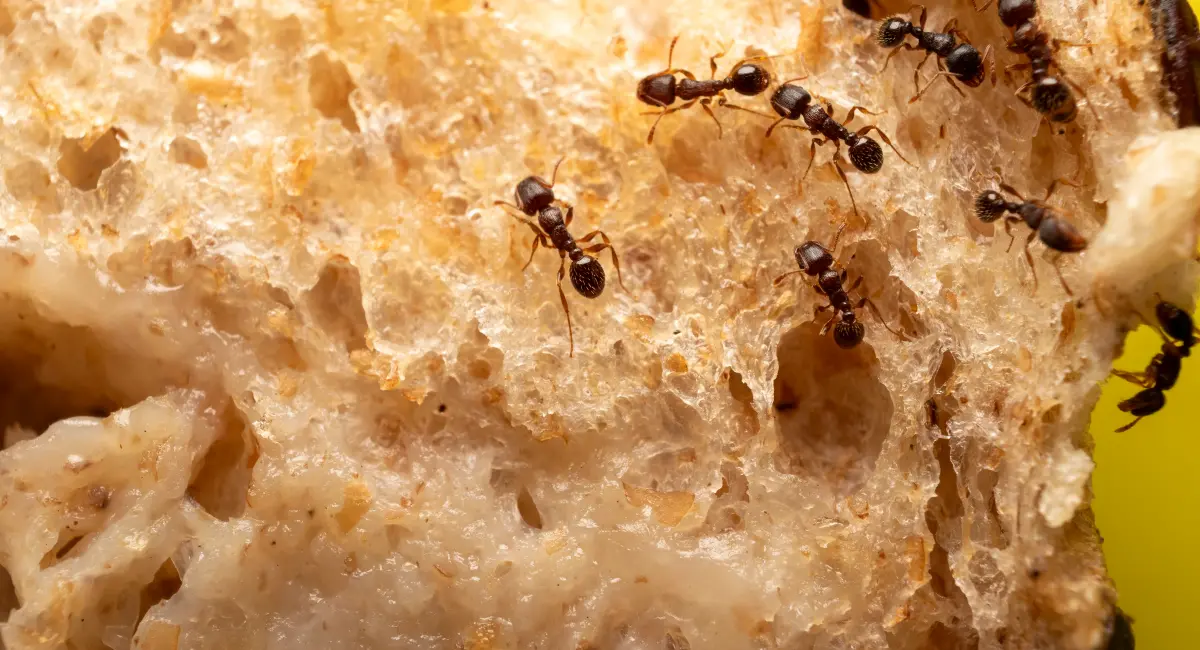
Once the ant discovers food, it doesn't just eat and leave. It turns around and follows a different pheromone trail back to the nest, all while laying down even more chemical markers. This reinforces the trail and makes it stronger. When other worker ants encounter this pheromone highway, they abandon their random searching and follow the established route directly to the food source.
This is why you see ants marching in such organized lines. They're not following each other; they're following the chemical roadmap left by the scouts who found food first. And considering how strong ants are, they can carry food many times their body weight back along these trails to feed the colony.
The more ants that use the trail, the stronger it becomes, creating that unmistakable ant superhighway across your kitchen floor.
How ants detect different types of food
Ants use a sensory system called chemosense to detect food, similar to how we use taste and smell. They can identify chemical substances in their environment, even at very low concentrations. Small bristles covering their bodies act as receptors, picking up chemical signals from potential food sources.
This is why ants are so good at finding sugar and sweets; they can detect the chemical signature of glucose and other sugars from a distance. But different ant species have different preferences. Carpenter ants, for example, prefer proteins, fats, and sugary substances. Outdoors, they feed on other insects and honeydew—a sweet liquid produced by aphids, and not to be confused with the melon of the same name (which ants also love). Indoors, they'll go after meat, pet food, syrup, honey, and anything else that fits their dietary needs.
Understanding what specific ants in your home prefer helps explain their behavior and makes it easier to control them effectively. Learn more about what, specifically, ants are attracted to in your home.
Why this matters for your home
Knowing how ants find food explains why they're so persistent and why a small problem can quickly become a big one. That single scout ant you saw yesterday has probably already told hundreds of its nestmates exactly where to find that spill you forgot to clean up.
The good news is that understanding their foraging behavior gives you an advantage. By eliminating food sources, cleaning up spills immediately, and disrupting their chemical trails with regular cleaning, you can make your home much less attractive to these determined foragers.
Protecting your home from foraging ants
Once you understand how ants locate food, prevention becomes much more straightforward:
- Store all food in airtight containers that don't leak odors
- Clean up crumbs and spills immediately, even tiny ones
- Wipe down counters with vinegar or soap to disrupt pheromone trails
- Don't leave pet food out all day—feed on a schedule
- Take out garbage regularly and keep bins sealed
- Fix any moisture issues that might attract thirsty ants
- Seal entry points where ants might be getting inside
- Regular cleaning is your best defense because it erases the chemical trails ants rely on to navigate.
When to get professional help
Sometimes, despite your best efforts, ants keep finding their way to food in your home. Different ant species require different control strategies, and identifying exactly what type you're dealing with is crucial.
Ehrlich's technicians understand ant foraging behavior and can identify the species invading your home, locate their nest, and implement targeted treatments that address both the ants you see and the colony you don't. We'll also help you identify what's attracting them and recommend changes to keep them from coming back.
Schedule your free pest inspection today
Get peace of mind knowing your home or business is protected. Our technicians will assess your property and recommend customized solutions.
Book your free pest inspection today
Our local technicians will assess your property and recommend tailored solutions. Fast, friendly, and completely obligation-free.
- Targeted treatments applied safely and responsibly
- Local experts, fast response
- Trusted, trained technicians