© 2026 Rentokil Initial plc and subject to the conditions in the legal statement.
Watch an ant for just a few minutes, and you'll witness something remarkable: a tiny insect carrying a crumb many times larger than itself, navigating obstacles, and marching back to its nest.
Ants are nature's weightlifters, capable of feats of strength that would be impossible for humans at the same scale. But just how strong are these miniature powerhouses, and what makes them so incredibly capable?
The lifting power of ants
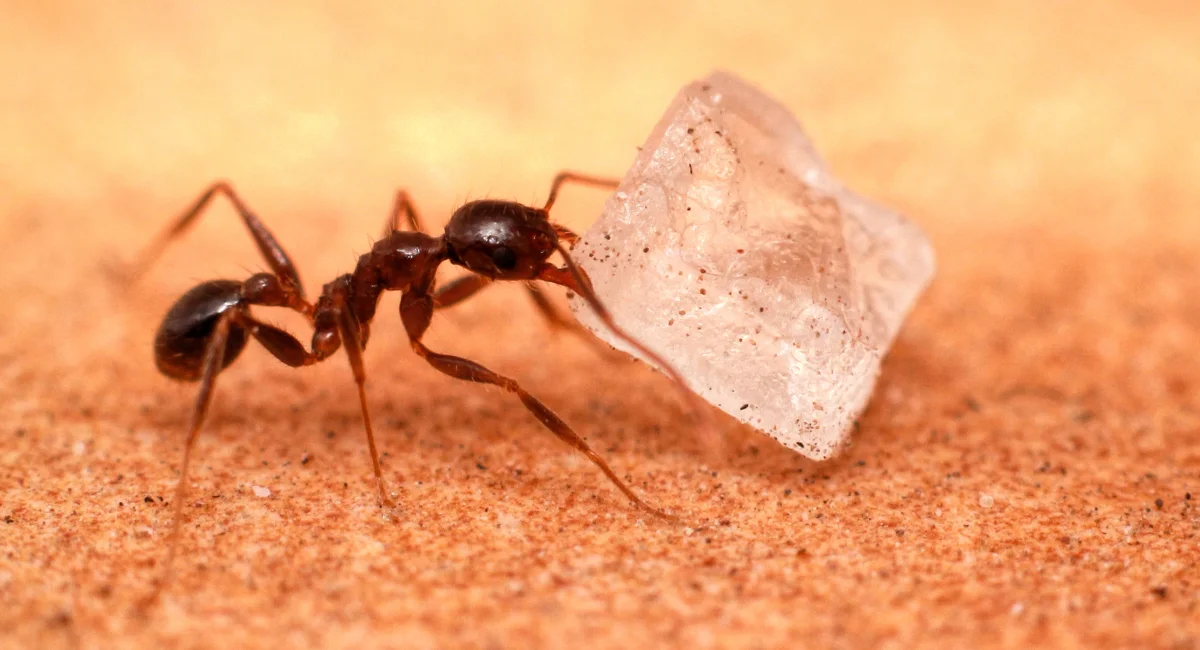
Here's a number that might surprise you: many ant species can carry between 10 to 50 times their own body weight. Some specialized species can lift even more. To put that in perspective, imagine if a 180-pound person could pick up and carry a full-grown cow on their back.
A typical ant weighs only about two milligrams, yet it can carry loads of 20 milligrams or more without breaking stride. This isn't just impressive; it's essential to their survival. Ants depend on this strength to gather food, build and maintain their nests, care for their young, and defend their colonies from threats. They can exploit tiny cracks and crevices, move food from hard-to-reach places, and establish colonies in locations that would be inaccessible to less capable insects.
What makes ants so strong?
The secret to ant strength lies in the relationship between their body size and body mass, combined with some remarkable anatomical features that evolution has perfected over millions of years.
Ant bodies contain two main types of muscles. Striated muscles handle rapid movements like walking, running, and lifting. These are the powerhouse muscles that give ants their incredible strength. Smooth muscles control internal functions like digestion and circulation. The striated muscles are densely packed and incredibly efficient, allowing ants to generate tremendous force relative to their size.
Unlike humans with internal skeletons, ants have exoskeletons, which are hard outer shells that provide structure and protection. These exoskeletons feature specialized attachment sites called apodemes, which serve as anchor points for muscles. This design allows ants to exert force more efficiently than if their muscles were attached to internal bones.
Even more impressive, ant joints can withstand more than 3,000 times their own body weight without breaking. This structural integrity means ants can carry heavy loads without their bodies collapsing under the pressure. Essentially, every part of an ant's anatomy is built for brute strength.
Some ant species have also evolved enlarged mandibles or jaws specifically designed for gripping, cutting, and transporting heavy objects. These specialized tools act like built-in forklifts, making it easier to manipulate loads that would otherwise be impossible to move.
Why ants need to be so strong
Ants live in complex social colonies where every member has a specialized role, and many of those roles demand serious physical capability.
The queen is the colony's founder and leader, focused primarily on laying eggs to maintain the population. Male drones exist solely to mate with the queen. Alates are winged ants—both male and female—whose job is to fly off during "nuptial flights" to mate and establish new colonies.
But the ants you see marching across your kitchen counter or disrupting your picnic are worker ants. These are all female, and they handle the heavy lifting (literally).
Some dig tunnels to expand the nest. Others care for the queen's offspring. And many venture out to forage for food, which they must then carry back to the colony, sometimes over considerable distances.
The strongest ant species
Not all ants are created equal when it comes to strength. Different species have evolved unique capabilities based on their environment, diet, and role within their ecosystem.
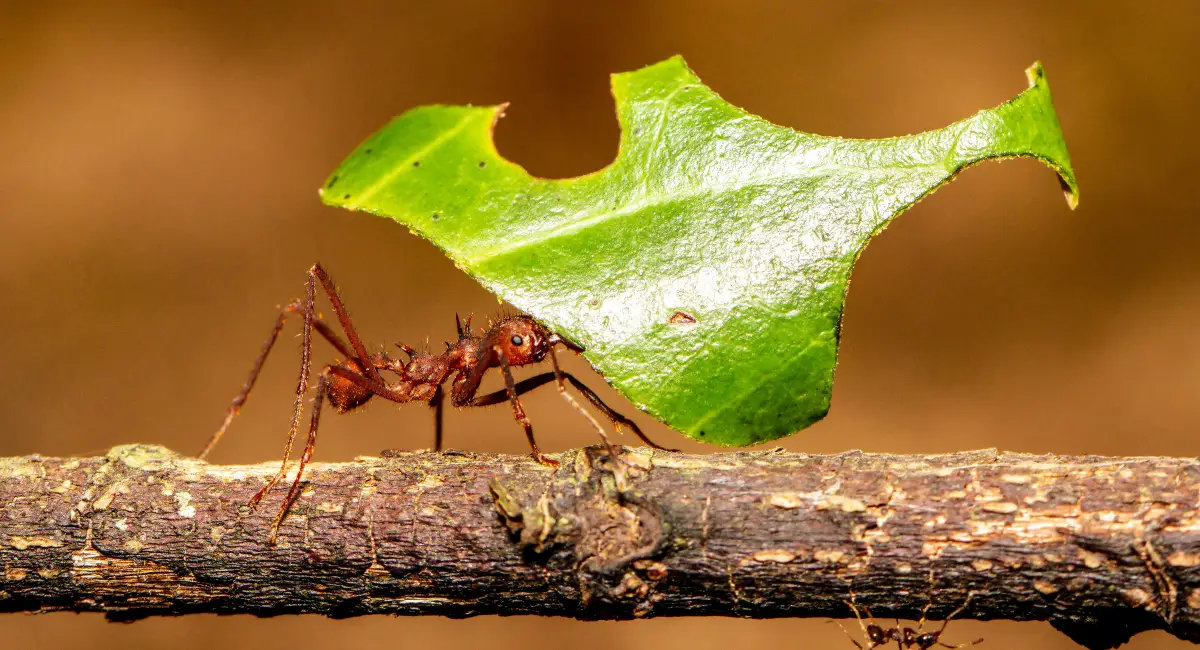
Leafcutter ants
These are the heavyweight champions of the ant world. Leafcutter ants can transport leaf fragments weighing more than 50 times their own body weight.
They use these leaf fragments not as food, but to cultivate fungus gardens that feed the entire colony.
Carpenter ants
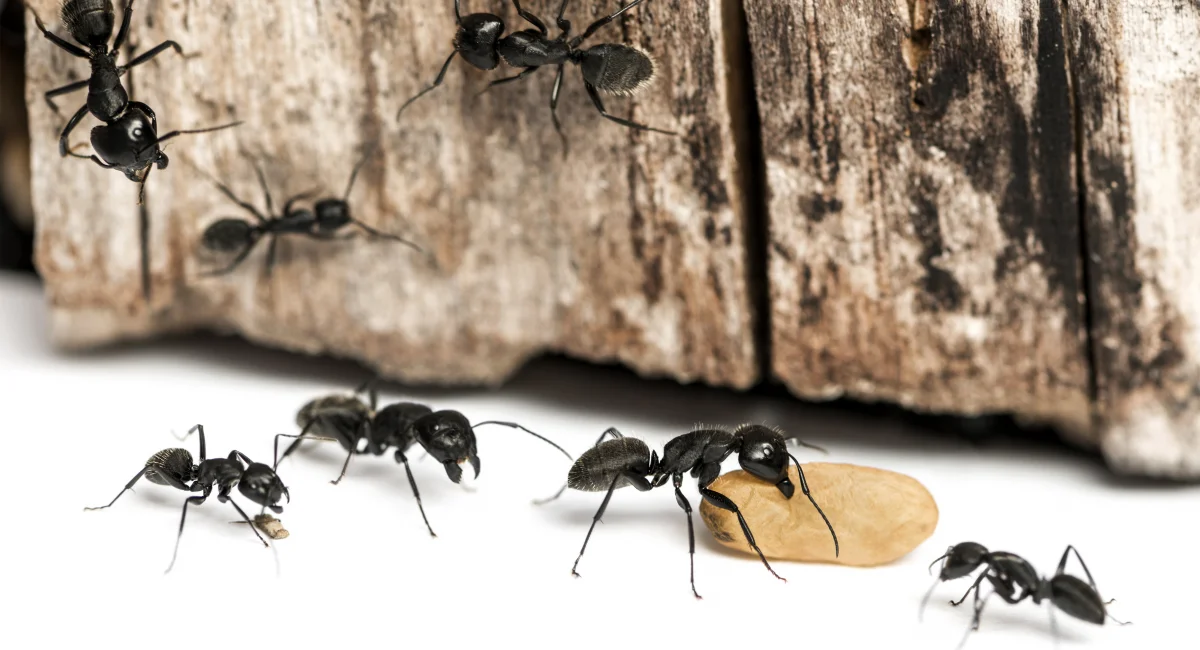
Carpenter ants are capable of carrying objects more than 10 times their body weight. While that might sound less impressive than leafcutters, remember that carpenter ants are often larger, meaning they're moving heavier absolute loads.
Their strength is particularly useful for excavating wood to create nesting galleries, a task that requires both power and precision.
Field ants
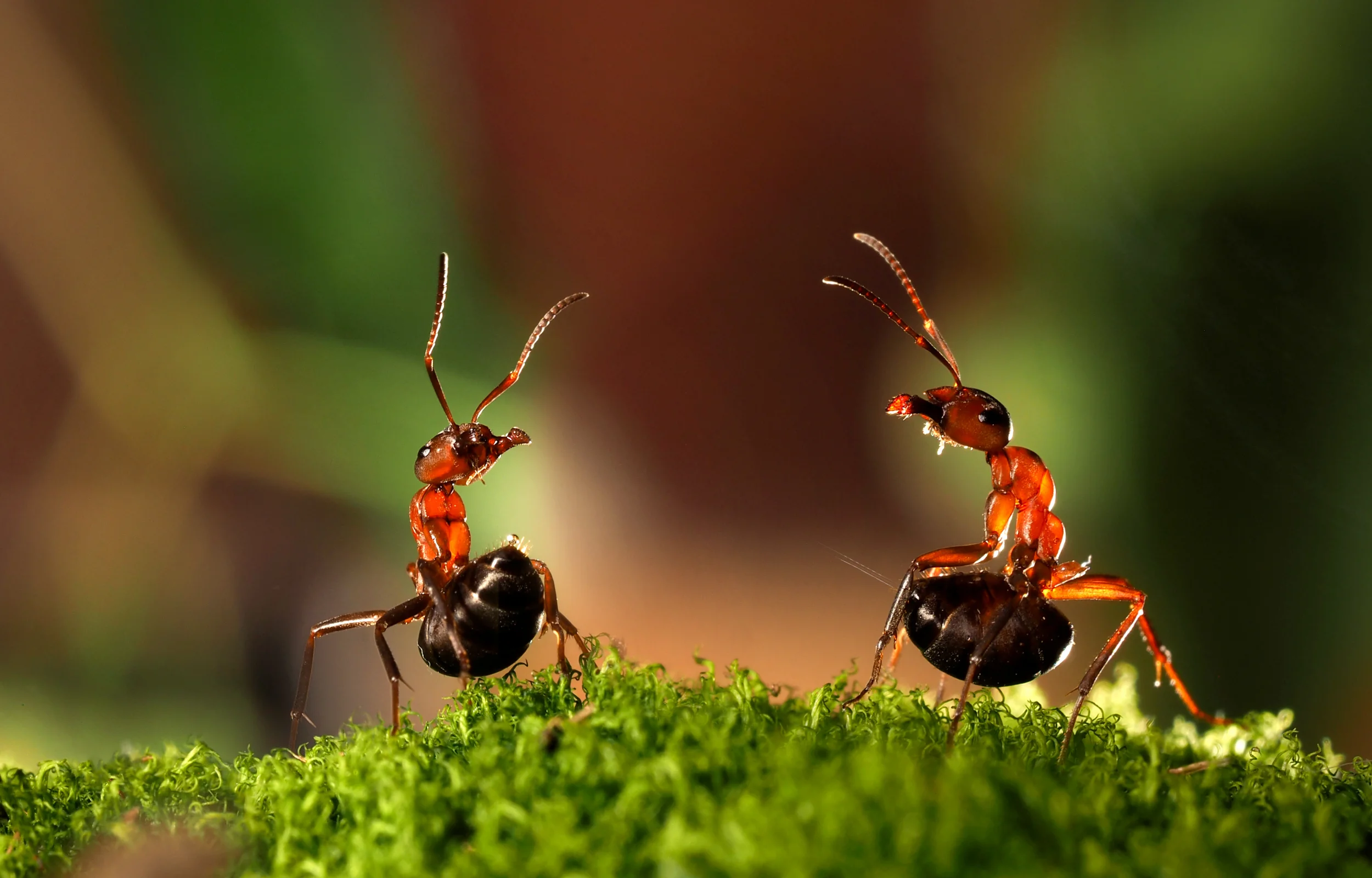
Common field ants can withstand forces up to 5,000 times their own body weight without injury. This incredible durability allows them to survive in harsh outdoor environments where they might be stepped on, buried, or crushed by falling debris.
Field ants
Common field ants can withstand forces up to 5,000 times their own body weight without injury. This incredible durability allows them to survive in harsh outdoor environments where they might be stepped on, buried, or crushed by falling debris.
The physics of ant strength
Why can ants lift so much more relative to their size than humans can? It comes down to basic physics.
As objects get smaller, their volume (and therefore weight) decreases faster than their surface area. This means that smaller creatures have a greater muscle cross-sectional area relative to their body weight. Ants benefit enormously from being tiny. Their muscles don't have to support as much mass, leaving more strength available for lifting external objects.
Humans, by contrast, have much higher body weight and proportionally less muscle mass available for lifting. Our bodies require most of our strength just to move ourselves around.
If humans were shrunk down to ant size while maintaining the same body proportions, we'd be much weaker than actual ants because our anatomy isn't optimized for that scale.
How ants use teamwork
While individual ants are impressively strong, their real power comes from cooperation. When faced with food items too large for one ant to move, workers will recruit nestmates to help. They communicate through pheromones and physical contact, coordinating their efforts to drag, push, or carry oversized loads.
This collective strength is why you might see a group of ants successfully moving a dead insect, a piece of fruit, or even small vertebrates back to their nest. What one ant can't accomplish alone, a dozen ants working together can manage easily.
Understanding how strong ants are helps explain why they're such successful invaders. They can exploit tiny cracks and crevices, move food from hard-to-reach places, and establish colonies in locations that would be inaccessible to less capable insects.
Controlling ant activity in your home
While ants are fascinating creatures, their strength and determination make them challenging pests when they invade your home. Ehrlich's technicians can identify the ant species in your home, locate their nests, and develop targeted treatment plans that address both the workers you see and the colony supporting them.
We understand ant behavior, including their impressive strength and foraging abilities, which helps us implement solutions that actually work.
Because at the end of the day, appreciating how strong ants are doesn't mean you want them carrying food out of your pantry.
Schedule your free pest inspection today
Get peace of mind knowing your home or business is protected. Our technicians will assess your property and recommend customized solutions.
Book your free pest inspection today
Our local technicians will assess your property and recommend tailored solutions. Fast, friendly, and completely obligation-free.
- Targeted treatments applied safely and responsibly
- Local experts, fast response
- Trusted, trained technicians