Temps and termites are on the rise. Schedule your free inspection today.

800-837-5520 Call us for a free quote Contact us

How quickly do bed bugs spread?

Bed bugs are small, but they're fast movers. If they get into your home, they can quickly spread from room to room, becoming a serious infestation in a matter of weeks. 

How do bed bugs spread?

Bed bugs spread in two main ways: reproducing and hitchhiking. How quickly this occurs depends on several factors.

On their own, they move slowly and steadily through a building, traveling along walls, floors, and ceilings to find new hiding spots close to a food source. But the faster, more common route is to catch a ride on people's belongings. Luggage, clothing, used furniture, and bedding are all common carriers. 

A single infested item moved from one room, home, or building to another can introduce bed bugs to an entirely new environment. This is how they end up in hotels, offices, and homes that have never had a problem before.
How fast can bed bugs spread from room to room?

Bed bugs don't have wings and can't jump, but they're surprisingly quick on their feet. They can crawl up to four to five feet per minute, which means they can cover a lot of ground in a short time. 

They like to move through wall cavities, along baseboards, and through gaps in floors and ceilings, making it easy for them to travel between rooms or even between apartments in a multi-unit building.

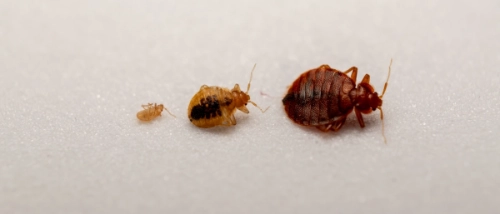
Three bed bugs at different life stages on a white surface, showing size progression from a tiny pale nymph on the left to a larger, darker reddish-brown adult on the right

How fast can bed bugs multiply?

In the early weeks, you might not notice anything at all. That’s because bed bugs are nocturnal; they hide well, and not everyone reacts visibly to their bites. By the time signs become obvious, the infestation may already be well established. A rough timeline looks like this:

  • Weeks one to two: A pregnant female finds a hiding spot and begins laying eggs
  • Weeks two to three: Eggs hatch; nymphs begin feeding
  • Weeks five to six: Nymphs reach adulthood and start reproducing
  • Months two to three: The population grows significantly; bites, stains, and live bugs become more noticeable

Factors that affect how fast bed bugs spread

Not every infestation moves at the same pace. The speed at which bed bugs spread depends on several factors in your home.

  • Temperature: Bed bugs thrive in warm environments. Warmer indoor temperatures speed up their life cycle, meaning eggs hatch faster and nymphs reach adulthood more quickly.
  • Access to food: The more people sleeping in an infested space, the more feeding opportunities bed bugs have. Regular blood meals fuel faster reproduction.
  • Surface type: Bed bugs move more easily across rough surfaces like fabric, wood, and carpet than smooth ones like glass or polished metal. Soft furnishings and cluttered spaces give them more places to hide and travel.
  • Clutter: A cluttered home gives bed bugs more hiding spots and makes it harder to detect and treat an infestation early.
  • How often items are moved: Regularly moving bags, bedding, or clothing between rooms can inadvertently carry bed bugs to new areas of your home.

How to prevent bed bugs from spreading

A little caution goes a long way. Bed bugs are opportunistic, and they'll take any chance to sneak into your home, so inspecting luggage after travel, washing and drying clothing on high heat, and checking secondhand furniture before bringing it inside can all help reduce your risk. Keeping clutter to a minimum also makes it harder for bed bugs to hide and easier to spot.

Need help managing bed bugs?

If you've spotted a bed bug, it's unlikely to be solitary. You'll need treatment to deal with the full extent of the infestation. Call us, or click the button below, to learn more.

Frequently asked questions

A single female bed bug can lay one to five eggs per day and up to 500 eggs over her lifetime. Under the right conditions, a small number of bed bugs can grow into a significant infestation within just a few months.

It depends on how many bed bugs were introduced and the conditions in your home. In warm environments with easy access to a host, a handful of bed bugs can establish a noticeable infestation in as little as six to eight weeks.

If you manage a commercial property, you know pest problems can impact your reputation and your bottom line. See how Ehrlich helps protect your business.

Enjoy protection from 39 of the most common household pests with our annual residential pest control program, PestFree365+.