Temps and termites are on the rise. Schedule your free inspection today.

800-837-5520 Call us for a free quote Contact us

A guide to the different bed bug types

Most people have heard of bed bugs, but you might be surprised to learn there are actually a few different types that look alike and are easy to mix up. Each has its own preferred climate and geographic range, but their behaviors are broadly similar. Though one thing’s for certain: all require professional bed bug control to keep your home safe.

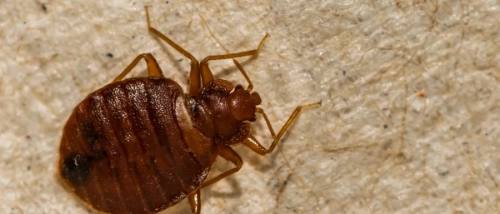
A close-up of a common bed bug

How many species of bed bugs are there?

There are around 90 species within the family Cimicidae, but only a small number are associated with humans. The vast majority feed on bats or birds. 

For most people in the U.S., there are two different bed bug species worth knowing: the common bed bug and the tropical bed bug. A third species, found in parts of West Africa, is rarely encountered in North America.

The main bed bug species

Of those species, here are the main ones you're likely to come across:

The common bed bug

The common bed bug (Cimex lectularius) is found across temperate regions worldwide and is the dominant bed bug species in North America, Europe, and much of the rest of the developed world.

What it looks like:

  • Oval and flat, roughly the size of an apple seed (about ¼ inch long)
  • Reddish-brown in color, becoming darker and more swollen after feeding
  • Six legs, no wings, and a distinctly segmented abdomen
  • The prothorax (the section just behind the head) has wide, flattened margins, which is a key distinguishing feature from the tropical bed bug

Where it's found:
Anywhere humans sleep or rest. Mattresses, box springs, bed frames, headboards, baseboards, and upholstered furniture are all common hiding spots. The common bed bug thrives in cooler, temperate climates and is well-adapted to indoor environments.
The tropical bed bug

The tropical bed bug (Cimex hemipterus) is closely related to the common bed bug. The key difference is geography: it is primarily found in tropical and subtropical regions, including parts of Florida, the Caribbean, Southeast Asia, and Africa. 

What it looks like:

  • Very similar to the common bed bug in size and color
  • The main visual difference is the prothorax, which is narrower and less flattened at the edges compared to the common bed bug
  • Without close inspection, the two species can be difficult to tell apart

Where it's found:
Hotels, hostels, and residential properties in warmer climates. If you've recently traveled to a tropical destination and come home with bites, the tropical bed bug could be the culprit.

Other types of ‘bed bugs’

Two other species are sometimes confused with bed bugs: bat bugs and swallow bugs. Both look nearly identical to the common bed bug and require microscopic examination to distinguish. The key difference is their preferred host:

  • Bat bugs feed primarily on bats. If bats are roosting in your attic or walls, bat bugs can migrate into living spaces and bite humans when their primary host is removed.
  • Swallow bugs are associated with cliff swallows and barn swallows. They can enter homes built near nesting sites.

Neither species establishes itself long-term in human environments without its preferred host, but both can cause bites and confusion. If you’re unsure of what type of bug you’re dealing with, contact our bed bug exterminators for accurate identification and treatment options.

Do different bed bug species behave differently?

In terms of behavior, the two main human-associated species (common bed bugs and the tropical bed bugs) are very similar. Both:

  • Feed on human blood, typically at night
  • Hide in cracks, crevices, and soft furnishings close to where people sleep
  • Spread by hitchhiking on luggage, clothing, and secondhand furniture
  • Reproduce quickly, with females laying several eggs per day

The main practical difference between the common bed bug and the tropical bed bug is climate preference. The common bed bug is better adapted to cooler, indoor environments, while the tropical bed bug thrives in warmer conditions. Treatment approaches are broadly the same for both.

Does the species affect how bed bugs are treated?

For most homeowners and businesses, the answer is: not significantly. The treatment methods used for bed bug infestations, including heat treatment, chemical sprays, and steam, are effective against both the common and tropical bed bugs. What matters more is the size of the infestation, where the bugs are hiding, and how early the infestation’s caught.

Need help with bed bug identification?

Infestations like to spread fast, no matter the species. If you suspect you have a problem, don’t hesitate: Call us or click the button below.

Frequently asked questions

The two species you're most likely to encounter are the common bed bug and the tropical bed bug. The easiest way to tell them apart is by looking at the section just behind the head, called the prothorax. 

On a common bed bug, this section is broader and wider. On a tropical bed bug, it's noticeably narrower, and the body is slightly less flat overall. 

These differences are subtle, though, and not easy to spot without a trained eye.

No. Heat treatment, steam, and chemical sprays are effective against both the common and tropical bed bugs.

If you manage a commercial property, you know pest problems can impact your reputation and your bottom line. See how Ehrlich helps protect your business.

Enjoy protection from 39 of the most common household pests with our annual residential pest control program, PestFree365+.