© 2026 Rentokil Initial plc and subject to the conditions in the legal statement.
Updated on: 17 September 2026
Quick overview
- Eastern cicada killer wasps are among the largest wasps in North America
- Females are larger than males and are the only ones with a stinger, though stings are rare
- They dig underground burrows in bare, sunny soil
- Larvae feed on cicadas that females paralyze and drag back to the burrow
- Despite their size, cicada killer wasps aren't aggressive toward people unless provoked
When you see a wasp bigger than one inch in size, you may become pretty frightened, and we don’t blame you: A flying creature that large can be very alarming! If this wasp is black and has yellowish marks, it could be an eastern cicada killer wasp (Sphecius speciosus). You may mistake this insect for a large yellowjacket.
This might be the first time you’ve heard of a cicada killer wasp. Where does that scary-sounding name come from? Well, it is quite fitting, given that these wasps give their larvae cicadas on which to feed.
Are you interested in learning about cicada killer wasps, such as their stings and how to get rid of them? If cicada killers are causing you issues, Ehrlich can help you eliminate them. Simply call us at 888-984-0186 or contact us online to schedule a time for us to visit your home or business and check out the problem.
Cicada killer wasp facts
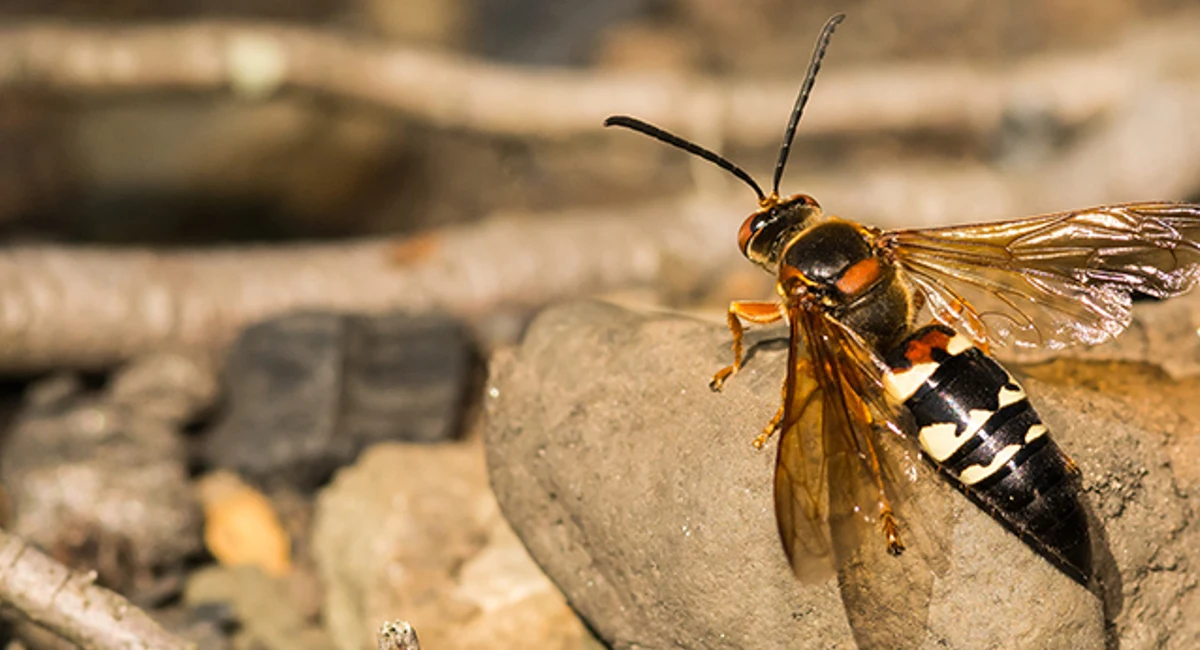
Cicada killer wasps come out during the summer, so this is a good time to get to know them a little better. Let’s get familiar with some basic facts about eastern cicada killer wasps.
- These are not tiny wasps - they can be up to 1 ⅝ inch in length.
- Males are usually smaller compared to females.
- Their wings are tinted orange.
- Eastern cicada killer wasps are located to the east of the Rocky Mountains.
- Cicada killer wasp sting venom paralyzes cicadas.
- As morbid as it sounds, cicada killer wasp larvae actually feed on cicadas that are paralyzed.
- Due to their feeding on cicadas, cicada killer wasps are helpful insects, as cicadas can harm trees. But issues could occur if cicada killers are located in an area where many people go.
- In the eastern United States, you may see cicada killers from July through September.
- They are not the same thing as the Northern giant hornet, or murder hornet
Alongside other species of wasps, they can be known as one of nature's pest controllers. Wondering how they might benefit the ecosystem? Learn more in our article - what is the purpose of wasps?
Cicada killer wasp size
Cicada killer wasps are some of the largest wasps found in North America, with females measuring up to two inches long. Their size, paired with black bodies, yellow abdominal stripes, and reddish-brown wings, gives them an intimidating appearance, though they're far less aggressive than their size suggests.
Cicada killer wasp: male vs. female
Females are noticeably larger than males, growing to nearly two inches long compared to about 1.5 inches for males. This size difference comes down to diet: females need extra strength to carry paralyzed cicadas back to their burrows, so they receive more food as larvae.
Males, meanwhile, spend their time hovering and challenging other males near nesting sites, but they lack a stinger entirely, so despite their bold behavior, they can't sting. Females do have a stinger, but rarely use it unless handled roughly.
Cicada killer wasp diet
As larvae, cicada killers feed exclusively on paralyzed cicadas which the female wasp hunts, stings, and drags or carries back to her burrow. Adult cicada killers, however, feed on flower nectar and plant sap rather than other insects.
Cicada killer wasp holes
Cicada killer wasp females create burrows. A common place for a burrow is bare soil. Females like making holes where full sunlight is present. The holes can be found in spots such as beneath shrubs or close to sidewalks.
Underground cicada killer wasp nests
Using their stings to paralyze cicadas, female cicada killer wasps take the cicadas to their burrows for their offspring. Once the larvae have hatched (which takes two to three days), they feed on the cicadas. The cicadas are alive during this time – not exactly the most appealing picture to think about!
Later, the larvae create cocoons, where they spend the winter becoming pupae in the spring and adults around summertime. As adult cicada killers, they search for mates.
When cicada killer wasps create tunnels, soil that has been moved can cover grass. These flying insects can also excavate soil in gardens. Moreover, cicada killer wasp buzzing can be noisy. They will buzz at you if you walk into their area. A number of cicada killers can nest in close proximity to each other.
These nests are usually solitary, though several females may dig burrows close together in the same patch of soil if conditions are favorable, which can make an area look more heavily infested than it is. While cicada killers are generally not aggressive toward people, a yard full of burrows can still be disruptive, especially in areas where children or pets play.
Cicada killer wasp sting
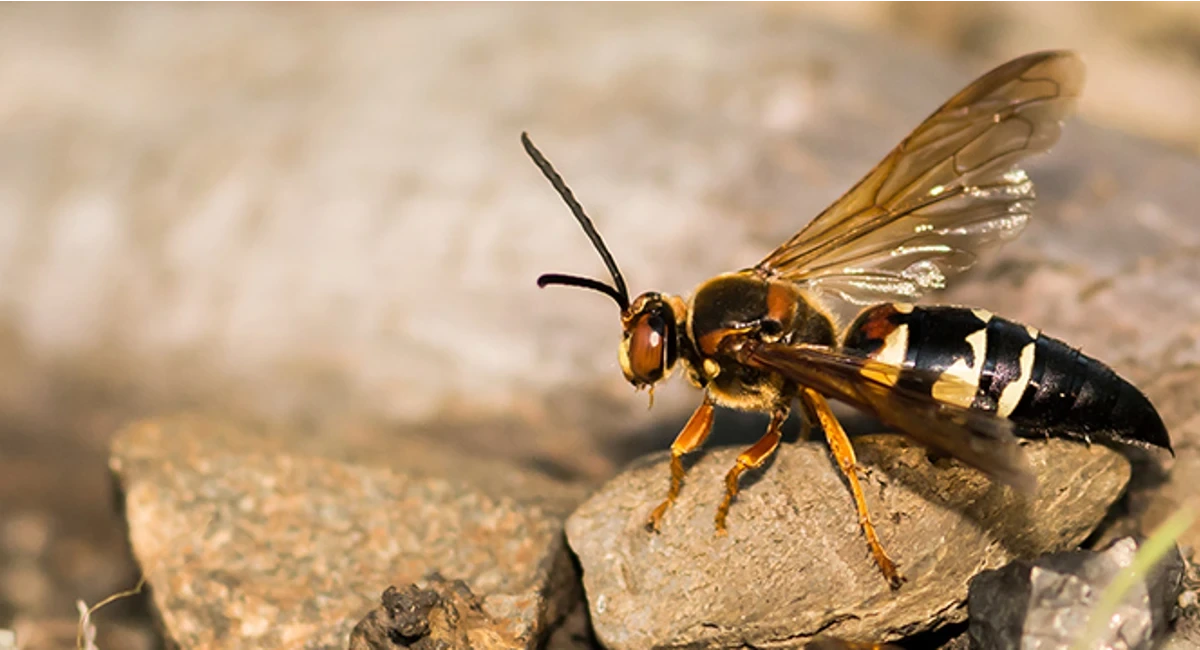
If you have ever seen a cicada killer wasp, your number one fear may be their sting – but do not become too afraid. Only female cicada killers sting. This can hurt, but they sting only when they are bothered. If you come into an area with cicada killers, a male one may fly up to you, but you will not face a sting from them.
So, as long as you don’t incite cicada killers, you shouldn’t need to worry much. Do be careful when walking around in bare feet, as you could step on one and get stung.
At the same time, insect stings can bring on severe reactions in some people. If you do happen to be stung and experience any serious symptoms, contact a medical professional right away.
What happens if a cicada killer stings you?
A cicada killer sting typically causes localized pain, redness, and swelling similar to other wasp stings, though many people describe it as less painful than a yellowjacket or hornet sting. Since males don't have a stinger, only females are capable of stinging, and they generally only do so when handled or stepped on.
Are cicada killer wasps dangerous?
Cicada killer wasps aren't considered dangerous in the way some other stinging insects are. Females have a stinger but rarely use it against people unless directly provoked, and males can't sting at all. The bigger concern tends to be their size and burrowing habits rather than any real threat to people or pets. That said, anyone with a known allergy to wasp or bee stings should still take precautions around any stinging insect.
Are cicada killer wasps aggressive?
Despite their large size and the way males patrol nesting areas, cicada killer wasps aren't aggressive toward people. Males may dive-bomb or hover nearby to guard territory, but this behavior is aimed at other males, not humans, and they physically cannot sting. Females are focused on hunting cicadas and provisioning their burrows, so they tend to ignore people unless threatened.
How to destroy a cicada killer wasp nest
Since cicada killer burrows are underground and can branch into multiple tunnels, locating and treating every entrance is tricky, and pouring water or chemicals down a single hole often misses connected tunnels entirely. This makes DIY nest destruction more of a short-term fix than a real solution, and disturbing burrows without the right approach can still lead to stings.
Our wasp control services can help identify how extensive a burrow network is and treat it thoroughly, so the problem doesn't just resurface later in the season.
How to get rid of cicada killer wasps
When it comes to stinging insects such as wasps or bees, you need to be very careful and rely on the experts who know how to handle them safely. If cicada killers are disturbing your property, you should get in touch with a wasp control professional to resolve the issue.
One of Ehrlich’s trusty pest specialists can come out to your home or business and get rid of your cicada killer problem.
Book your free pest inspection today
Our local technicians will assess your property and recommend tailored solutions. Fast, friendly, and completely obligation-free.
- Safe, targeted treatments
- Local experts, fast response
- Trusted, trained technicians