© 2026 Rentokil Initial plc and subject to the conditions in the legal statement.
Quick overview
- Bed bugs can hitch a ride on clothing without you knowing
- Hotels, secondhand items, and shared laundry are common transfer points
- High-heat washing and drying can help address bed bugs on fabric
- Washing clothes alone won't resolve an infestation; professional treatment is needed
- Bed bugs are not a sign of poor hygiene; they go wherever people go
Bed bugs in clothes are more common than most people realize. These tiny insects are expert hitchhikers, and fabric is one of their favorite ways to get from one place to another. Whether you've just returned from a hotel stay, visited a friend's home, or picked up a secondhand item, your clothing can unknowingly become a vehicle for these pests.
Understanding how bed bugs use clothing to travel puts you in a much stronger position to stop them. Here's what you need to know.
Can bed bugs live on clothes?
Bed bugs don't live on your body the way lice do. They prefer to stay close to where you sleep, hiding in mattress seams, bed frames, and nearby furniture. But bed bugs can live on clothes temporarily.
Clothing left on the floor, draped over a chair near the bed, or packed in a bag in an infested room can easily pick up bed bugs. They'll tuck themselves into seams, cuffs, and folds, staying hidden until they find a new place to settle. This is one of the main ways bed bug infestations spread between rooms, homes, and even cities.
Will bed bugs stay on your clothes all day?
This is a question we hear a lot. Will bed bugs stay on your clothes while you're wearing them? Generally, no. Bed bugs are not adapted to live on a moving host. They prefer dark, undisturbed hiding spots and tend to come out only to feed at night when you're still and asleep.
That said, if you put on clothing that was sitting in an infested area, a bed bug could hitch a ride. Once you're moving around, they're more likely to drop off or find a new hiding spot in your bag, car seat, or home. This is exactly how bed bugs can be carried on clothes from one location to another without the person even knowing.
Can you see bed bugs on clothes?
Adult bed bugs are about the size of an apple seed, roughly 5 to 7 mm long, flat, and reddish-brown. In theory, yes, you can spot them with the naked eye. But they're very good at hiding in the folds and seams of fabric, which makes them easy to miss.
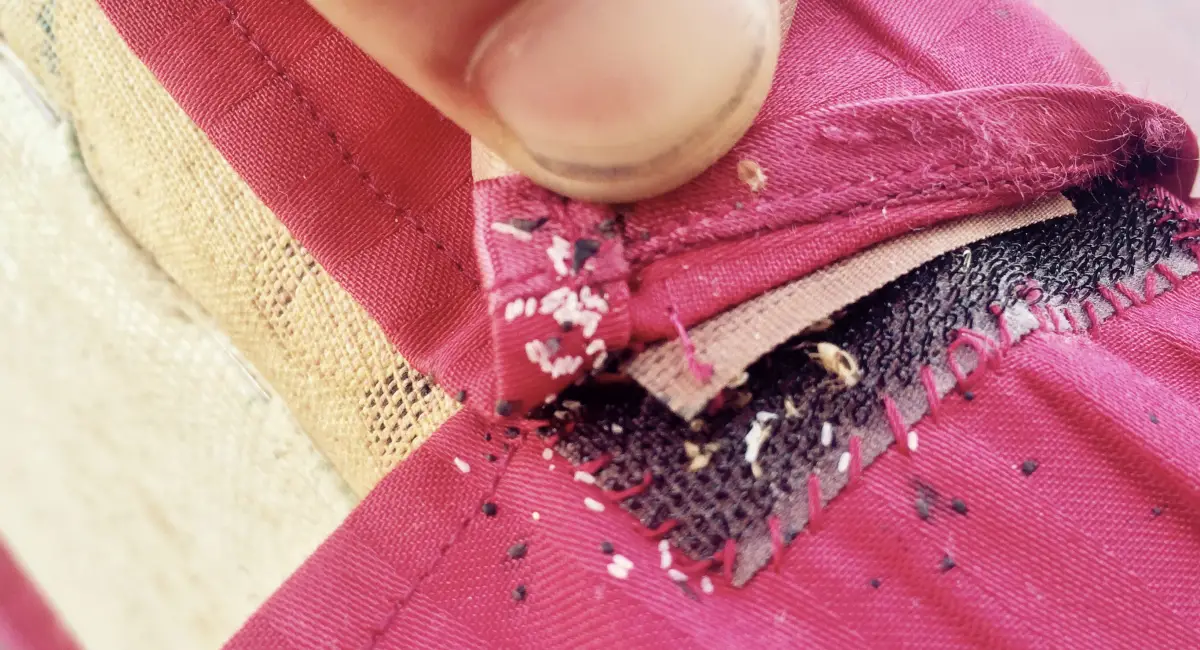
Nymphs (young bed bugs) are much smaller and nearly translucent, making them even harder to detect. And bed bug eggs on clothes are tiny, white, and sticky, often laid in the seams of garments left undisturbed near an infested area.
Here's what to look for when checking clothing:
- Live bugs tucked into seams, cuffs, or folds
- Tiny white eggs in fabric creases, especially on items left near sleeping areas
- Dark fecal spots (small ink-like dots) on light-colored fabric
- Shed skins from nymphs as they grow
How do bed bugs get onto clothing?
It happens more often than people expect, and it doesn't require a heavily infested environment. Even a single bed bug in a hotel room, a friend's couch, or a shared laundry facility can end up on your clothing.
Bed bugs are found in hotels of all price ranges, and leaving clothes on the bed or floor significantly increases the risk of picking them up. Secondhand clothing and thrift store items are another concern. Pieces that have passed through multiple homes can carry bed bugs or their eggs without any visible signs. Communal laundry rooms in apartment buildings are also a known transfer point, as are the upholstered seats on buses, trains, and planes, which can harbor bed bugs that then move onto clothing or bags.
Even visiting a friend's home can be enough. Sitting on infested furniture and then placing your bag or jacket nearby is all it takes for a transfer to happen.
It's worth noting that bed bugs are not a sign of poor hygiene. They're opportunistic pests that go wherever people go, and they're a challenge that pest control professionals like Ehrlich deal with regularly across all types of properties.
What to do if you think bed bugs are in your clothes
If you suspect bed bugs in your clothes, acting quickly can help limit the spread. Here's a practical approach:
- Contain the clothing. Before moving anything, place the items in a sealed plastic bag. This helps prevent any bugs from spreading to other areas of your home while you deal with the problem.
- Wash and dry on high heat. Heat is one of the most effective ways to address bed bugs in fabric. Wash clothing in hot water and then dry on the highest heat setting for at least 30 minutes. Bed bugs cannot survive temperatures above 118°F, so a hot dryer cycle is your best option here. If an item can't be washed, placing it in a sealed bag and putting it in a hot dryer alone (without washing) can still be effective.
- Store clean items carefully. Once laundered, store clean clothing in sealed bags or containers until you're confident the infestation has been addressed. Don't return items to drawers or closets in an infested room.
- 4. Don't rely on DIY measures alone. Washing your clothes is an important step, but it won't resolve an infestation in your home. Bed bugs hide in mattresses, bed frames, baseboards, and furniture, and a thorough treatment is needed to address all life stages. DIY methods can reduce numbers temporarily, but they rarely get to the root of the problem. A professional bed bug exterminator is the most reliable way to identify the full extent of an infestation and get it under control.
How to stop bed bugs from hitchhiking home on your clothes
Prevention is always easier than dealing with an active infestation. These practical steps can help reduce the risk of bringing bed bugs home on your clothes:
- When traveling: Keep luggage on a rack and away from the bed. Inspect the mattress seams and headboard before settling in. Store worn clothing in a sealed bag rather than leaving it on the floor or furniture.
- After travel: Unpack directly into the washing machine if possible. Inspect your luggage before bringing it inside.
- At shared laundry facilities: Transport clothing in sealed bags and remove items directly from the dryer into a clean bag. Avoid placing clean laundry on shared surfaces.
- When buying secondhand clothing: Inspect items carefully before bringing them home, and wash them on high heat right away.
For property managers, hotels, and businesses where guests or residents move in and out regularly, bed bug risks are an ongoing concern. A proactive approach to pest management for your business can help catch problems early before they have a chance to spread.
So, in summary, while bed bugs don’t live on clothes, they can catch a ride on them into your home. But you can reduce the risks of a bed bug infestation by taking the steps outlined above.
See how Ehrlich can help address bed bug infestations in your home or business.
Schedule your free pest inspection today
Get peace of mind knowing your home or business is protected. Our technicians will assess your property and recommend customized solutions.
Book your free pest inspection today
Our local technicians will assess your property and recommend tailored solutions. Fast, friendly, and completely obligation-free.
- Safe, targeted treatments
- Local experts, fast response
- Trusted, trained technicians