© 2026 Rentokil Initial plc and subject to the conditions in the legal statement.
Quick overview
- Bed bugs and fleas both bite, but they look and behave very differently
- Bed bugs are flat and oval; fleas are narrow and jump
- Bed bugs stay near beds; fleas spread throughout the home
- Correct identification is key; the wrong treatment can allow infestations to grow
You've got bites. You've checked the bed. You're still not sure what you're dealing with. It's a frustrating situation, and it's more common than you'd think. Fleas and bed bugs are two of the most frequently confused household pests in the U.S., and getting the identification wrong can mean weeks of ineffective treatment.
So, what's the difference between bed bugs and fleas? More than you might expect. While both are small, reddish-brown, and feed on blood, they behave very differently, live in different places, and call for completely different approaches to control.
Are bed bugs and fleas related?
Despite the confusion, bed bugs and fleas are not related. They belong to entirely different insect orders. Bed bugs (Cimex lectularius) are members of the order Hemiptera, the "true bugs." Fleas belong to the order Siphonaptera, a group of wingless, jumping insects.
The two share some surface-level similarities: both are parasitic, both bite, and both are small enough to go unnoticed until an infestation is well underway. But that's roughly where the similarities end. Anyone dealing with a suspected infestation will find that bed bug biology and behavior is quite distinct from that of fleas.
What do they look like?
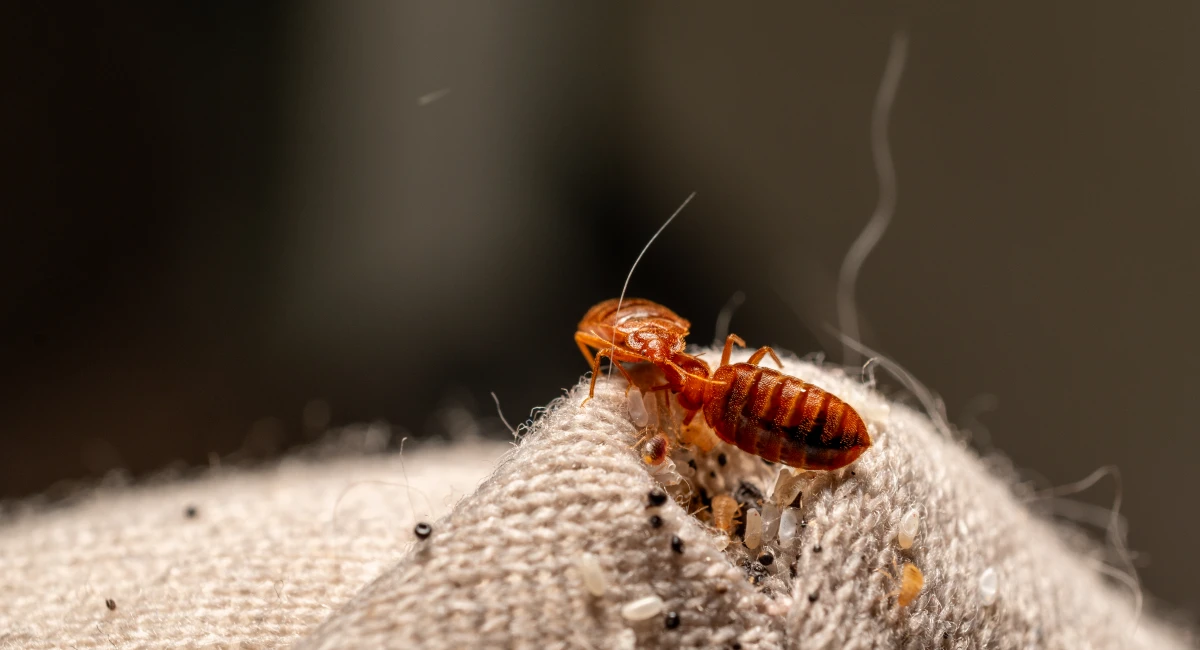
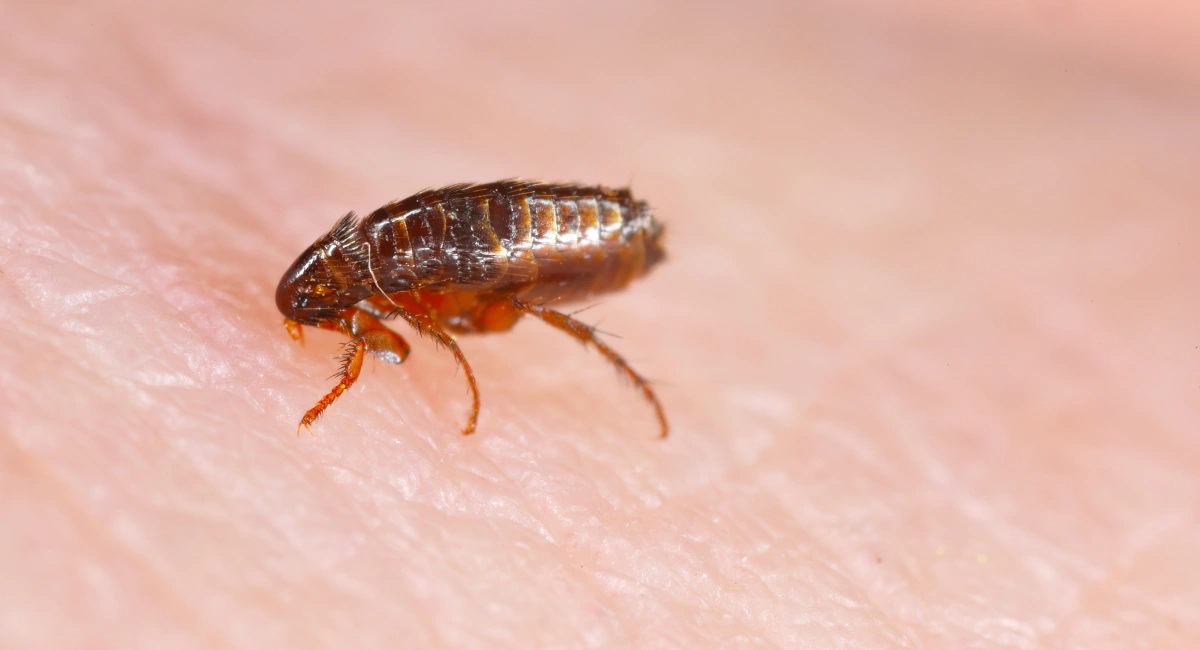
Getting a close look at the pest is often the fastest way to figure out what you're dealing with. Essentially, if the insect you're looking at is flat and oval, it's more likely a bed bug. If it's narrow and appears to jump, it's almost certainly a flea.
Bed bug appearance
Bed bugs are flat, oval-shaped insects, roughly the size of an apple seed (about 1/4 inch long). They are reddish-brown in color, though they appear darker and more swollen after feeding. Their flat profile allows them to squeeze into incredibly tight spaces, like the seam of a mattress or a crack in a baseboard.
Flea appearance
Fleas are smaller than bed bugs, typically around 1/16 to 1/8 inch long. Their bodies are narrow and compressed from side to side, which gives them that distinctive, almost seed-like silhouette when viewed from above. They are dark brown to reddish-brown and have long, powerful hind legs built for jumping.
Where do they live?
Location is one of the most reliable clues when telling fleas and bed bugs apart.
Where bed bugs hide
Bed bugs stay close to where people sleep, typically within a few feet of the bed. Common hiding spots include mattress seams, box springs, bed frames, headboards, behind baseboards and electrical outlets, and inside furniture joints and upholstery seams.
They are nocturnal and rarely venture out during the day. Homeowners and property managers who spot insects hiding in these areas are often dealing with a bed bug infestation that warrants professional bed bug exterminators.
Where fleas live
Fleas are far more mobile and tend to spread throughout a home. They thrive in carpets and rugs, especially in shaded, low-traffic areas. They can also be found in pet bedding and upholstered furniture, cracks in hardwood floors, and outdoor areas where pets rest or wildlife passes through.
Fleas are strongly associated with pets. If you have a dog or cat that goes outdoors, they are a common entry point. That said, fleas can enter a home even without pets, hitching rides on rodents or wildlife. For businesses in food service, healthcare, or hospitality, a flea problem can escalate quickly in high-traffic environments, where commercial pest management becomes essential.
How do their bites differ?
Bite location and pattern can offer useful clues to the pest. Bed bug bites typically appear on exposed skin during sleep: arms, neck, shoulders, and face. They often show up in a line or cluster and may not become visible for several days after the bite occurs.
Flea bites tend to cluster around the ankles and lower legs, since fleas jump from floor level. They are usually small, red, and intensely itchy, often with a red halo around the bite site. Pets with fleas may show signs of excessive scratching, hair loss, or skin irritation.
However, bite appearance alone is not a reliable way to identify the pest. Both bites can look similar, and individual reactions differ widely.
How do they move?
This is one of the clearest behavioral differences between the two pests.
- Bed bugs crawl. They cannot fly or jump. They move slowly and deliberately, which is why they tend to stay close to their feeding area.
- Fleas jump. Their powerful hind legs allow them to leap up to 150 times their own body length, which is how they spread through a home so quickly.
If you see something jumping, it's a flea. If it's crawling slowly across a surface, it's more likely a bed bug.
Which hosts do they prefer?
Bed bugs strongly prefer humans. They are drawn to the carbon dioxide and warmth we produce during sleep and will rarely feed on pets if a human host is available nearby.
Fleas prefer animal hosts, particularly cats and dogs. They will bite humans, but typically only when their preferred host isn't available. This is why flea infestations are far more common in homes with pets.
Why correct identification matters
Misidentifying the pest is more common than you might expect. Many bed bug infestations are initially reported as flea problems before being correctly identified. Getting it wrong means applying the wrong treatment, which wastes time and allows the infestation to grow.
The treatment approaches for these two pests are fundamentally different. Flea control focuses on breaking the flea life cycle across the whole home and treating pets, while bed bug treatments target specific hiding spots using heat, steam, or targeted insecticide applications.
DIY products can help reduce populations in mild cases, but they rarely address the full scope of an infestation. Fleas reproduce rapidly, laying up to 50 eggs per day, and bed bugs are skilled at hiding in places that are easy to miss. For recurring or widespread problems, a professional pest control assessment is the most reliable path forward.
Not sure what you're dealing with?
If you've spotted bites, found insects, or just have a nagging feeling something isn't right, our team at Ehrlich can help. We offer free pest inspections across our service areas, and our technicians are trained to accurately identify and address both bed bug and flea infestations. Get in touch to schedule your inspection and take the guesswork out of it.
See how Ehrlich can help address bed bug infestations in your home or business.
Schedule your free pest inspection today
Get peace of mind knowing your home or business is protected. Our technicians will assess your property and recommend customized solutions.
Book your free pest inspection today
Our local technicians will assess your property and recommend tailored solutions. Fast, friendly, and completely obligation-free.
- Safe, targeted treatments
- Local experts, fast response
- Trusted, trained technicians