Temps and termites are on the rise. Schedule your free inspection today.

800-837-5520 Call us for a free quote Contact us

Bumble bee control services

Bumble bees are important pollinators that help flowers, gardens, and crops thrive. However, they can pose a danger to your family and pets when their nests are too close to your home. Find out how our technicians can provide bumble bee control to help manage infestations responsibly while keeping environmental protection in mind.

Seeing bumble bees on your property? Ehrlich can help

While they’re a vital part of the ecosystem, protecting your family, pets, and property from an unexpected bumble bee sting is important. Ehrlich technicians can identify nests and remove them if necessary, offering bumble bee removal solutions that put both people and these important pollinators first.

* Required field

Download this report

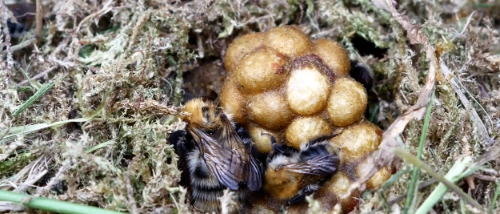
Several bumble bees in a ground-level nest, consisting of several clustered cells

What does a bumble bee nest look like?

A bumble bee nest is usually small and often built close to the ground, unlike wasp and hornet nests. 

It can look like a messy ball made of waxy material mixed with bits of grass or moss. These nests are typically found in sheltered spots such as abandoned rodent burrows, under sheds, or around compost piles.

Each species of bumble bee - of which there are approximately 47 species in the US alone - may build slightly differently. Most nests contain wax cells used for storing nectar and pollen, though. If you notice increased bee activity around one area of your yard, it could signal a nest nearby.

Learn more about bees
Is bumble bee pest control necessary?

Although bumble bees are not an aggressive species, they can become defensive if their nest is disturbed. They’ll act to protect their colony and may sting to defend it. In many cases, nests can be left alone if they’re located far from human activity, but when they’re too close for comfort, professional bumble bee pest control may be needed.

When are bumble bees a problem?

Bumble bees can become an issue when:

  • The nest is located near an area where people or pets walk frequently.
  • Someone in your household has an allergy to bee stings.
  • A pet or family member has been stung or swarmed by bees.
  • The nest appears to be expanding and more bees are present each day.

Our bumble bee control process

Our technicians are trained to identify and manage bee activity with care. We use methods that prioritize safety and the environment, aiming to get rid of bumble bees responsibly. Below is what to expect from our process for bumble bee control.

Initial consultation

During your first call, an Ehrlich technician will discuss the problem, assess the level of activity, and recommend next steps. We’ll schedule a visit that fits your availability and works around you.

Property inspection

Your technician will inspect your property to confirm the nest’s location and determine whether relocation or treatment is required. Identifying the exact type of bee and the size of the colony helps us decide the next steps. Treatments and costs will be made clear before treatment begins.

Treatment or relocation of bees

If the nest poses an immediate risk, your technician may carefully apply control measures or coordinate relocation with a local beekeeper. Depending on the situation, bumble bee extermination may only be considered as a last resort, when relocation isn’t possible due to safety concerns.

Follow-up inspections

After the treatment, our team will check your property to ensure the issue has been resolved and that no new activity is developing. This follow-up visit helps maintain lasting results and prevents new nests from forming.

Ehrlich provides expert bumble bee control

Ehrlich has decades of experience providing responsible, science-backed pest management. Our technicians use environmentally conscious solutions to help manage bumble bee control problems while protecting pollinators whenever possible. If you suspect a nest near or in your home, reach out to us today to schedule an inspection and learn how we can help you stay protected year-round.

Frequently asked questions

Yes, bumble bees can sting, but they usually do so only when they feel threatened or if their nest is disturbed. Unlike honey bees, bumble bees can sting multiple times without losing their stinger.

No, bumble bees are generally not aggressive and prefer to focus on gathering nectar and pollen. They will only become defensive if someone or something comes too close to their nest.

Bumble bees are drawn to flowering plants that provide nectar and pollen. They may also nest near sheltered areas such as sheds, compost piles, or underground burrows where they can stay protected.

A bumble bee nest usually houses between 50 to 400 bees, depending on the species and season. Colonies start small in spring and grow larger as summer progresses.

Bumble bees often hover near people out of curiosity or because they detect floral scents from clothing, lotions, or perfumes. They typically move on once they realize there’s no food source.

Find your local branch

With our annual preventative pest maintenance program, PestFree365+, you can enjoy protection from pests, 365 days a year.