800-837-5520 Call us for a free quote Contact us

What does an ant nest look like?

Different ant species build in very different ways, from visible mounds in your lawn to hidden networks inside your walls. Here's a breakdown of the main ant nest types and the species most likely to build them.

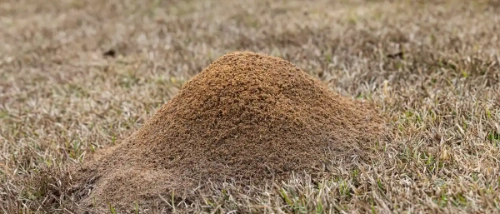
An ant nest mound, 10 inches tall, on a lawn.

Soil mounds

Soil mounds are one of the most recognizable types of ant nests. They appear as raised piles of loose, disturbed earth. Size and shape vary by species, but they're most commonly found in lawns, along driveways, or near the base of structures.

Species that build soil mounds:

  • Fire ants build distinctive dome-shaped mounds of loose, fluffy soil, typically 10–24 inches wide. Unlike most ant mounds, fire ant nests have no visible entrance hole on top.
  • Pavement ants create small craters of fine sand or soil pushed up through cracks in pavement, driveways, patios, and along foundations.
  • Black garden ants build small, rounded mounds of loose soil in lawns, garden beds, and along paths. A central entrance hole is usually visible.
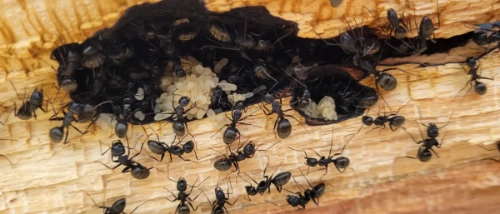
Dozens of carpenter ants infest timber; their eggs are visible

Nests in wood

Wood-nesting ants don't eat wood in the same way termites do. They excavate it to create smooth, hollow galleries for their colony. If you spot what appears to be a pile of sawdust near a wooden beam, window frame, or door, it's worth investigating. Due to the destructive nature of wood-nesting ants, we recommend professional ant control as soon as you spot signs of them.

Species that nest in wood

  • Carpenter ants are the only common ant species to nest inside wood. They carve out smooth, clean galleries, often in soft, moisture-damaged timber. Look for frass: a mix of coarse sawdust, insulation fragments, and insect debris pushed out of the nest.

Seeing ants?

Call now to book your free inspection.

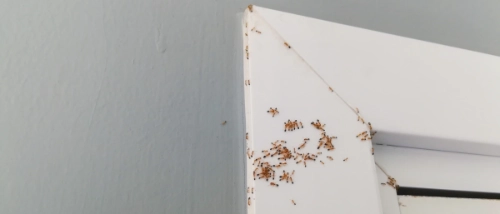
Dozens of ants crawl around an interior doorframe

Hidden indoor nests

Some ant nests in the home are almost impossible to see. Some species nest deep inside wall voids, behind baseboards, under flooring, or near heat sources. The main clue is a steady trail of ants appearing from a crack or gap with no obvious source.

Species that build hidden indoor nests

  • Pharaoh ants nest deep inside wall voids, behind baseboards, and near warm appliances or pipes. Colonies can be large and spread across multiple sites within a building.

  • Odorous house ants nest in wall voids, under floors, and beneath insulation. Outdoors, they'll nest under mulch, stones, or debris. Colonies move frequently, making them tricky to track down.
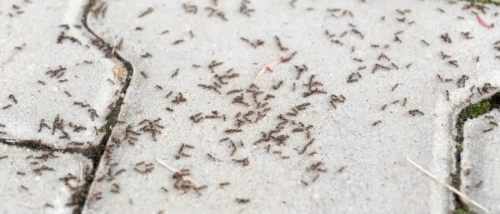
Many ants crawl over and through the cracks of pavement slabs

Nests under objects

Many ant species prefer to nest in sheltered spots just below the surface: under rocks, logs, mulch, or garden debris. These nests are often only discovered when the object is moved. They tend to look like a network of shallow tunnels and chambers in the soil, sometimes with a cluster of white larvae visible.

Species that nest under objects

  • Argentine ants build shallow nests in moist soil beneath stones, mulch, logs, and leaf litter. The nest itself is unremarkable, but colonies can be enormous, sometimes spanning multiple connected sites across a yard.
  • Odorous house ants also commonly nest under stones, mulch, and garden debris outdoors before moving inside. 
  • Pavement ants. While best known for mounds in pavement cracks, they also nest under flat stones, slabs, and debris close to structures.
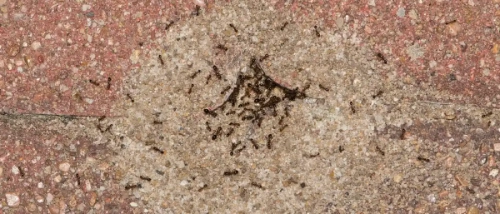
Dozens of ants crawl out of the opening of their underground nest - a small opening in the sidewalk

Underground nests

Some ant colonies extend well below the surface, often with minimal signs above ground. These nests can be surprisingly deep and wide, housing thousands and even millions of ants throughout networks of tunnels.

Species with underground nests

  • Pavement ants nest primarily underground beneath slabs, foundations, and paved surfaces. Small mounds may appear over their nests.
  • Black field ant colonies can extend several feet underground, with a network of chambers used for food storage, egg-laying, and overwintering.
  • Argentine ants build shallow but widespread underground networks, often interconnected, across large areas of a yard or garden.

What to do if you find an ant nest

If you've found an ant nest in your house or yard, try not to disturb it, as this can cause the colony to scatter and relocate, making it harder to treat effectively. (This is especially true for species like pharaoh ants, which can split into multiple new colonies when threatened.)

The most reliable approach is to get a professional assessment. Book a free inspection with Ehrlich and we’ll help to identify the species, locate the full extent of the nest(s), and recommend the right treatment, whether that's targeted baiting, barrier treatments, or exclusion work to seal entry points.

Many common ant species, including carpenter ants and fire ants, are covered under our PestFree365+ plan, which provides year-round protection.¹
Frequently asked questions

Underground ant colonies are made up of a network of tunnels and chambers used for food storage, egg-laying, and shelter. At the surface, you may see only a small entrance hole or a faint soil disturbance. The bulk of the colony is hidden below.

The most common signs are a steady trail of ants emerging from a crack or gap with no obvious food source nearby, or faint rustling sounds inside the wall. In the case of carpenter ants, you might notice small piles of frass near wooden structures. A professional inspection is the most reliable way to confirm it.

It depends on the species. A mature carpenter ant colony may hold a few thousand workers, while a fire ant mound can house hundreds of thousands. Argentine ant supercolonies are among the largest in the insect world, with interconnected nests containing millions or even hundreds of millions of workers.

¹ Treatments and Covered Pests defined in your Plan. Limitations apply. See Plan for details.

Find your local branch

Enjoy protection from 39 of the most common household pests with our annual pest control program, PestFree365+.