© 2026 Rentokil Initial plc and subject to the conditions in the legal statement.
Quick overview
- Only honey bees die after stinging
- Carpenter bees, bumble bees, and other species can sting multiple times
- Honey bee stingers are barbed; tearing them free kills the bee
- Established nests pose real risks; professional removal is strongly advised
Whether bees die when they sting a person depends on the species. While a honey bee does, in fact, perish after defending its hive, other common bee species are capable of striking multiple times without injury to themselves. To understand why honey bees die after stinging, we need to look at their anatomy and the highly specialized defensive mechanism they use to protect their colony.
The barbed stinger of the honey bee
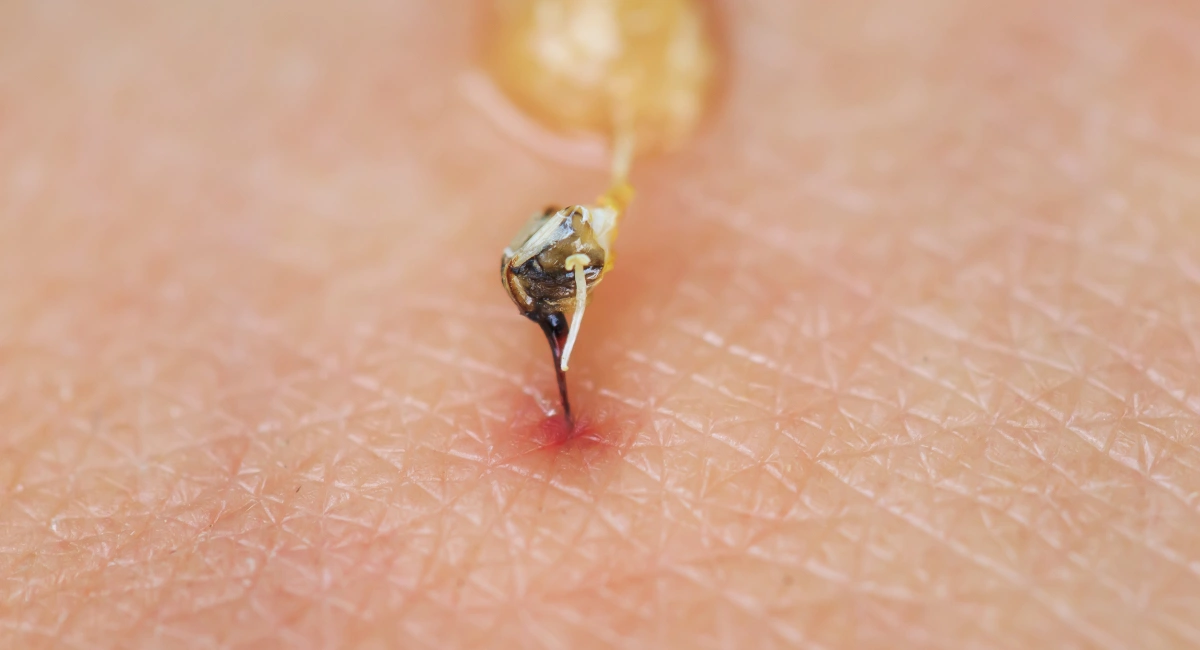
Up close, a worker honey bee's stinger looks like a hollow needle lined with two rows of saw-toothed, outward-facing barbs. When the bee stings a person, or another thick-skinned animal, these barbed blades slice into the tissue.
Because the stinger acts like an anchor, the bee cannot pull it out. When it tries to fly away, its lower abdomen ruptures, leaving behind the stinger, venom sac, and muscle tissue. This severe injury causes the honey bee to die shortly after the sting.
The stinger’s secret weapon
This act of self-sacrifice serves a clear evolutionary goal. Even after the stinger detaches, the venom sac's independent muscles keep pumping toxins deep into the skin. Plus, the venom releases an alarm pheromone that smells a lot like bananas. This scent warns nearby worker bees that there's a threat, kicking off a full-on defense of the hive.
Why do bees sting?
Bees generally only sting to defend their hive or themselves when they feel threatened. It's a natural defense mechanism that drives predators away from the colony and protects the reproducing queen and stored resources.
Bee species that can sting multiple times
Apart from the honey bee, most bees and wasps can sting multiple times. Bumble bees, carpenter bees, wasps, or hornets, for example, have smooth stingers and don't experience the fatal abdominal ruptures that honey bees do.
- Bumble bees: These fuzzy pollinators have smooth stingers and can strike multiple times without injury.
- Carpenter bees: Often found boring holes in wooden structures, female carpenter bees can repeatedly use their smooth stingers if provoked.
- Wasps and hornets: These predatory insects require a reusable weapon to hunt. They are capable of delivering multiple, rapid strikes.
What to do if you get stung
Insect venom contains melittin and histamines, which is what causes that sharp pain, swelling, and redness at the site of the sting. For most people, these symptoms will go away in a few days. However, you need to act fast to minimize discomfort and prevent any further problems.
First calmly walk away from the area of the sting to avoid further stings. Next, the AAD recommends removing the stinger by scraping over it with fingernail or a piece of gauze (never use tweezers as it can cause more venom to be released). After removing the stinger, wash the affected area with soap and water and apply a cold pack to reduce the swelling.
The AAD advises keeping an eye on the person who has been stung in case they develop more serious symptoms. Seek immediate medical attention if they show signs of an allergic reaction or have been stung multiple times.
Managing bees on your property
Established nests can pose real problems for homes and businesses alike — from the risk of stings in your yard to customer comfort in foodservice settings.
Never attempt to remove a nest yourself; disturbing an active colony can trigger a dangerous defensive response. It’s best to call in trained technicians for professional bee control. They can advise on the safest options, ensuring compliance with any relevant legislation intended to protect these vital pollinators.
Schedule your free pest inspection today
Get peace of mind knowing your home or business is protected. Our technicians will assess your property and recommend customized solutions.
Book your free pest inspection today
Our local technicians will assess your property and recommend tailored solutions. Fast, friendly, and completely obligation-free.
- Safe, targeted treatments
- Local experts, fast response
- Trusted, trained technicians