Temps and termites are on the rise. Schedule your free inspection today.

800-837-5520 Call us for a free quote Contact us

Carpenter bee control services

Carpenter bees can become an unexpected problem for homeowners, especially when they start drilling into wooden decks, porches, and railings. Unlike other bee species that live in hives, carpenter bees create their nests inside untreated or weathered wood. Our technicians can carry out carpenter bee control to help manage the problem while preserving your property’s structure, whether it’s commercial or residential.

Worried about carpenter bees? You're not alone

Noticing small, round holes in wood surfaces may be your first sign of a carpenter bee infestation. These bees don’t live in colonies; they tunnel into wood to lay their eggs, which can gradually cause damage over time. If you’ve seen sawdust piles or bees hovering near eaves or decks, it’s time to call for professional carpenter bee removal before the issue worsens.

* Required field

Download this report

What are carpenter bees, and why are they a problem?

Carpenter bees are large, solitary bees that resemble bumble bees but lack the fuzzy yellow markings on their abdomens. They are an important pollinator, but while they don’t typically pose much danger due to stinging, when they burrow into wood, they can weaken structures and leave unsightly holes behind. Over time, multiple generations of bees reusing the same wood can cause significant deterioration.

A carpenter bee, with a shiny black abdomen, and a fuzzy yellow thorax, and black head, clings to a stem

How to identify carpenter bees

  • Large and round in shape, usually black or metallic blue in color.
  • Shiny, hairless abdomens, unlike fuzzy bumble bees.
  • Often seen hovering near wood surfaces during spring and summer.

If you need help identifying bees, wasps, or hornets, take a look at our bee species page or get in touch with one of our bee experts.

Learn more about carpenter bees
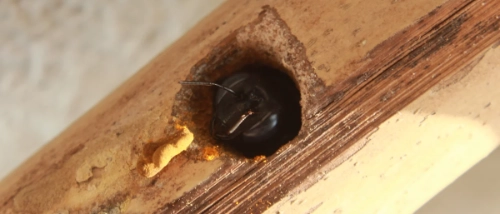
The head of a carpenter bee is barely visible, protruding from a small round hole in some wood

What does a carpenter bee nest look like?

Carpenter bee nests appear as perfectly round entry holes about ½ inch wide, often found on the underside of decks, eaves, or outdoor furniture. Inside, the tunnels run several inches deep and are lined with smooth walls where eggs are laid. You might also see sawdust or yellowish staining near openings, a common sign of nesting activity.

Our carpenter bee control process

Ignoring carpenter bees isn’t a good idea, and addressing the problem early with a professional carpenter bee treatment can help protect your home and prevent future issues. Ehrlich’s technicians use proven methods for long-term carpenter bee pest control. Our process combines targeted solutions with preventive steps to reduce risks and help maintain the integrity of your home.

Initial consultation

We’ll set up a call to learn more about the problem and to get an idea of your property type. We’ll then schedule an inspection visit at a time that suits you.

Thorough initial inspection

We start by identifying signs of bee activity, including entry holes and nesting tunnels, to confirm the extent of the infestation and the level of damage. Before treatment commences, your technician will answer any questions and provide a clear quote.

Targeted treatment

Based on findings, your technician will apply targeted carpenter bee treatments designed to remove bees without causing unnecessary harm to other wildlife.

Preventive protection

After addressing the immediate problem, we’ll recommend sealing entry holes and treating wood surfaces to discourage future nesting. This proactive approach helps you control activity before it becomes a structural concern.

Professional carpenter bee control with Ehrlich

Ehrlich offers trusted, environmentally responsible carpenter bee control designed to help homeowners manage and prevent wood-boring damage. If you suspect carpenter bees - or any bees - around your home or business, contact us today. Our experienced carpenter bee exterminators can inspect, treat, and advise on long-term solutions to keep your home secure.

Frequently asked questions

Carpenter bees look similar to bumblebees but have shiny, hairless abdomens. They are solitary insects, unlike bumblebees that live in colonies, and they tunnel into wood instead of nesting in the ground.

You may notice smooth, round holes in wooden railings, beams, or decks along with piles of sawdust below them. Increased buzzing or hovering around these areas often indicates nesting activity.

No, carpenter bees don’t eat wood; they chew through it to create tunnels for nesting. The sawdust you see around openings is a byproduct of this drilling.

They prefer untreated or weathered wood as a nesting site. Outdoor structures such as decks, fences, and eaves provide ideal shelter for their tunnels.

Yes, untreated nesting can lead to more tunnels and weakening of wood over time. Each generation expands on previous nests, which can cause increasing structural damage if not addressed.

Find your local branch

With our annual preventative pest maintenance program, PestFree365+, you can enjoy protection from pests, 365 days a year.