2. Look for the nest itself
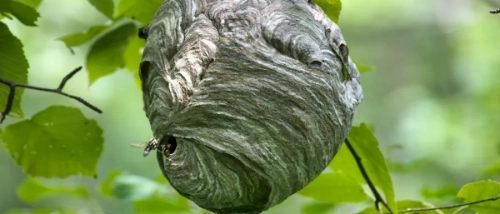
The most direct sign of a wasp infestation is the nest. Depending on the species, a wasp's nest might look like a papery, upside-down umbrella under an eave, a rounded gray ball tucked into a tree. It also may not be visible if the wasps have built a nest underground or inside a wall cavity.
Common places to check include:
- Roof eaves, soffits, and gutters
- Attics, sheds, and garages
- Wall voids and cavity spaces
- Tree branches and shrubs
- Holes in the ground, particularly in mulch beds or lawns
Early-season nests are often small, sometimes no bigger than a golf ball, which makes them easier to miss. Checking your property in spring, before the colony has time to grow, gives you the best chance of catching an infestation early.
Need more help identifying the nest? Check our page: Wasp’s Nest: Signs and Removal.