© 2026 Rentokil Initial plc and subject to the conditions in the legal statement.
Quick overview
- A pest control digital twin is a live virtual copy of your site.
- It maps floor plans, risk areas, and every monitoring device.
- Real-time data shows where and when pests move.
- Heat maps and history help predict problems before they grow.
- It powers 24/7 coverage instead of a few visits a year.
A pest control digital twin is a living virtual copy of your building, its structures, and any associated pest activity data and status. Think of it as a working model of your site that shows not just what your facility looks like, but what is happening inside it right now. If you manage a warehouse, plant, or restaurant, this is the technology that turns scattered sensor readings into a clear picture you can act on. It is also what makes truly proactive rodent control possible.
Here is what a digital twin actually is, and why it changes the math on pest risk.
A digital twin is more than a 3D model
The term gets used loosely, so it helps to be precise. A digital twin is not a static blueprint or a one-time 3D rendering. In facility management, it is a virtual replica that updates continuously with live data from sensors and connected systems, giving managers a real-time view rather than a snapshot.
That distinction matters. A floor plan tells you where things are. A digital twin gives you a virtual image of your site and provides intelligence on the what, when, and where of pest control, and how it changes over time.
How a pest control digital twin is built
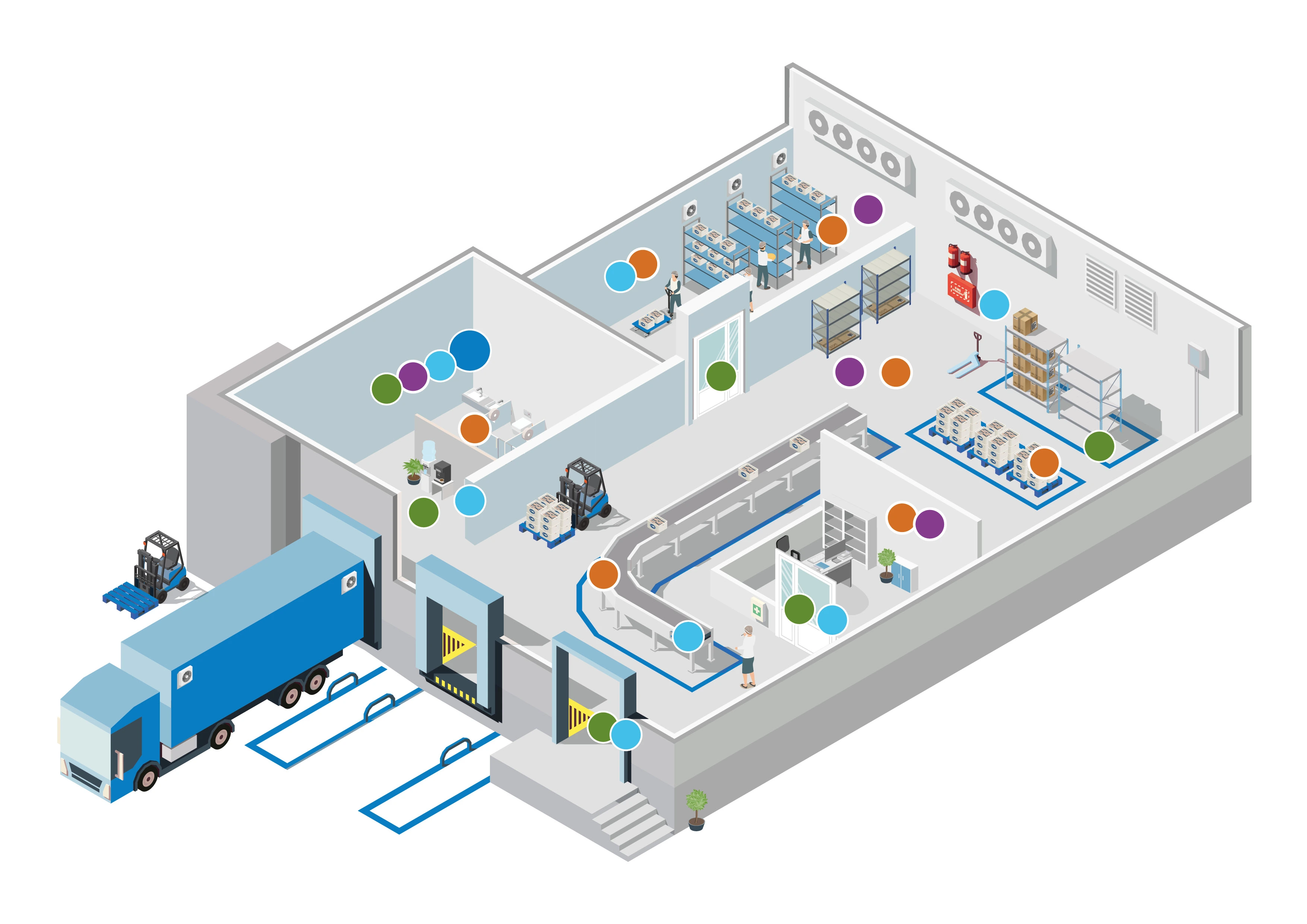
Setting up a digital twin starts with mapping your actual site. Using satellite imagery, floor plans, and a representation of the structure of your site, including buildings, floors, and risk areas where pests are most likely to appear. Then it layers on the location of every connected device.
From there, three data streams come together:
- Device data: what the connected sensors detect, minute by minute.
- Site data: the digital map of your building and its high-risk zones.
- Technician knowledge: what your local Ehrlich team observes and records on site.
Combined, these build a complete, current picture of your facility. Because the twin lives in software, the team can review it remotely and spot issues without waiting for the next scheduled visit.
Turning data into early warnings
This is where a digital twin earns its keep. Facility teams often lose time digging through disconnected systems, with research suggesting they spend nearly 35% of their time searching for fragmented information. The digital twin pulls that information into one place.
Heat maps and travel paths
The system allows visualization of your sites and associated pest information to provide intelligence for effective pest control. Instead of guessing, your technician can see the problem area and go straight to the source.
Spotting patterns you would miss
Because the twin logs time of day and day of week, it surfaces patterns that a single visit never could. If activity spikes every Thursday and that is your delivery day, the link is obvious: the loading doors are the entry point. That insight translates into a specific fix, such as tightening dock door procedures, rather than a general treatment.
Predicting, not just reacting
Digital twins facilitate the delivery of insights, enabling teams to move from reactive to proactive. With enough history, the system flags where a problem is likely to return, so you can act before activity builds.
Benchmarking across a portfolio
If you manage multiple locations, the value multiplies. The data from each site can be compared across your whole portfolio, revealing common pest behaviors by region or sector. That helps you see which commercial sites need attention first and apply what works at one location to the others.
See your facility's digital twin in action
A digital twin only helps if it drives a faster response, and that is exactly what PestConnect is built to do. It maps your site, monitors it 24/7, and alerts your local Ehrlich team the moment activity crosses a threshold, backed by year-round rodent data and technicians who know how to use it. To see how a digital twin would map your facility, request a free inspection with your local Ehrlich team.
Schedule your free pest inspection today
Get peace of mind knowing your home or business is protected. Our technicians will assess your property and recommend customized solutions.
Book your free pest inspection today
Our local technicians will assess your property and recommend tailored solutions. Fast, friendly, and completely obligation-free.
- Targeted treatments, applied safely
- Local experts, fast response
- Trusted, trained technicians