800-837-5520 Call us for a free quote Contact us

What do mouse droppings look like?

If you've spotted small, dark specks somewhere in your kitchen and aren't quite sure what you're looking at, they could well be mouse droppings. They are one of the first clues most people notice, often before they ever see the mouse itself. Find out how to identify them.

Note: If you think you’ve spotted rodent droppings, do not handle them without the proper PPE. They can carry pathogens like Hantavirus, Salmonella, and leptospirosis. Check out our guide on how to handle rodent droppings.

Rodent identification

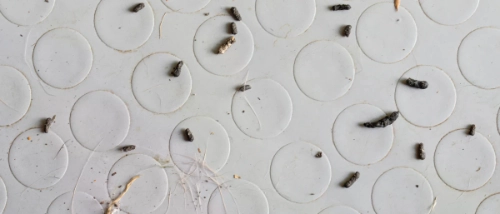
What mouse feces look like

Think of them as tiny, dark grains of rice with a point at each end.

  • Shape: Small, rod-shaped pellets with pointed ends
  • Size: About ¼ inch or less in length
  • Color: Dark brown or black when fresh, fading to gray as they dry out
  • Texture: Soft and moist when fresh, hard and crumbly after a day or two (but don’t handle them without PPE)
  • Quantity: Droppings tend to show up in small clusters rather than one at a time

You'll usually find mouse droppings near food sources, along baseboards, inside cupboards, or tucked into other quiet corners mice like to use as shortcuts.

Mouse vs. rat vs. cockroach droppings

Plenty of droppings look similar at a glance, and it's easy to misidentify the culprit. Check out this quick comparison between the three.

Pest Size Shape Common locations
Mouse ¼ inch or less Pointed ends, rod-shaped Cupboards, baseboards, behind appliances
Rat ½ to ¾ inch Blunt, rounded ends Attics, basements, along walls
Cockroach Under ⅛ inch Cylindrical, ridged sides Kitchens, bathrooms, dark crevices


Cockroach droppings cause the most mix-ups with mouse droppings, since both are small and dark. If you're still not sure how to identify mouse droppings, that's a perfectly good reason to let a technician take a look rather than guess. Treatment looks quite different for mice than it does for cockroaches.


Where to look for mouse droppings

Mice don't wander far from the action, so droppings usually turn up wherever they travel and feed. Keep an eye on:

  • Inside kitchen cupboards and drawers
  • Behind or underneath large appliances
  • Along baseboards and skirting boards
  • Inside pantries and food storage areas
  • In attics, basements, and garages

Finding droppings in more than one of these spots means it’s less likely you have a stray visitor, and more likely that you have an active mouse infestation settling in.

What to do if you find mouse droppings

If you’ve spotted mouse droppings, avoid touching them, and follow these steps.

  1. Don't disturb them dry. Hold off on sweeping or vacuuming until the area's been dampened with disinfectant.
  2. Check for other signs. Look for gnaw marks, nesting materials, or grease marks along walls.
  3. Clean safely. Gloves on, windows open, droppings handled with care.
  4. Call for an inspection. Droppings that keep reappearing are usually a sign something's still living there.

Our technicians can confirm exactly what you're dealing with and recommend the right next step, whether that's exclusion, trapping, or a full rodent control plan.​​​​​

Frequently asked questions

Mouse droppings are smaller, usually around ¼ inch, with pointed ends on both sides. Rat droppings are noticeably larger, closer to ½ to ¾ inch, with blunt, rounded ends. Rat droppings also tend to be thicker and more spread out, rather than clustered.

Fresh droppings are soft, moist, and dark brown to black in color, almost shiny in appearance. As they dry out over a day or two, they turn gray, lose their shine, and become crumbly to the touch, which can help you judge how recently mice have been active.

Mouse droppings can carry bacteria and viruses, including those linked to Salmonella and Hantavirus, so direct contact is best avoided. Always wear gloves, and if you've touched droppings without protection, wash your hands thoroughly and avoid touching your face in the meantime.

A handful of droppings in one spot could simply mean a single mouse passed through once. Regular droppings, or droppings turning up in multiple areas of the property, usually point to an active infestation that's settled in and is worth getting checked out.

Find your local branch

Enjoy protection from 39 of the most common household pests with our annual residential pest control program, PestFree365+.