800-837-5520 Call us for a free quote Contact us

How to identify cockroach droppings

Roach droppings can reveal the species, the location, and the scale of an infestation

Cockroach droppings are one of the clearest signs of an infestation, often appearing before you ever spot a live roach. What they look like depends on the species and how long they've been active in a space. There are, however, a few things that can help you tell them apart from other pest droppings.

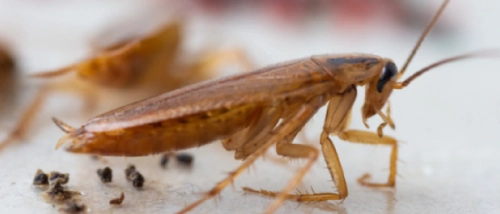
A close-up image of a cockroach and its droppings, with another out-of-focus roach in the background

What do cockroach droppings look like?

Cockroach droppings are typically small, dark, and cylindrical, often compared to coffee grounds or grains of black pepper. Larger species leave droppings with ridged sides and blunt ends, while smaller species produce finer, more scattered specks that can be harder to notice at a glance.

Fresh droppings tend to be darker and slightly moist, while older ones dry out and lighten in color. You'll usually find them concentrated in areas roaches frequent, such as under sinks, behind appliances, or along the back of cabinets.

Unfortunately, identifying cockroach droppings is one of the surefire signs that you have a roach infestation on your hands.
How droppings differ by cockroach species

Size is the biggest giveaway between species, since larger cockroaches produce larger, more defined droppings.

  • German cockroach: The most common indoor species. Droppings are tiny, resembling ground coffee or pepper flakes, and often appear in clusters in kitchens and bathrooms.
  • American cockroach: One of the largest species found indoors. American roach droppings are larger, with ridged sides and a blunt or rounded end, and are often found in basements, drains, or sewer-adjacent areas.
  • Oriental cockroach: Droppings are similar in size to American cockroach droppings but typically found in damp, cool areas like crawl spaces and drains.
  • Brown-banded cockroach: Smaller and harder to spot, since this species tends to hide in higher, drier locations like cabinets or behind picture frames rather than near moisture.
  • Wood roach: Mainly an outdoor species that occasionally wanders in through doors or on firewood. Wood roach droppings look similar to American cockroach droppings but is rarely found in large numbers indoors, since wood roaches don't typically establish an indoor colony.

Struggling with cockroaches?

Call now to book your free inspection.

Cockroach droppings vs. mouse droppings

Cockroach and mouse droppings are frequently mixed up, since both are small, dark, and found in similar hiding spots. Mouse droppings tend to have pointed ends and a smoother, more uniform shape, while cockroach droppings are more likely to have ridges along the sides.

Location can also help, as mice tend to leave droppings along travel paths against walls; cockroach droppings cluster more tightly around a specific harborage site. 

If you're not sure which pest you're dealing with, it's best to have a pest control technician confirm it, since the treatment approach differs significantly between the two.

Why roach droppings are a warning sign

Cockroach droppings can carry bacteria and pathogens picked up as roaches move through drains, garbage, and other unsanitary areas. Once left behind on counters, in cabinets, or near food, those germs can spread to surfaces people touch and eat from every day – in other words, exposure can make you sick.

Finding droppings is also one of the clearest signs that an infestation isn't new. A visible amount usually means they've been feeding and sheltering in that spot for a while, often in far greater numbers than what you can see. The more droppings you find, and the more spread out they are, the more established the problem has likely become.

Need help with cockroaches?

Cockroach droppings can tell you a lot, but confirming the species and the scale of an infestation is best left to a trained eye. Our technicians can inspect your property, identify what you're dealing with, and develop a cockroach control plan tailored to your home.

Frequently asked questions

Size and shape are the easiest starting points. Smaller, pepper-like droppings usually point to German cockroaches, while larger, ridged droppings suggest American or similar large-bodied species. Location matters too, as different species favor different areas of a property.

"Palmetto bug" is a regional nickname, usually for American or smokybrown cockroaches, so their droppings match those larger, ridged types of droppings.

Cockroaches can feed on a range of organic matter, including their own feces, particularly when other food sources are scarce. This habit can actually help spread bacteria and other pathogens throughout an infested space.

Roach droppings consist of undigested food particles along with bacteria picked up as the insect moves through drains, garbage, and other unsanitary areas (this is why finding droppings near food prep areas is a serious hygiene concern).

Find your local branch

Enjoy protection from 39 of the most common household pests with our annual residential pest control program, PestFree365+.