© 2026 Rentokil Initial plc and subject to the conditions in the legal statement.
Quick overview
- Mice nest in warm, hidden spots close to food and water
- Shredded paper, fabric, and insulation are common nest materials
- Indoor nests hide in attics, pantries, and behind appliances
- Outdoor nests turn up in wood piles, sheds, and overgrown gardens
- A nest means breeding, so acting fast matters
Mice can set up shop all over the house, often in hard-to-reach areas like under baseboards, behind appliances, and in wall voids and attic spaces. Still, it’s important to find the nest, since placing a few traps here and there won’t do much if the source is still breeding.
What does a mouse nest look like?
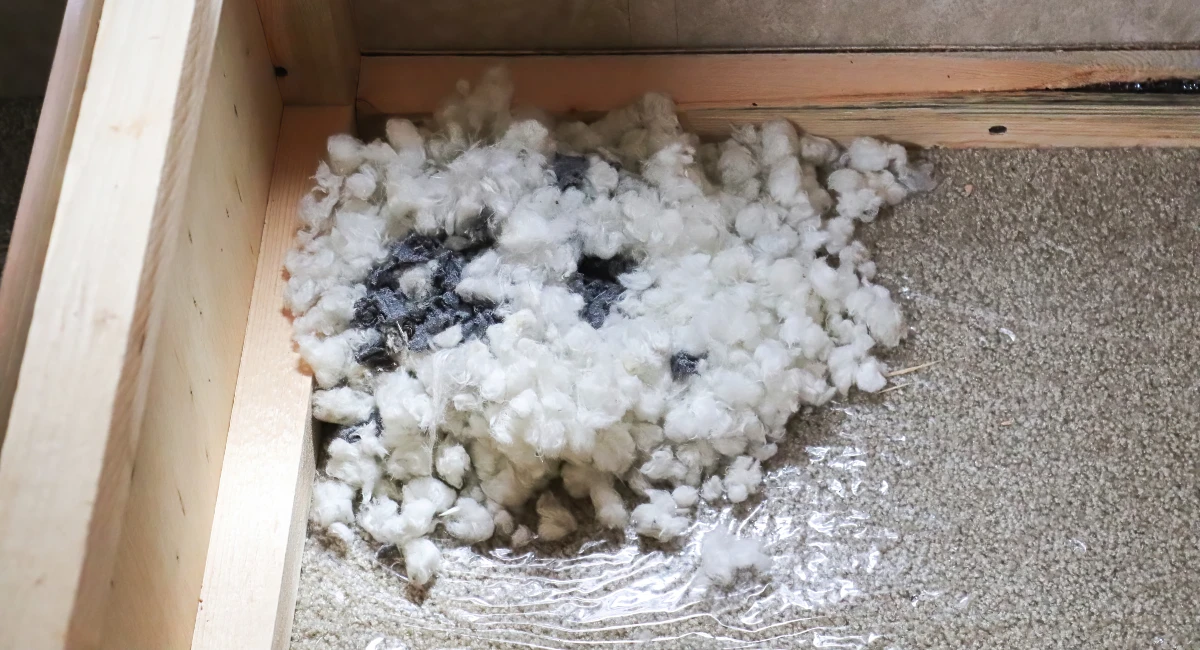
To find a mouse nest in your home, you first need to know what to look for. It's usually a loose, ball-shaped pile of soft materials, roughly the size of a grapefruit, built somewhere quiet and out of the way. Look for:
- Shredded paper or cardboard
- Fabric scraps, cotton, or stuffing
- Insulation pulled from walls or attics
- Dried leaves or grass (more common outdoors)
Where do mice nest in the house?
Mice look for two things above all else: warmth and cover. That usually points them toward places people rarely check. Common spots for a mouse nest in the house include:
- Behind large kitchen appliances like fridges and ovens
- Inside wall voids and cavities
- Pantries and food storage cupboards
- Closets with stored boxes or fabric
- Attics, basements, and crawl spaces
- Near water heaters and in utility rooms
Mice don't tend to stray far from their nest, so if you've spotted droppings or heard noise in one of these areas, the nest is probably not far off. Scratching sounds coming from the ceiling at night are often a sign of activity in the attic, which is one of the more common hiding spots.
Where do mice nest outside?
Not every mouse makes it indoors, and plenty are perfectly happy setting up outside instead. Look for a mouse nest outside your home in these areas:
- Wood piles or stacked firewood
- Garden sheds and storage boxes
- Compost heaps
- Dense, overgrown shrubs or ground cover
- Gaps under decking or porches
Outdoor nests are often the stepping stone to an indoor problem, since mice nesting near your foundation are only ever a small gap away from moving inside once the weather turns colder.
What to do if you find a mouse nest
Finding a nest is progress, but how you handle it matters. Droppings and nesting material can carry bacteria, so it's worth taking a few precautions before diving in:
- Wear gloves before touching anything near the nest
- Avoid vacuuming or sweeping dry materials, since this can stir up dust
- Dampen the area with disinfectant first to settle any contaminated dust
- Dispose of nesting material in a sealed bag
If the nest is small and freshly abandoned, a confident homeowner can usually clear it out safely. Check out our guide on how to clean up rodent droppings.
If there are multiple nests, active mice, or you're just not keen on getting close, that's exactly the kind of job our technicians handle regularly. Book your free rodent inspection today.
Book your free pest inspection today
Our local technicians will assess your property and recommend tailored solutions. Fast, friendly, and completely obligation-free.
- Safe, targeted treatments
- Local experts, fast response
- Trusted, trained technicians