Important notice: Our online forms are temporarily unavailable due to system maintenance. We apologize for the inconvenience and are working to restore this service as soon as possible.

800-837-5520 Call us for a free quote Contact us

How carpenter ants can damage your home or business

See how these destructive pests can damage your property

Spotted oversized black ants marching along your baseboards? You might be dealing with carpenter ants in your house or your business. They won't eat your walls like termites, but left alone, carpenter ant damage can weaken the wood holding your property together. Here's what to watch for.

Do carpenter ants eat wood?

Carpenter ants excavate wood to build tunnels and galleries for their nests, but they get their actual meals (carbohydrates, proteins, and other insects) elsewhere. The bad news is that "not eating it" doesn't mean "not wrecking it." A colony can spend months, even years, quietly carving out a home inside your walls before you notice a thing. Our professional ant control services can help to remove colonies and prevent new ones from forming.

Can carpenter ants destroy a house or a business?

Not overnight, but given enough time and moisture, carpenter ants can genuinely compromise structural wood. Tunneling can cause serious structural issues if it hits key support timbers, even though individual nest sites rarely span more than a few square feet. String enough nests together over the years, though, and carpenter ant wood damage adds up.

Commercial properties aren't exempt either. Warehouses, food processing facilities, and older office buildings all offer the damp, undisturbed wood carpenter ants love. If you manage a facility, find out more about our commercial pest management services.
What does carpenter ant damage look like?

Once you know what carpenter ant damage looks like, it becomes a little easier to spot. Look for:

1. Holes and galleries in wood

Smooth, hollow galleries that run with the wood grain (almost sanded in appearance). It’s not always obvious which wood-boring insect has created damage. Our ant control professionals are experts in identification.

2. Piles of frass

Small piles of frass (a sawdust-like debris mixed with insect parts) pushed out near slit-shaped openings.


3. Hollow-sounding wood

Wood that sounds hollow when tapped, even if the surface looks intact, could be a sign of carpenter ant damage.

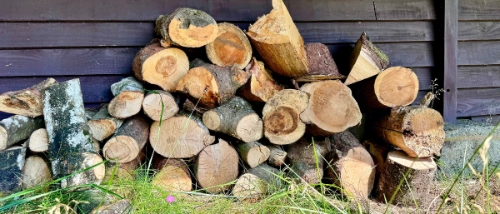
A pile of logs stacked against a wooden wall

Carpenter ants in a wood pile: a hidden risk

Got a stack of firewood leaning against the garage? Carpenter ants in a wood pile are more common than you'd think, and it's an easy way for them to hitch a ride indoors. This applies just as much to a commercial yard or loading area as it does to a backyard. Any damp, undisturbed wood is fair game for carpenter ants.

Storing wood off the ground and away from structures goes a long way toward keeping ants (and termites) at arm's length.

Carpenter ant damage vs. termite damage

Carpenter ant galleries look smooth and sanded, with frass nearby, while termite tunnels tend to be messier, and depending on the species, can be packed with mud-like material. Carpenter ants also excavate wood without eating it, while termites feed on it directly, which typically makes termites the more damaging pest over time. That said, neither pest is something you want to find in your walls.

Worried about carpenter ants?

If you've found frass, heard rustling, or just have a nagging feeling something's off in the walls, it's worth getting a second opinion. Our technicians track down nests, including hard-to-reach satellite colonies, and help protect your property going forward.

Frequently asked questions

No. Carpenter ants excavate wood to build nests, but get their food elsewhere. Termites, on the other hand, actually consume wood as their food source.

Repair costs can climb the longer the damage goes unnoticed, since it often affects hidden structural wood. That's part of why catching (or preventing) an infestation early tends to be the more affordable route.

Yes. Nests are frequently tucked inside walls, beams, or other hard-to-see areas, so damage can develop for a while before there's any visible sign.

It’s entirely dependent on the coverage you have. Most policies treat pest damage as a preventable maintenance issue rather than sudden or accidental damage, so coverage is often limited. It's worth double-checking the specifics of your policy directly with your provider.

Find your local branch

Enjoy protection from 39 of the most common household pests with our annual residential pest control program, PestFree365+.