© 2026 Rentokil Initial plc and subject to the conditions in the legal statement.
Key takeaways
- As outdoor temperatures drop, rats and mice seek food, water, and shelter inside homes.
- Based on our service data, Pennsylvania dominates the rankings, with Philadelphia holding the #1 spot as the city with the most rats on the East Coast.
- Dense populations, abundant food waste, aging properties, and milder winters all contribute to the conditions that make these locations the most rat-infested cities.
- Rodents can cause structural damage by chewing through wires, insulation, and building materials. They can also carry various diseases and contaminate surfaces and products.
- Homeowners should seal entry gaps, eliminate food sources, and contact Ehrlich to get a customized exclusion and treatment plan for their home.
Jump to section
As temperatures drop in fall and winter, rodents like rats and mice, start seeking warmth and shelter indoors. Using service data from Ehrlich branches, Ehrlich has identified the cities with the most rats and mice and the highest demand for rodent control along the East Coast.
Major metropolitan areas like Philadelphia, Baltimore, Pittsburgh, and Buffalo consistently rank among the most rat-infested cities. Check if your hometown made our list, and learn how to keep your home protected.
If you see signs of rodents on your property, don’t wait for the problem to grow. Ehrlich can provide mouse and rat control services that can help determine what’s attracting these pests to your property and the best methods to keep them out.
What city has the most rats and mice on the East Coast?
Human activity, dense living spaces, and milder winters continue to drive rodent populations across the East Coast. Our latest service data shows Philadelphia holding steady at #1, while heavyweights like Baltimore, Pittsburgh, and Washington, D.C. consistently rank among the top cities for rodent activity.
While major metropolitan areas remain hot spots, our 2026 stats also highlight several new suburban and smaller municipal entries, including Allentown, Reading, Scarsdale, and Sterling. Overall, Pennsylvania dominates the ranking with the most featured cities.
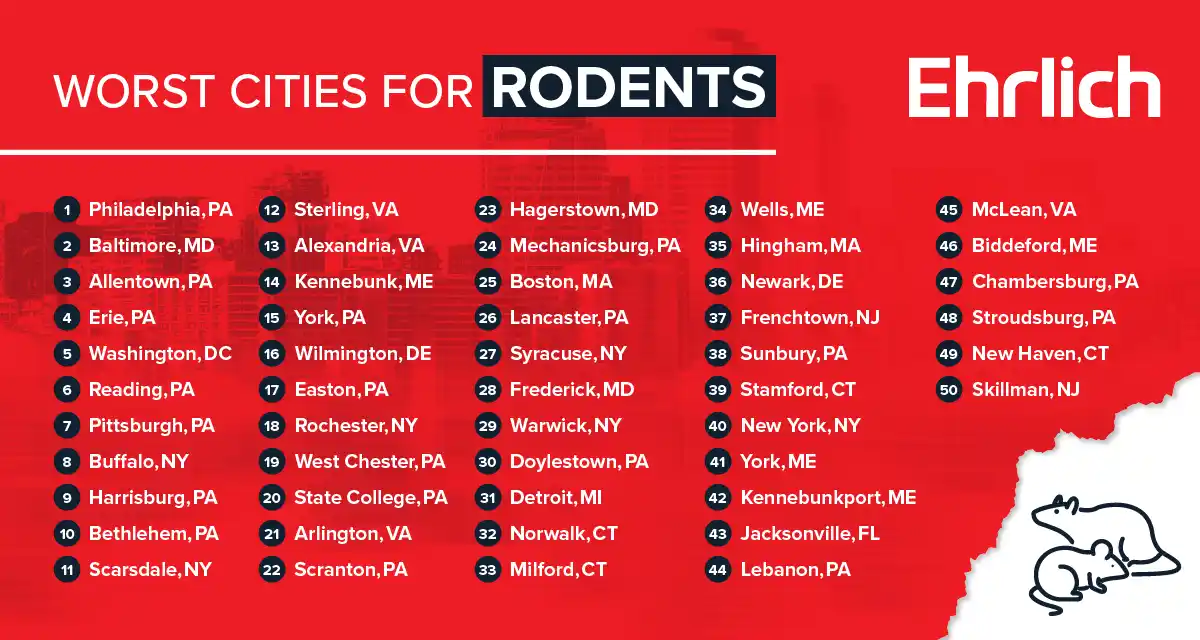
Here are the top 50 most rodent-infested cities on the East Coast*:
| 1. Philadelphia, PA | 26. Lancaster, PA |
| 2. Baltimore, MD | 27. Syracuse, NY |
| 3. Allentown, PA | 28. Frederick, MD |
| 4. Erie, PA | 29. Warwick, NY |
| 5. Washington, D.C. | 30. Doylestown, PA |
| 6. Reading, PA | 31. Detroit, MI |
| 7. Pittsburgh, PA | 32. Norwalk, CT |
| 8. Buffalo, NY | 33. Milford, CT |
| 9. Harrisburg, PA | 34. Wells, ME |
| 10. Bethlehem, PA | 35. Hingham, MA |
| 11. Scarsdale, NY | 36. Newark, DE |
| 12. Sterling, VA | 37. Frenchtown, NJ |
| 13. Alexandria, VA | 38. Sunbury, PA |
| 14. Kennebunk, ME | 39. Stamford, CT |
| 15. York, PA | 40. New York, NY |
| 16. Wilmington, DE | 41. York, ME |
| 17. Easton, PA | 42. Kennebunkport, ME |
| 18. Rochester, NY | 43. Jacksonville, FL |
| 19. West Chester, PA | 44. Lebanon, PA |
| 20. State College, PA | 45. McLean, VA |
| 21. Arlington, PA | 46. Biddeford, ME |
| 22. Scranton, PA | 47. Chambersburg, PA |
| 23. Hagerstown, MD | 48. Stroudsburg, PA |
| 24. Mechanicsburg, PA | 49. New Haven, CT |
| 25. Boston, MA | 50. Skillman, NJ |
What makes these cities rodent hotspots?
Urban areas can provide rodents with everything they need to thrive: continuous food, water, and shelter. Dense populations mean endless food waste from trash cans, dumpsters, and street litter. Meanwhile, older infrastructure, such as aging sewer systems, basements, and subway tunnels, can provide rats and mice with hidden pathways to travel and nest safely out of sight.
Milder winters also play a big role by extending rodent breeding seasons, allowing populations to grow much faster. Packed residential neighborhoods and shared walls can also make it easy for a rodent problem to spread quickly from one building to the next.
Signs of rats or mice in your home
Rodents are experts at hiding, but they typically leave behind evidence of their presence. Catching these warning signs early can help prevent a small problem from turning into a more severe infestation:
- Droppings: Small, dark, capsule-shaped pellets commonly found near food pantries, under sinks, or along baseboards.
- Gnaw marks: Chewed food packaging, wooden baseboards, plastic piping, or exposed electrical wiring.
- Scurrying sounds: Scratching, squeaking, or rustling noises coming from inside walls, attics, or ceilings, especially at night.
- Nesting materials: Piles of shredded paper, cardboard, insulation, or fabric tucked away in quiet, dark corners.
- Grease marks: Dark, smudged rub marks left along walls and baseboards from the oils in their fur as they travel along established paths.
Tips to prevent rodent infestations
Rats and mice aren’t just a nuisance. They can cause various problems for homeowners. They can chew through wires, insulation, and structural materials, leading to costly damage. There are also various diseases rats can carry and spread to humans through droppings, urine, and contaminated food.
Prevention is key to keeping your family protected. Here are a few tips that can help prevent rats and mice:
- Seal potential entry points: Seal gaps, cracks, and openings around doors, windows, vents, utility lines, and other potential entry points.
- Store food securely: Keep human and pet food in airtight containers and promptly clean up crumbs and spills.
- Eliminate clutter: Keep basements, attics, and garages organized and clear of debris to reduce potential nesting spots.
- Maintain your yard: Trim vegetation, stack firewood away from the house, and remove debris where rodents might hide. Don’t leave pet food or waste outside overnight.
- Schedule regular inspections: Routine inspections by our rodent exterminators can help catch early signs of activity before a severe infestation develops.
What to do if you find rodents in your home
If you spot signs of rodents, especially if you live in one of the cities with the most rats and mice, taking action right away is critical. Start with these immediate steps:
- Clean up spills and debris: Wipe down counters daily, vacuum up crumbs, and remove clutter such as cardboard boxes, where rodents love to nest.
- Block cracks and gaps: Fill small cracks or openings around piping and doors using steel wool and caulk until permanent repairs can be made.
- Contact a pest control professional: While DIY steps can help limit attractants, fully resolving an infestation requires professional intervention.
Ehrlich experts can pinpoint how rodents are entering your home, evaluate the severity of the infestation, and create a tailored exclusion and treatment plan to help protect your home and family. Contact us to schedule your free rodent inspection today!
Schedule your free pest inspection today
Get peace of mind knowing your home or business is protected. Our technicians will assess your property and recommend customized solutions.
*The cities listed are based on Nielsen’s Designated Market Areas (DMAs). A DMA may include multiple nearby cities and surrounding suburbs that function as one larger media market. For this reason, some entries may list more than one city together
Book your free pest inspection today
Our local technicians will assess your property and recommend tailored solutions. Fast, friendly, and completely obligation-free.
- Targeted treatments applied safely and responsibly
- Local experts, fast response
- Trusted, trained technicians