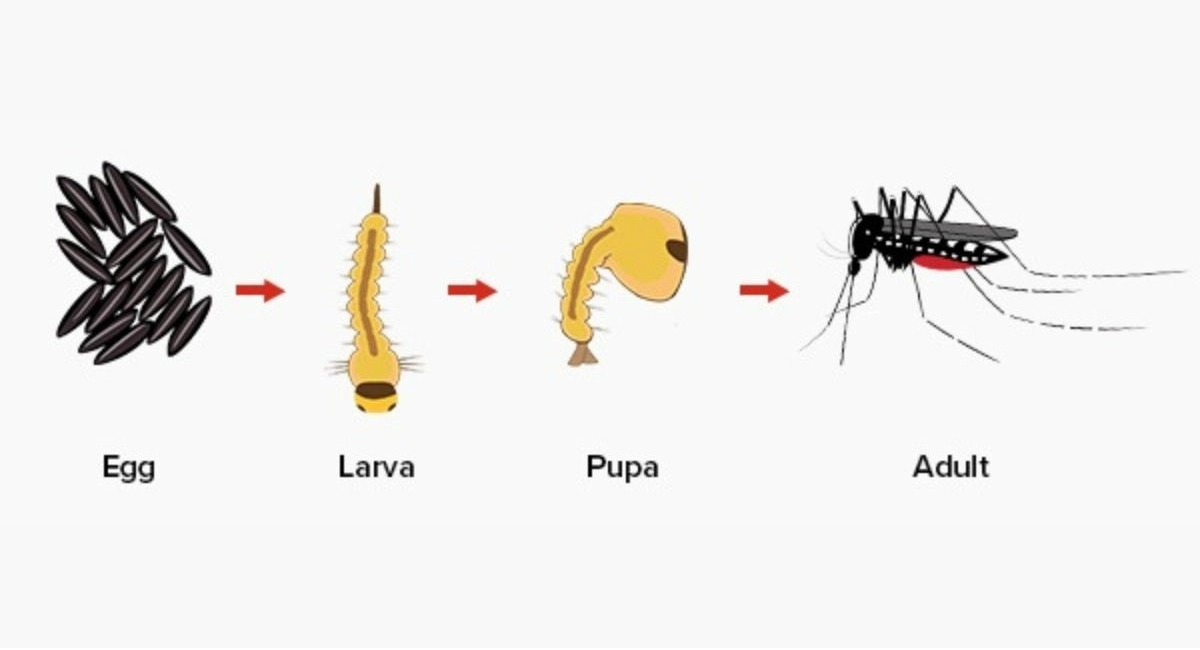
The mosquito life cycle
Mosquitoes start out their lives as eggs and when they are first born, they are aquatic. Female mosquitoes will lay eggs in any standing water they find. They typically do not need much water in which to lay the eggs – a rain shower and the subsequent puddles will do the trick! Mosquitoes must lay their eggs in stagnant water which means even a small disturbance is enough to destroy the eggs or prevent a female from laying eggs in the first place.
Once the eggs hatch, the larvae emerge swimming in the stagnant water. Sometimes they are eaten by fish (depending on the water source), but if they survive, the mosquito larvae float close to the surface. Their bodies adapt to breathing near the surface of the water and from there, the larvae molt and grow.
Once the mosquitoes reach the pupa stage, they enter a resting mode. During this stage, the mosquito can move, but does not feed. When the pupa changes into an adult, and their legs and wings form, they come to the surface and rest on the top of the water to dry. Once their wings are dry, the pupa fly into the air in search of blood meals to help them grow and eventually mate, lay eggs, and start the cycle all over again.